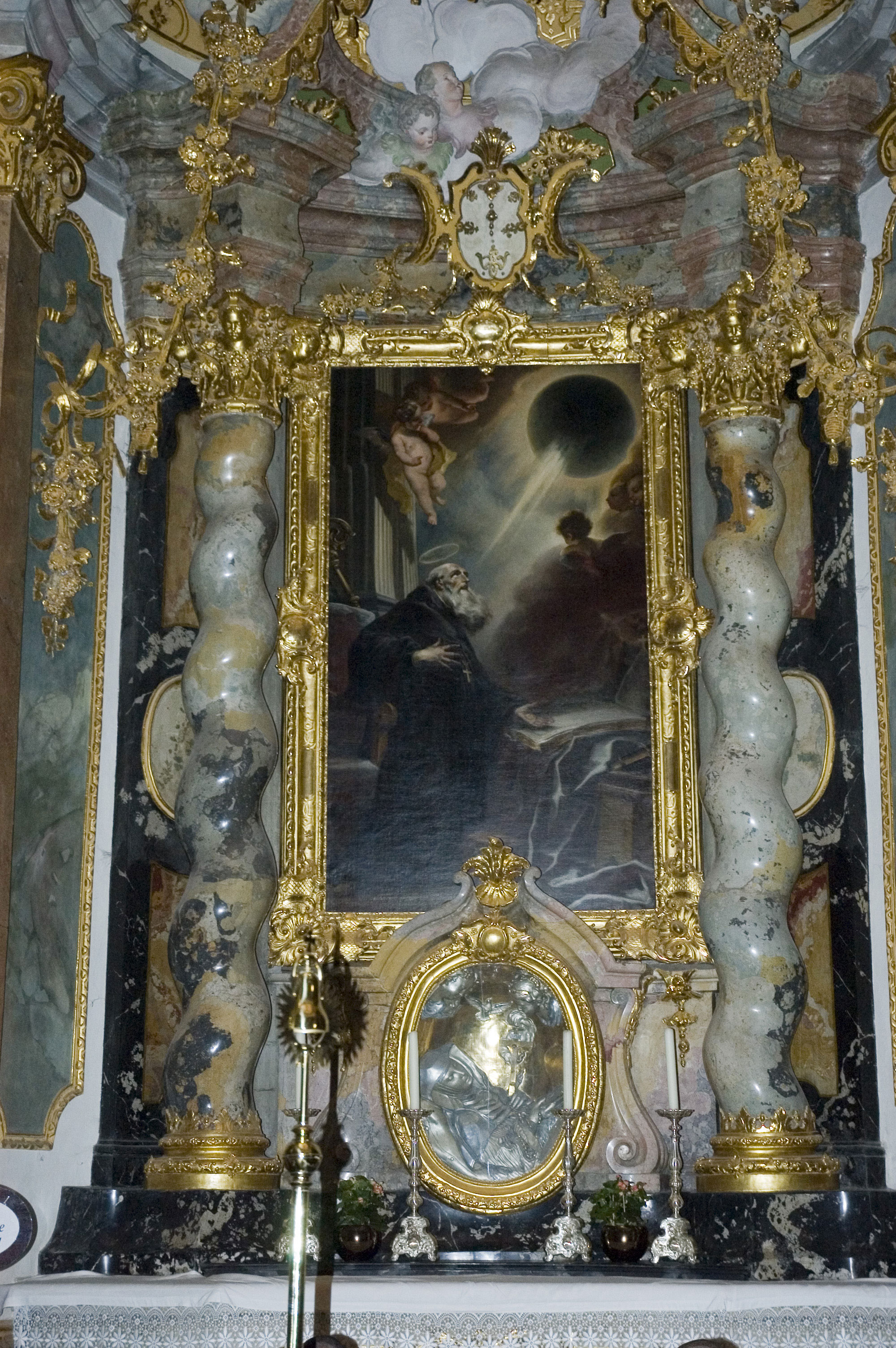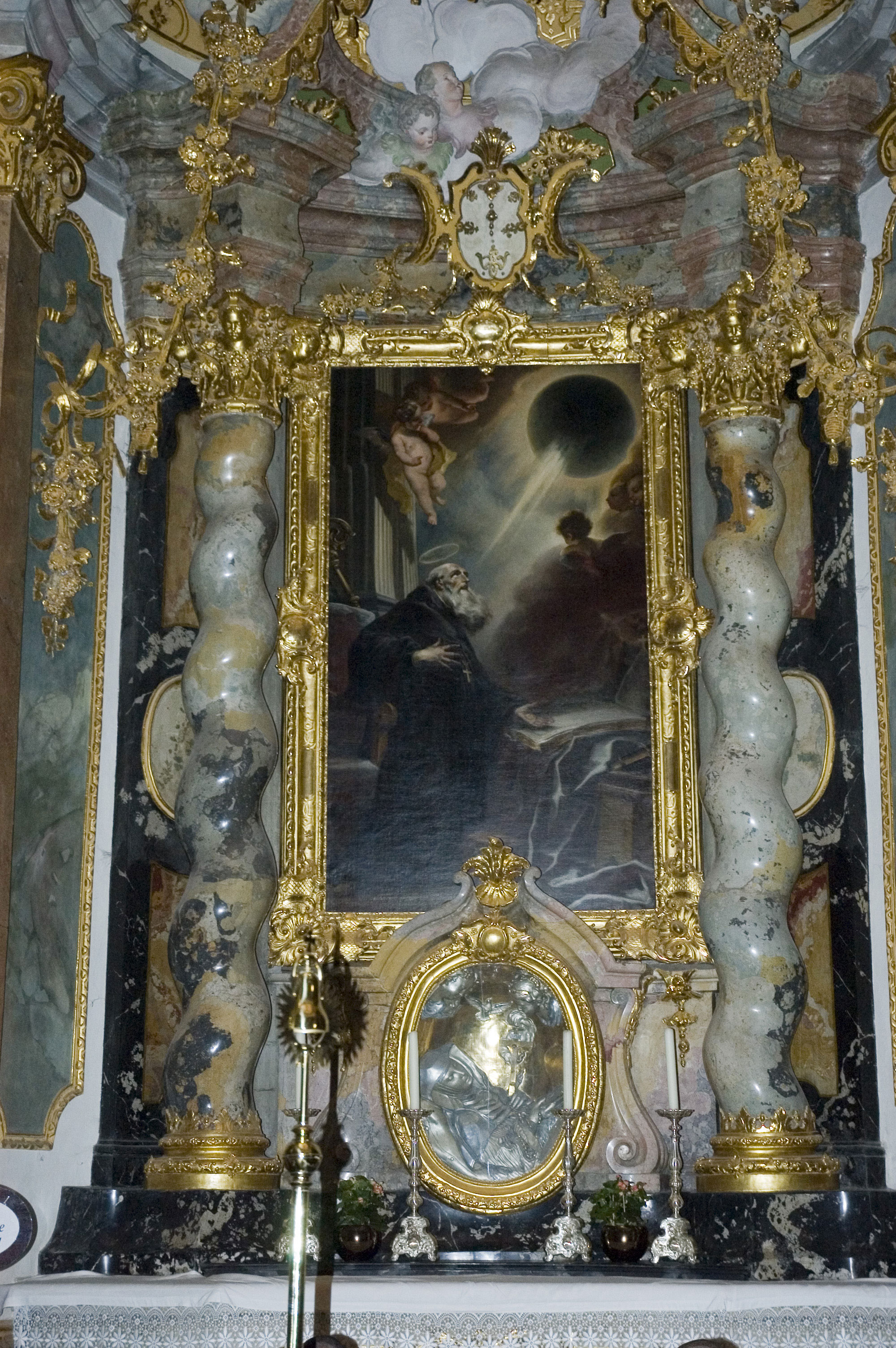
Is this painting the earliest realistic depiction of a total eclipse of the Sun? Some historians believe it is. The above painting was completed in 1735 by Cosmas Damian Asam, a painter and architect famous in early eighteenth century Germany. Clearly drawn is not only a total solar eclipse, but the solar corona and the diamond ring effect visible when sunlight flows only between mountains on the Moon. The person depicted viewing these eclipse phenomena is St. Benedict. Roberta J. M. Olson and Jay Pasachoff have hypothesized that Asam himself may have seen first hand one or all of the total solar eclipses of May 1706, 1724, and 1733. Many facts about our astronomical universe that are taken for granted today have been known -- or accurately recorded -- only during the last millennium. Asam's painting currently hangs in Weltenburg Abbey in Bavaria, Germany.
¿Es este cuadro la representación más realista conocida de un eclipse total del Sol? Algunos historiadores así lo creen. El cuadro anterior fue completado en 1735 por Cosmas Damian Asam, pintor y arquitecto célebre en la Alemania del siglo dieciocho temprano. Claramente dibujado está no solo un eclipse solar total, sino la corona solar y el efecto de anillo de diamante visible cuando la luz solar fluye solo entre las montañas de la Luna. La persona representada observando estos fenómenos de eclipse es San Benito. Roberta J. M. Olson y Jay Pasachoff han planteado la hipótesis de que Asam mismo pudo haber presenciado directamente uno o todos los eclipses solares totales de mayo de 1706, 1724 y 1733. Muchos hechos sobre nuestro universo astronómico que se dan por sentados hoy en día han sido conocidos o registrados con precisión solo durante el último milenio. El cuadro de Asam cuelga actualmente en la Abadía de Weltenburg en Baviera, Alemania.