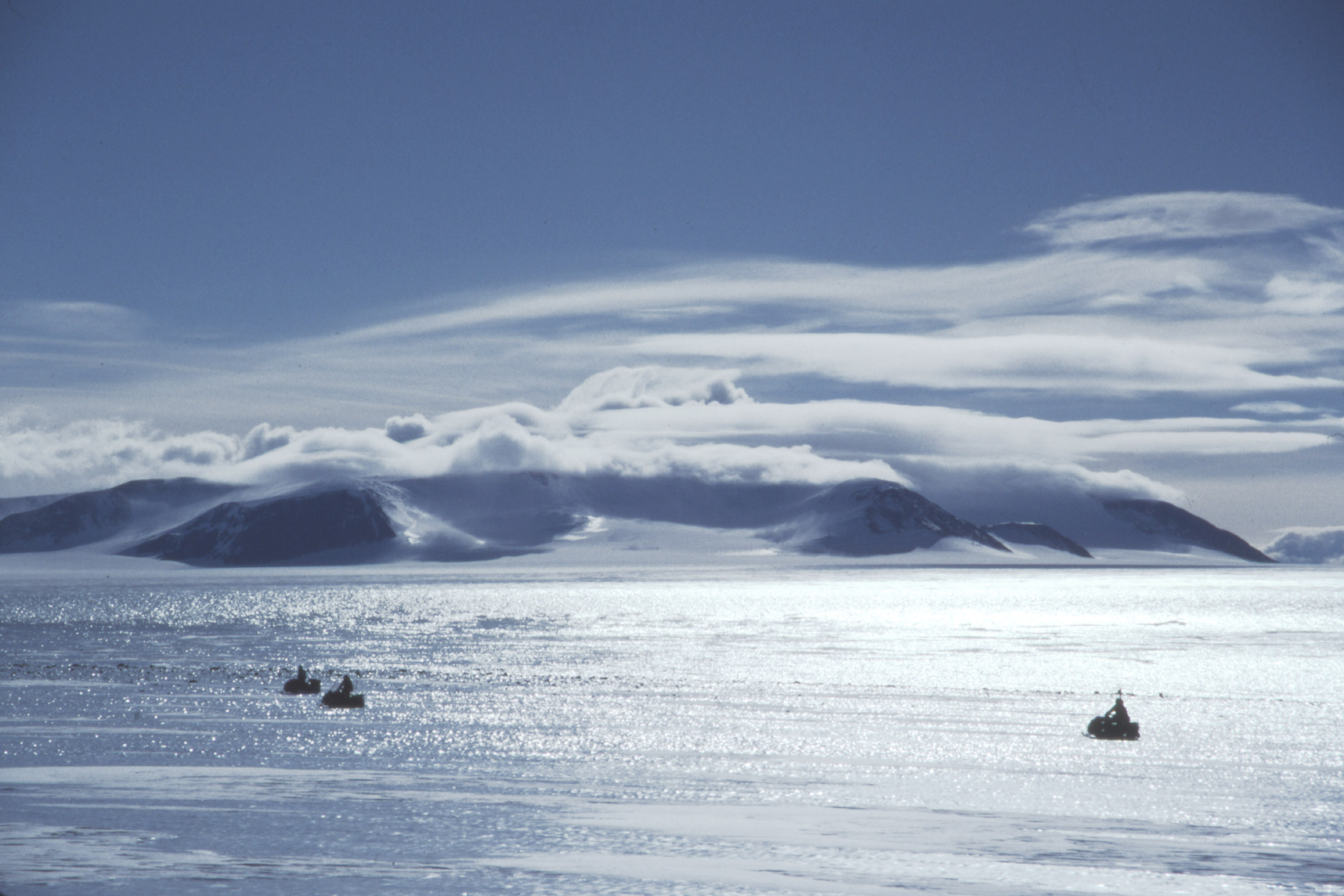
Where is the best place on Earth to find meteorites? Although meteors fall all over the world, they usually just sink to the bottom of an ocean, are buried by shifting terrain, or are easily confused with terrestrial rocks. At the bottom of the Earth, however, in East Antarctica, huge sheets of blue ice remain pure and barren. When traversing such a sheet, a dark rock will stick out. These rocks have a high probability of being true meteorites -- likely pieces of another world. An explosion or impact might have catapulted these meteorites from the Moon, Mars, or even an asteroid, yielding valuable information about these distant worlds and our early Solar System. Small teams of snowmobiling explorers so far have found thousands. Pictured above, ice-trekkers search a field 25-kilometers in front of Otway Massif in the Transantarctic Mountain Range during the Antarctic summer of 1995-1996. The week marks the 100th anniversary of humans first reaching the Earth's South Pole. Browse or share: Lastest lunar eclipse pictures
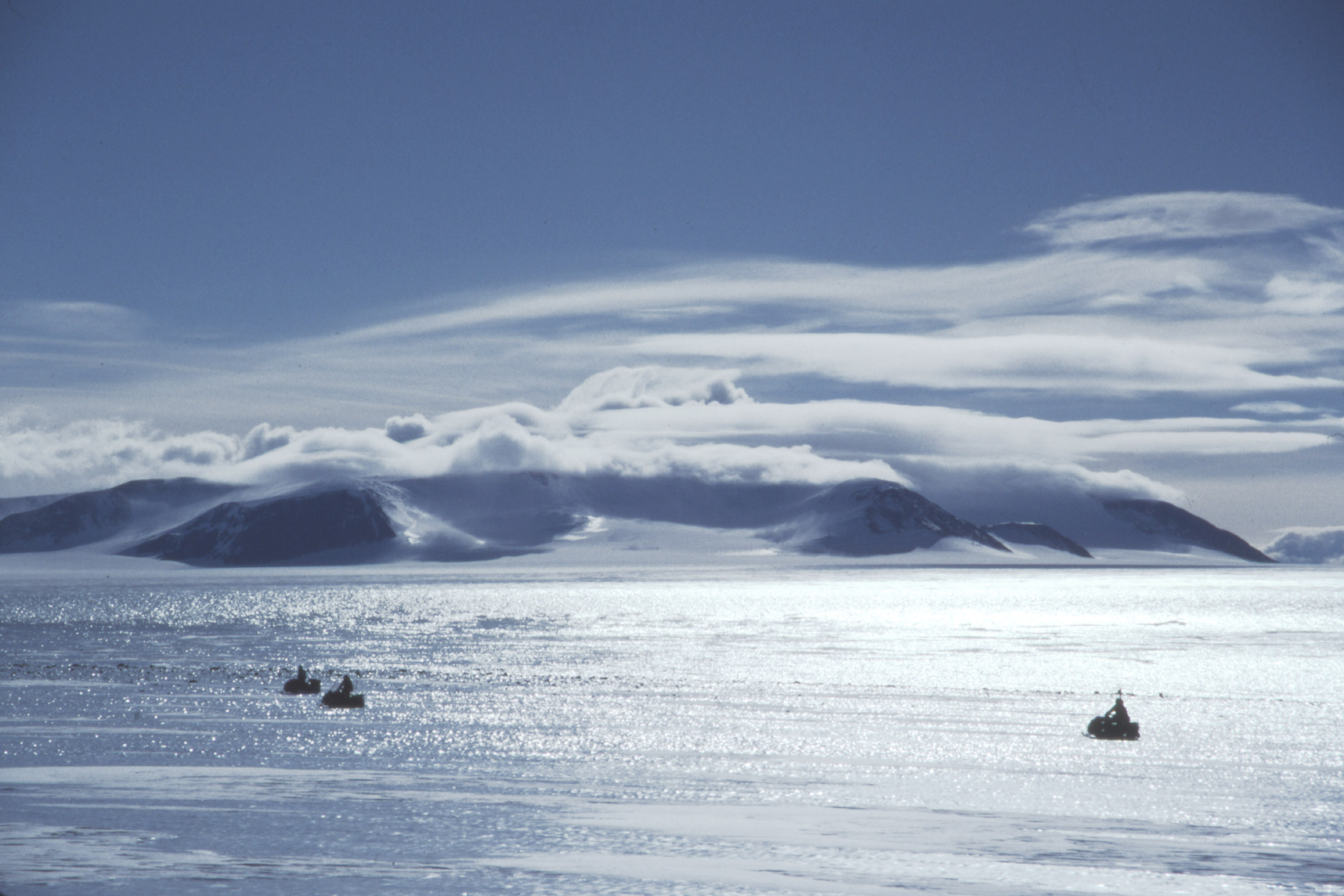
¿Cuál es el mejor lugar de la Tierra para encontrar meteoritos? Aunque los meteoros caen en todo el mundo, generalmente se hunden en el fondo del océano, quedan enterrados por terrenos cambiantes o se confunden fácilmente con rocas terrestres. Sin embargo, en el extremo austral de la Tierra, en la Antártida Oriental, enormes campos de hielo azul permanecen puros y desolados. Al atravesar una de estas superficies, una roca oscura resalta de inmediato. Estas rocas tienen una alta probabilidad de ser verdaderos meteoritos, probablemente fragmentos de otro mundo. Una explosión o un impacto pudo haber lanzado estos meteoritos desde la Luna, Marte o incluso un asteroide, proporcionando valiosa información sobre estos mundos distantes y sobre los orígenes de nuestro Sistema Solar. Pequeños equipos de exploradores en motonieve han encontrado miles de ellos hasta ahora. En la imagen, exploradores sobre el hielo rastrean un campo ubicado 25 kilómetros frente al macizo Otway, en la Cordillera Transantártica, durante el verano antártico de 1995-1996. Esta semana se conmemora el centenario de la primera vez que seres humanos alcanzaron el Polo Sur terrestre.