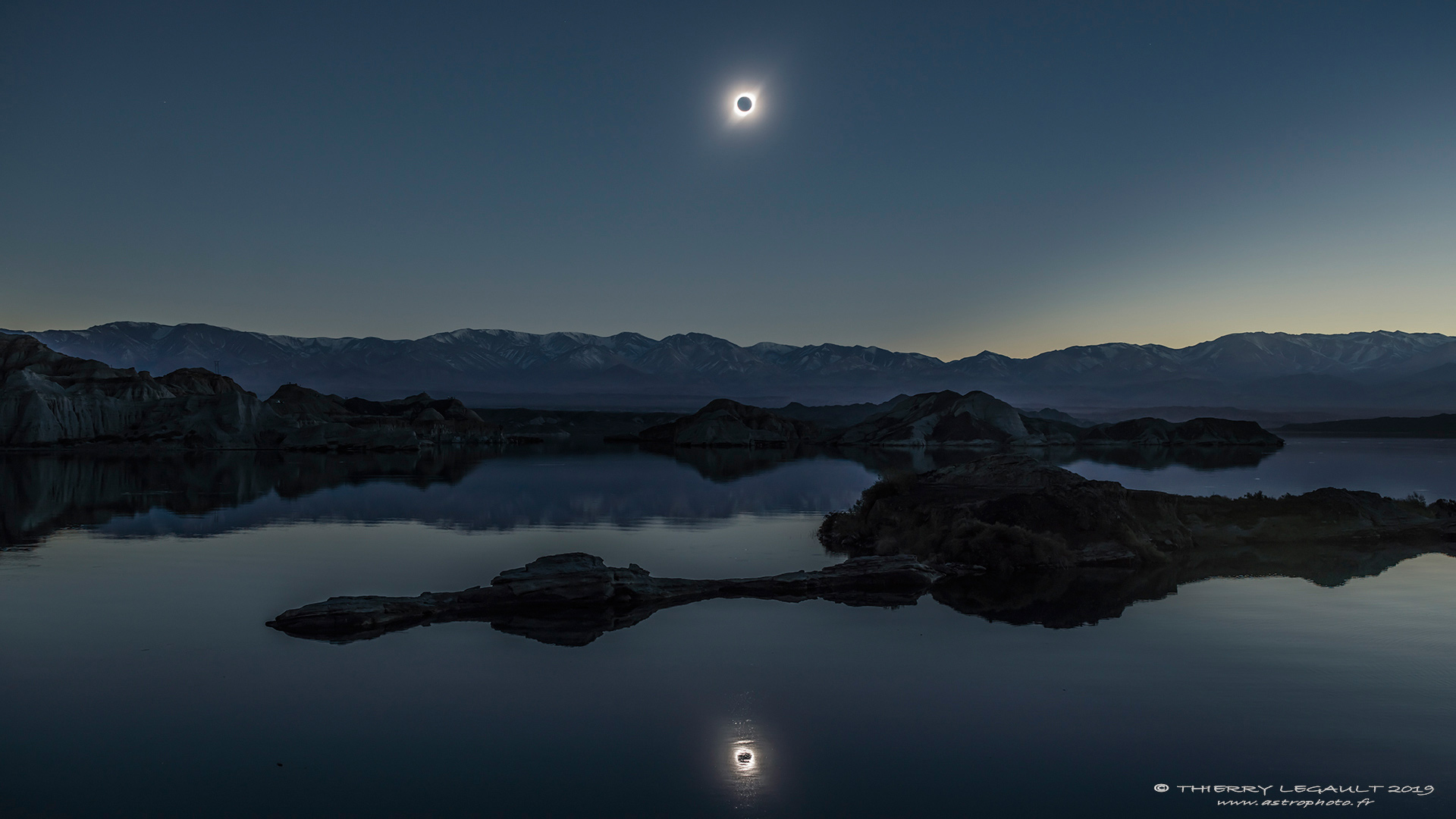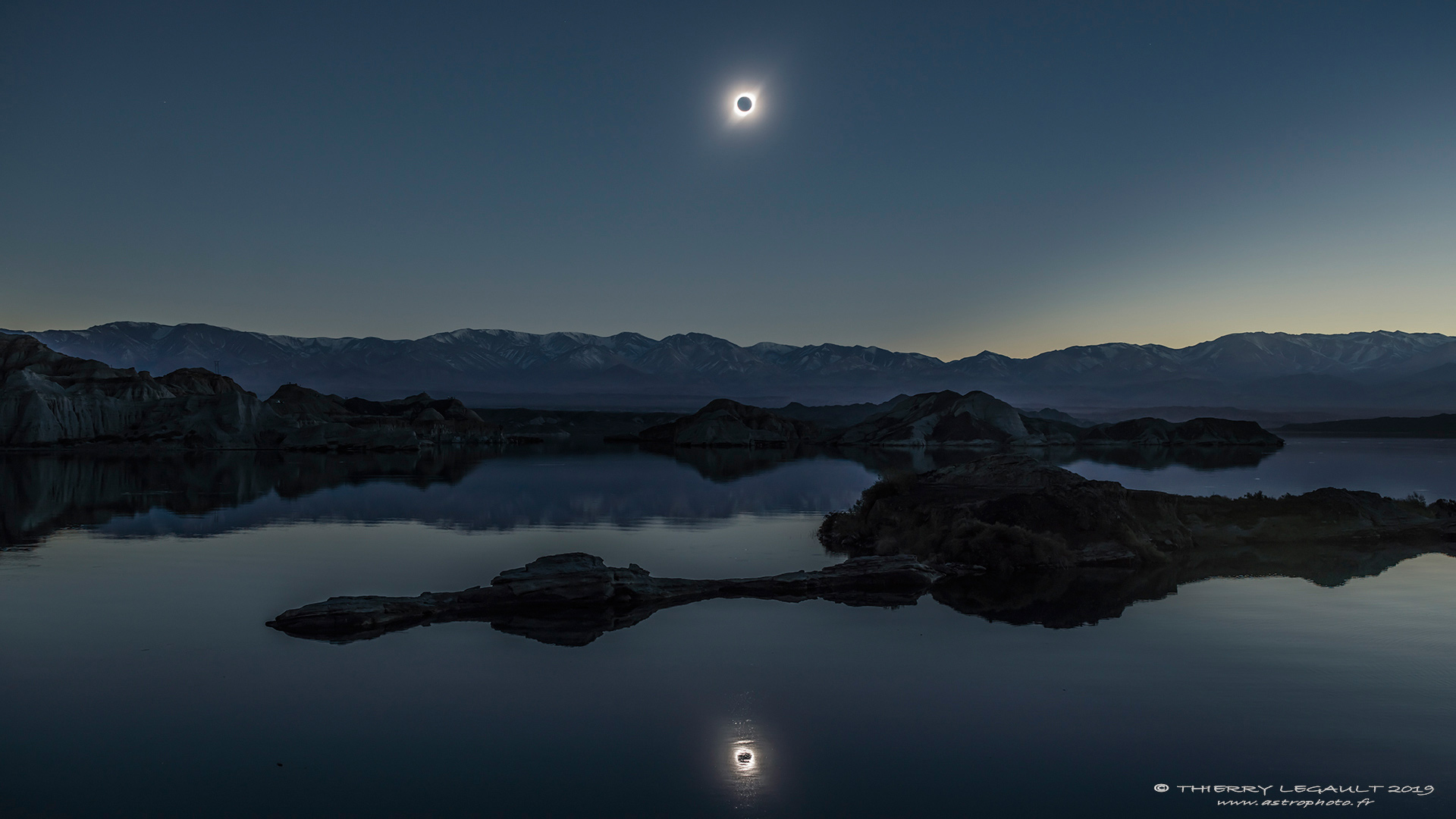
If you saw a total solar eclipse, would you do a double-take? One astrophotographer did just that -- but it took a lake and a bit of planning. Realizing that the eclipse would be low on the horizon, he looked for a suitable place along the thin swath of South America that would see, for a few minutes, the Moon completely block the Sun, both directly and in reflection. The day before totality, he visited an Argentine lake called La Cuesta Del Viento (The Slope of the Wind) and, despite its name, found so little wind that the lake looked like a mirror. Perfect. Returning the day of the eclipse, though, there was a strong breeze churning up the water -- enough to ruin the eclipse reflection shot. Despair. But wait! Strangely, about an hour before totality, the wind died down. This calmness may have been related to the eclipse itself, because eclipsed ground heats the air less and reduces the amount rising warm air -- which can dampen and even change the wind direction. The eclipse came, his tripod and camera were ready, and so was the lake. The featured image of this double-eclipse came from a single exposure lasting just one fifteenth of a second. Soon after totality, the winds returned and the water again became choppy. No matter -- this double-image of the 2019 July total solar eclipse had been captured forever.
Si observaste un eclipse solar total, ¿harías una doble toma? Un fotógrafo astronómico lo hizo así, pero necesitó un lago y un poco de planificación. Al darse cuenta de que el eclipse estaría bajo en el horizonte, buscó un lugar adecuado a lo largo de la estrecha franja de Sudamérica que vería, durante unos minutos, la Luna bloquear completamente al Sol, tanto directamente como en reflejo. El día antes del eclipse, visitó un lago argentino llamado La Cuesta Del Viento (La Ladera del Viento) y, a pesar de su nombre, encontró tan poco viento que el lago se veía como un espejo. Perfecto. Pero al regresar el día del eclipse, había un fuerte viento agitando el agua, suficiente como para arruinar la toma del reflejo del eclipse. Desesperación. ¡Pero espera! Extrañamente, aproximadamente una hora antes del eclipse total, el viento disminuyó. Esta calma podría haber estado relacionada con el eclipse mismo, ya que la tierra eclipsada calienta menos el aire y reduce la cantidad de aire cálido ascendente, lo cual puede atenuar e incluso cambiar la dirección del viento. El eclipse llegó, su trípode y cámara estaban listos, y también lo estaba el lago. La imagen destacada de este doble eclipse provino de una única exposición que duró solo una quinceava parte de segundo. Poco después del eclipse total, los vientos regresaron y el agua volvió a estar agitada. Da igual: esta doble imagen del eclipse solar total de julio de 2019 había sido capturada para siempre.