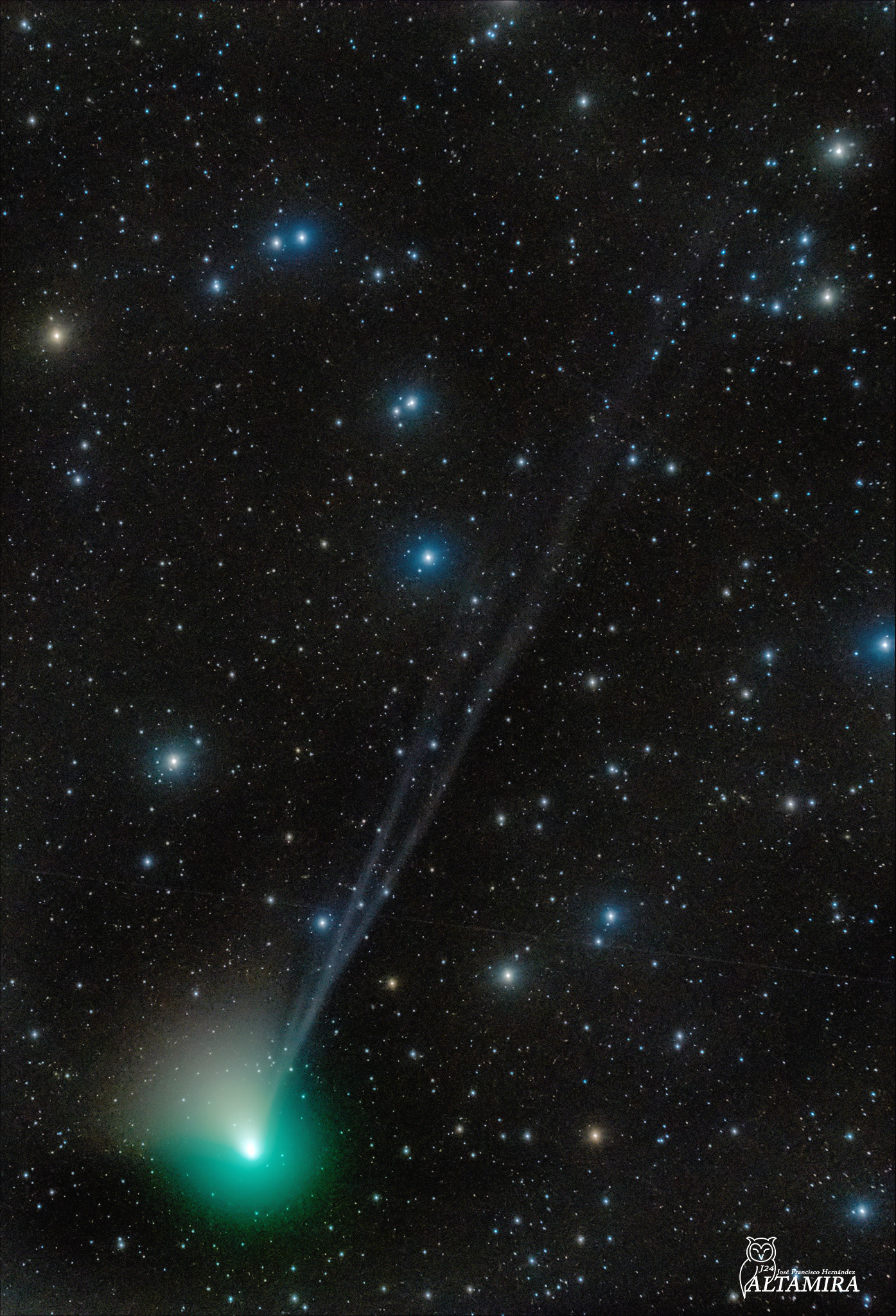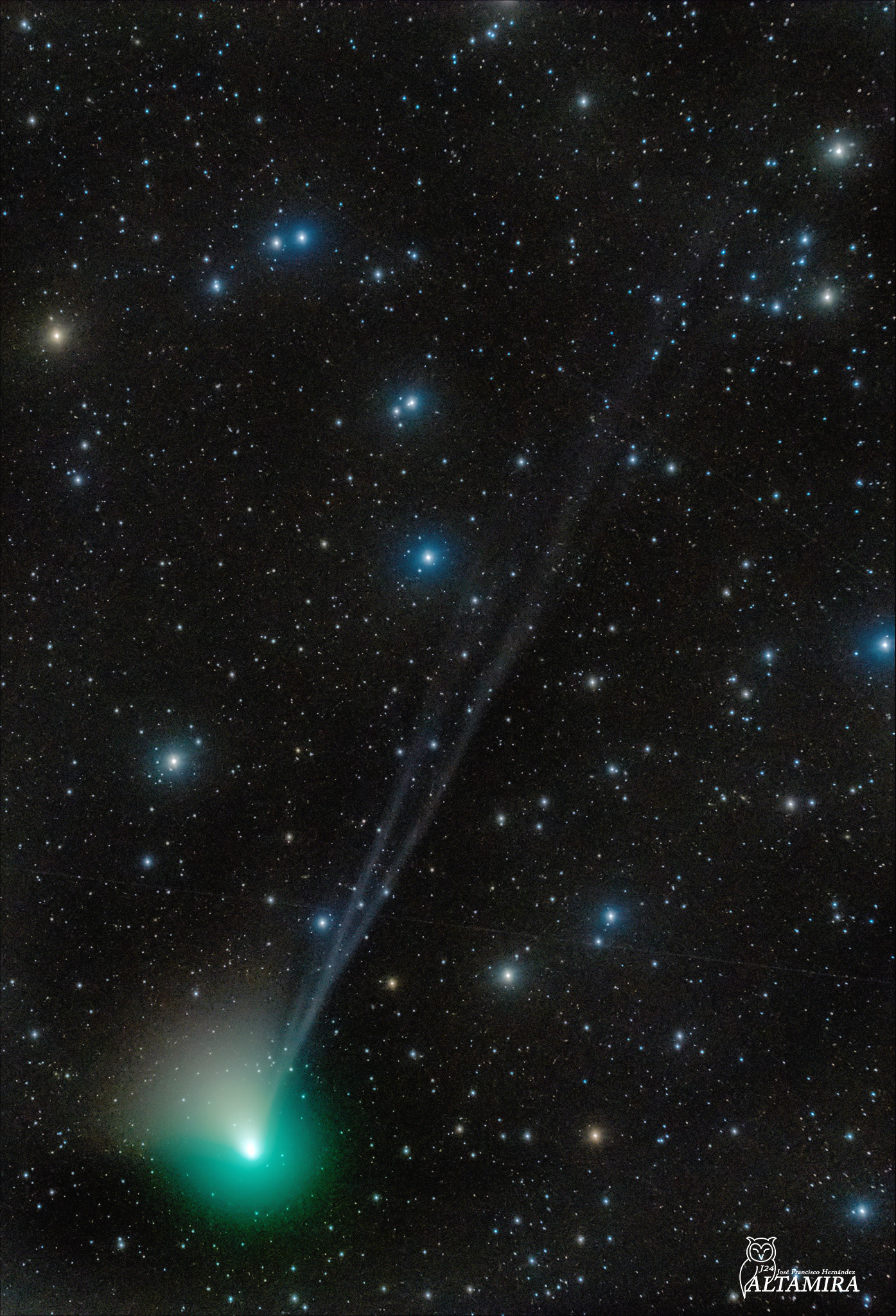
Comet ZTF may become visible to the unaided eye. Discovered early last year, this massive snowball has been brightening as it approaches the Sun and the Earth. C/2022 E3 (ZTF) will be closest to the Sun later this week, at which time it may become visible even without binoculars to northern observers with a clear and dark sky. As they near the Sun, comet brightnesses are notoriously hard to predict, though. In the featured image taken last week in front of a picturesque star field, three blue ion tails extend to the upper right, likely the result of a variable solar wind on ions ejected by the icy comet nucleus. The comet's white dust tail is visible to the upper left and much shorter. The green glow is the comet's coma, caused by glowing carbon gas. Comet ZTF is expected to pass nearest the Earth in early February, after which it should dim dramatically. Discovery + Outreach: Graduate student research position open for APOD
El cometa ZTF podría hacerse visible a simple vista. Descubierto a principios del año pasado, este gran cometa ha ido aumentando de brillo a medida que se acerca al Sol y a la Tierra. C/2022 E3 (ZTF) estará más cerca del Sol a finales de esta semana, momento en el cual podría hacerse visible incluso sin binoculares para observadores del hemisferio norte con un cielo claro y oscuro. Sin embargo, es bien sabido que la predicción del brillo de los cometas cuando se acercan al Sol es notablemente difícil. En la imagen destacada tomada la semana pasada frente a un campo estelar pintoresco, tres colas iónicas azules se extienden hacia la parte superior derecha, probablemente como resultado de un viento solar variable sobre los iones expulsados por el núcleo helado del cometa. La cola de polvo blanca del cometa es visible hacia la parte superior izquierda y es mucho más corta. El brillo verde es la coma del cometa, causada por gas de carbono luminoso. Se espera que el cometa ZTF pase más cerca de la Tierra a principios de febrero, momento en el cual debería atenuarse drásticamente.