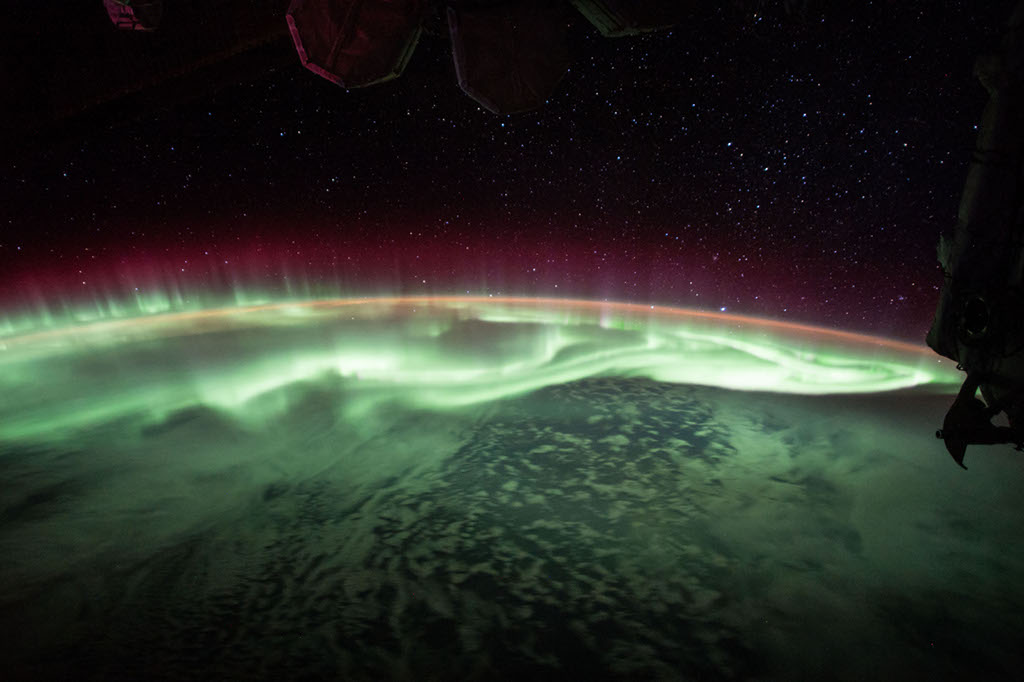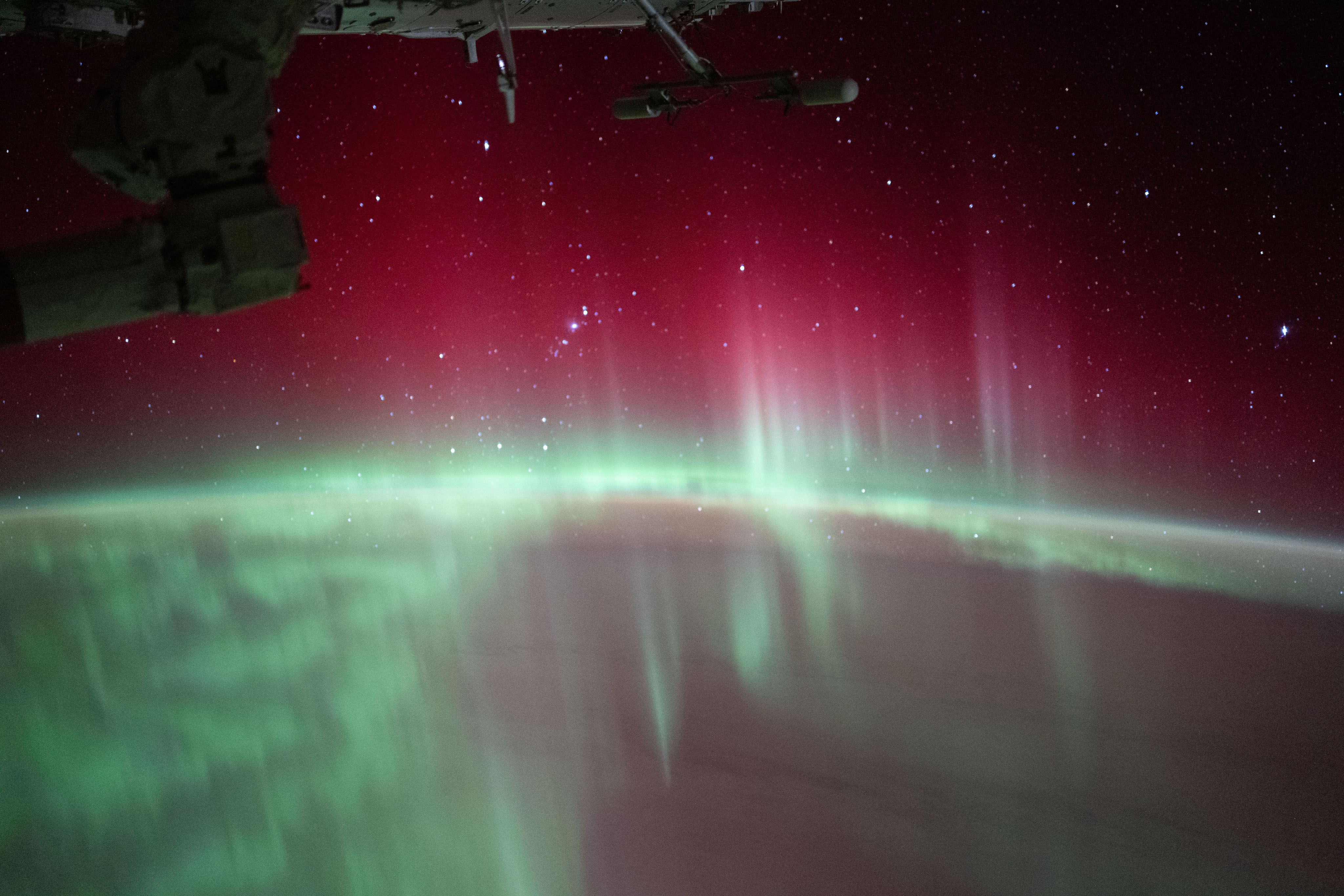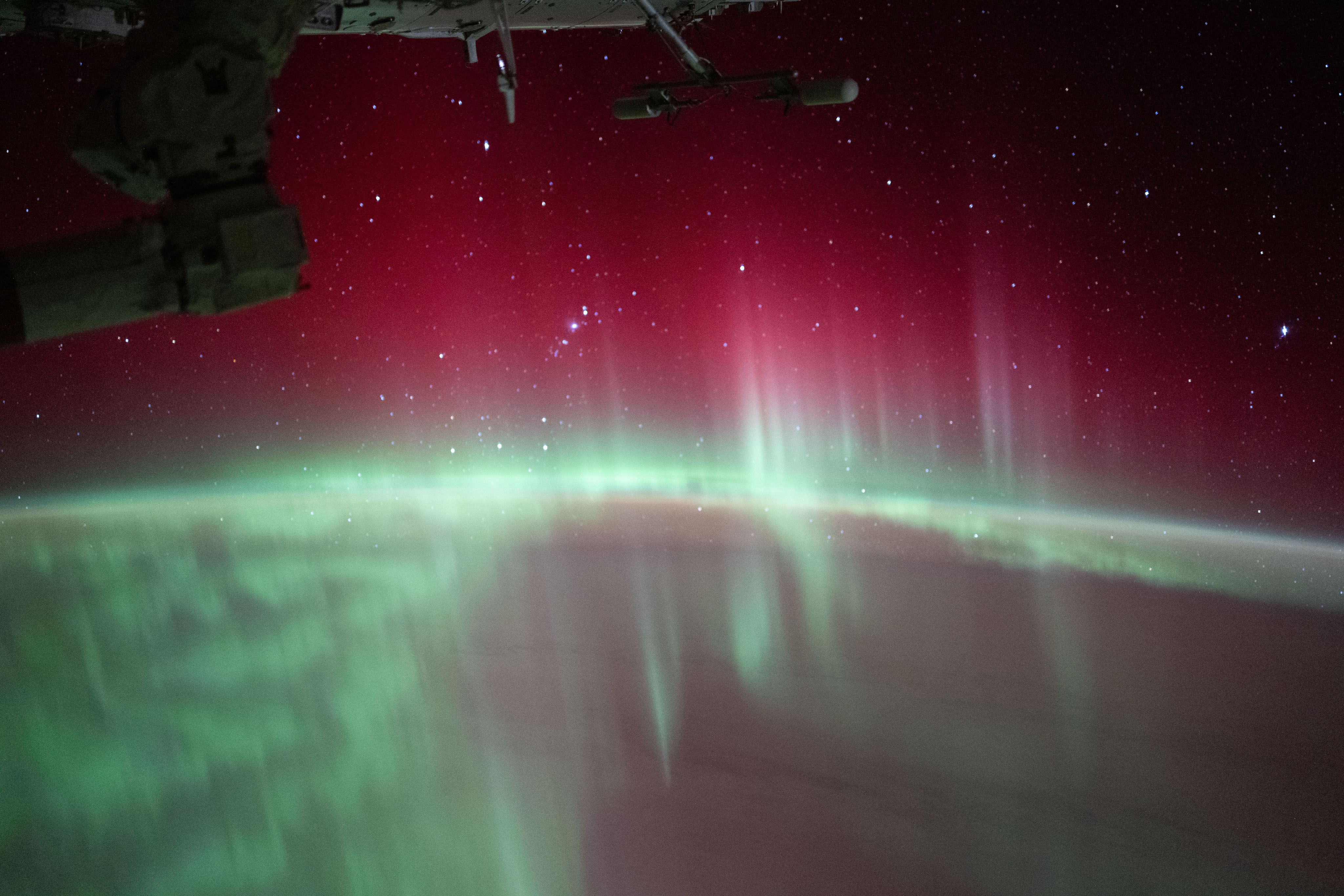
This snapshot from the International Space Station was taken on August 11 while orbiting about 430 kilometers above the Indian Ocean, Southern Hemisphere, planet Earth. The spectacular view looks south and east, down toward the planet's horizon and through red and green curtains of aurora australis. The auroral glow is caused by emission from excited oxygen atoms in the extremely rarefied upper atmosphere still present at the level of the orbiting outpost. Green emission from atomic oxygen dominates this scene at altitudes of 100 to 250 kilometers, while red emission from atomic oxygen can extend as high as 500 kilometers altitude. Beyond the glow of these southern lights, this view from low Earth orbit reveals the starry sky from a southern hemisphere perspective. Stars in Orion's belt and the Orion Nebula are near the Earth's limb just left of center. Sirius, alpha star of Canis Major and brightest star in planet Earth's night is above center along the right edge of the southern orbital skyscape. Looking Up: International Observe the Moon Night
Crédito: NASA, CSA, ESA, JAXA Esta instantánea tomada desde la Estación Espacial Internacional fue capturada el 11 de agosto mientras orbitaba a unos 430 kilómetros sobre el Océano Índico, en el hemisferio sur del planeta Tierra. La espectacular vista mira hacia el sur y el este, hacia el horizonte terrestre y a través de cortinas rojas y verdes de aurora australis. El resplandor auroral es causado por emisiones de átomos de oxígeno excitados en la extremadamente enrarecida atmósfera superior aún presente al nivel de la base orbital en órbita. La emisión verde del oxígeno atómico domina esta escena a altitudes de 100 a 250 kilómetros, mientras que la emisión roja del oxígeno atómico puede extenderse hasta altitudes de 500 kilómetros. Más allá del resplandor de estas luces del sur, esta vista desde órbita baja revela el cielo estrellado desde una perspectiva del hemisferio sur. Las estrellas en la cintura de Orión y la Nebulosa de Orión están cerca del límite terrestre justo a la izquierda del centro. Sirio, la estrella alfa de Canis Major y la más brillante del cielo nocturno de la Tierra, se encuentra encima del centro a lo largo del borde derecho del paisaje estelar orbital del sur.