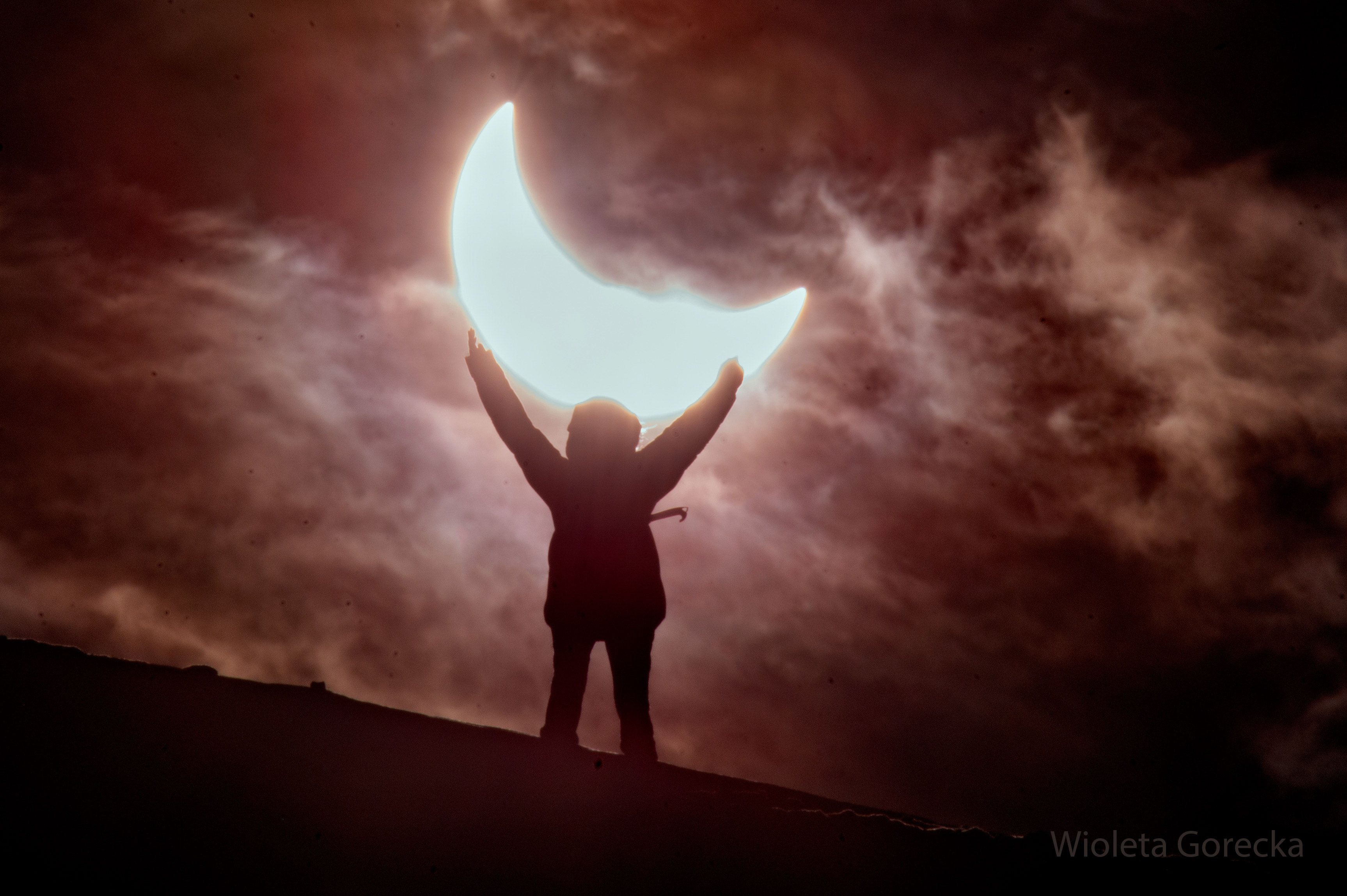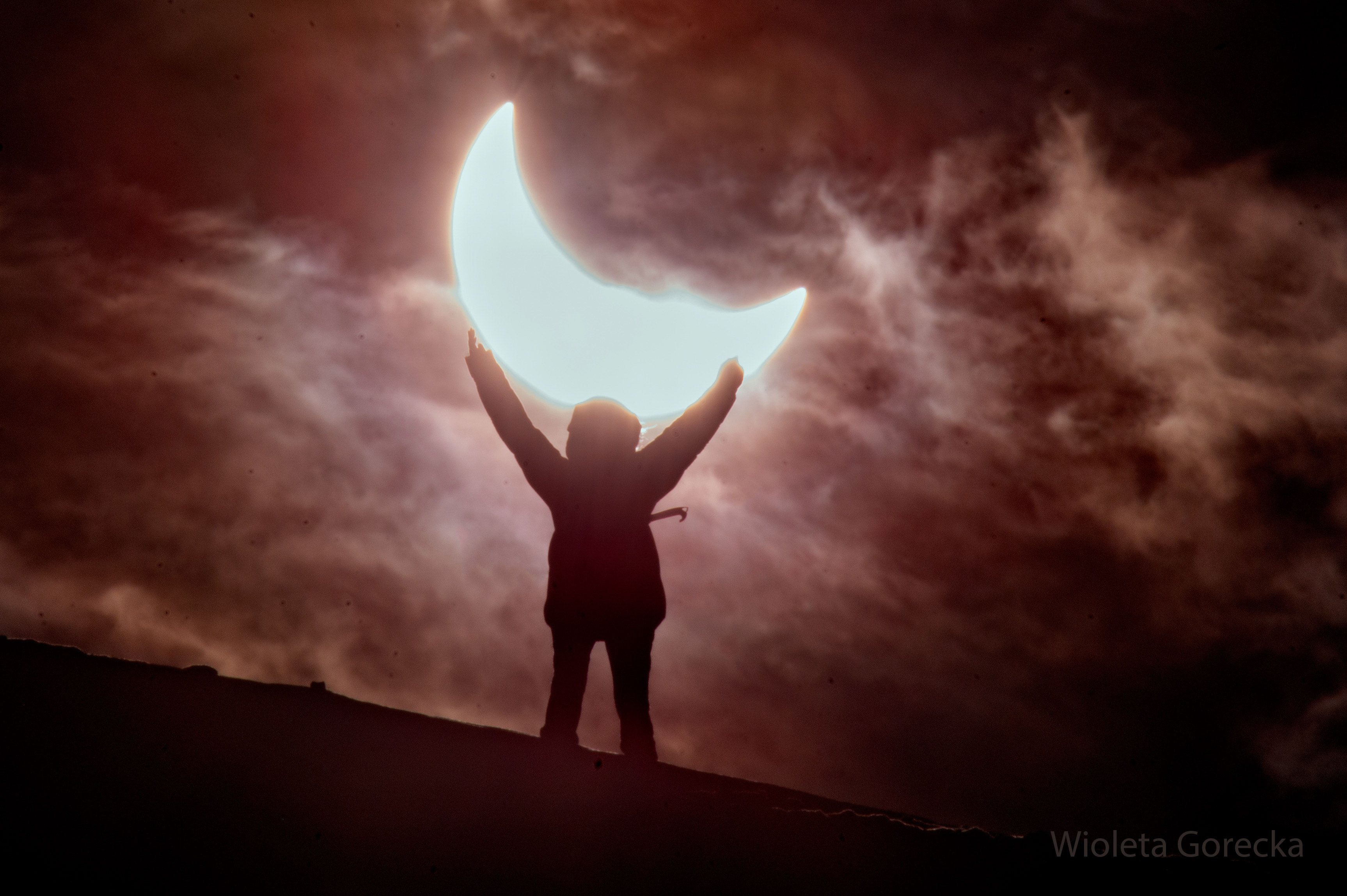
What if the Sun and Moon rose together? That happened yesterday over some northern parts of planet Earth as a partial solar eclipse occurred shortly after sunrise. Regions that experienced the Moon blocking part of the Sun included northeastern parts of North America and northwestern parts of Europe, Asia, and Africa. The featured image was captured yesterday over the Grábrók volcanic crater in Iceland where much of the Sun became momentarily hidden behind the Moon. The image was taken through a cloudy sky but so well planned that the photographer's friend appeared to be pulling the Sun out from behind the Moon. No part of the Earth experienced a total solar eclipse this time. In the distant past, some of humanity was so surprised when an eclipse occurred that ongoing battles suddenly stopped. Today, eclipses are not a surprise and are predicted with an accuracy of seconds. Growing Gallery: Partial Solar Eclipse of 2025 March
¿Qué pasaría si el Sol y la Luna se levantaran juntos? Eso ocurrió ayer sobre algunas partes del norte del planeta Tierra, cuando un eclipse solar parcial tuvo lugar poco después del amanecer. Las regiones en las que la Luna bloqueó parte del Sol incluyeron las zonas noreste de América del Norte y las zonas noroeste de Europa, Asia y África. La imagen destacada fue capturada ayer sobre el cráter volcánico Grábrók en Islandia, donde gran parte del Sol quedó momentáneamente oculta detrás de la Luna. La imagen fue tomada a través de un cielo nublado, pero tan bien planificada que la amiga del fotógrafo parecía estar sacando el Sol detrás de la Luna. Ninguna parte de la Tierra experimentó un eclipse solar total en esta ocasión. En el lejano pasado, algunas personas de la humanidad quedaron tan sorprendidas al ocurrir un eclipse que las batallas en curso se detuvieron repentinamente. Hoy en día, los eclipses no son una sorpresa y se predicen con una precisión de segundos.