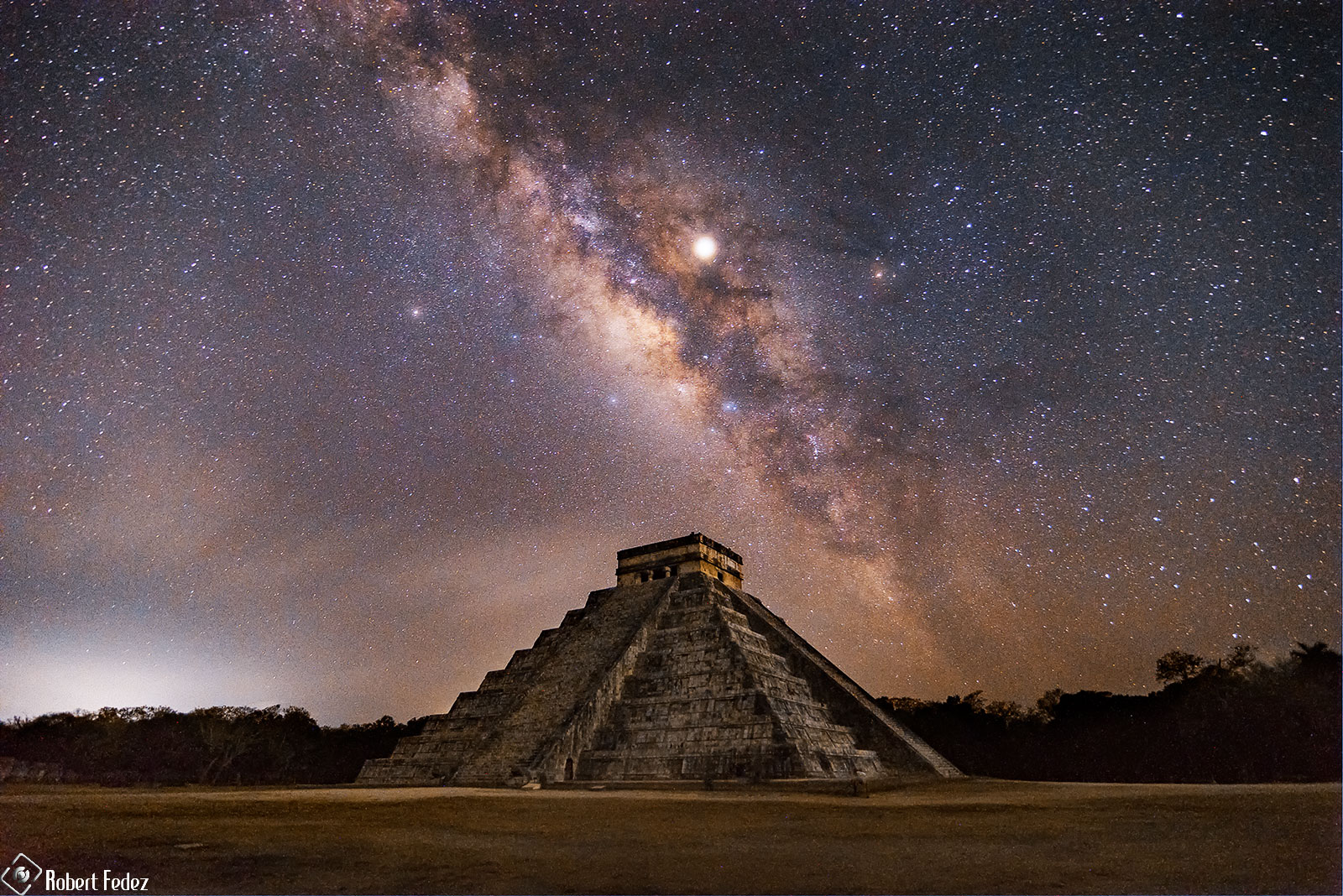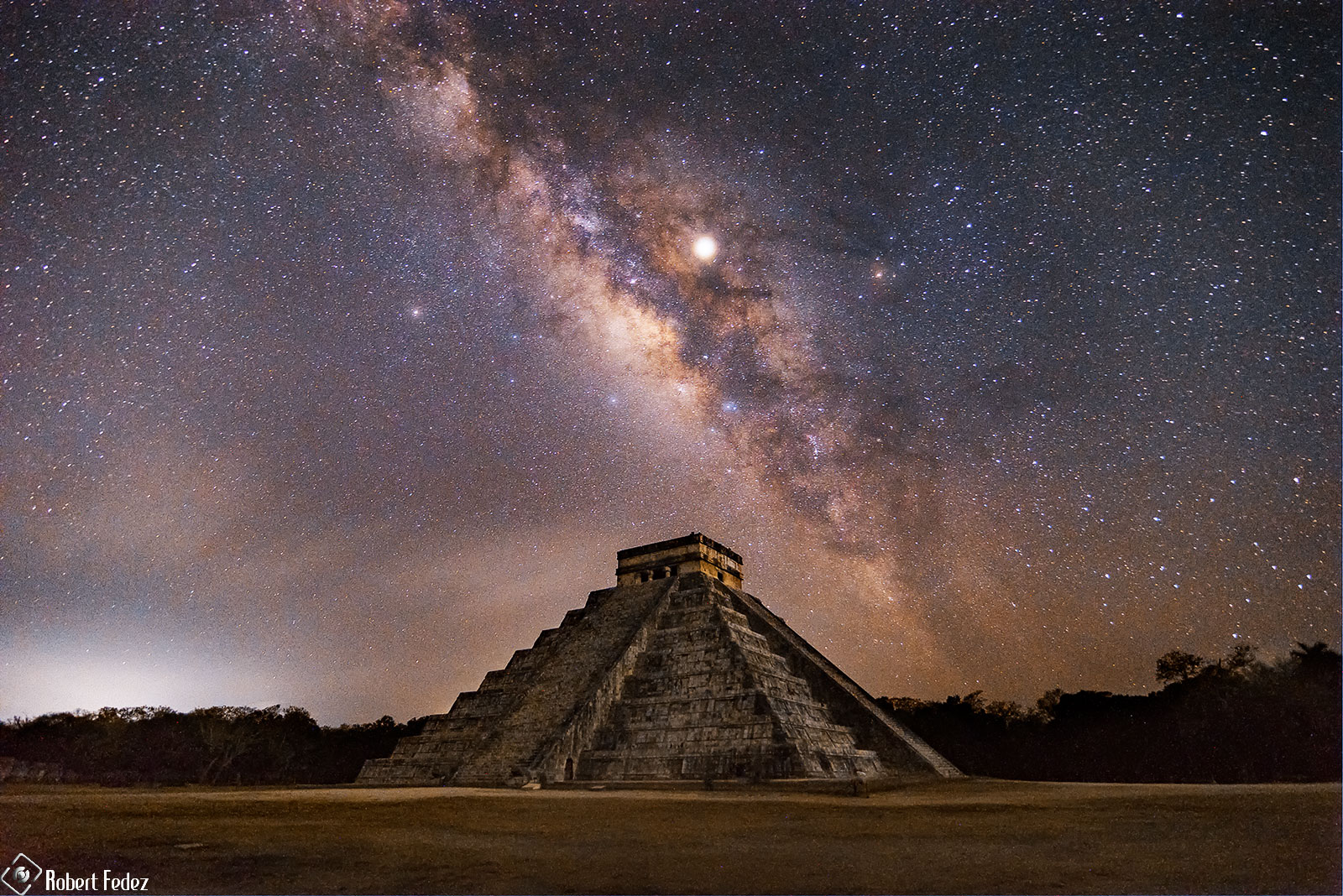
To see the feathered serpent descend the Mayan pyramid requires exquisite timing. You must visit El Castillo -- in Mexico's Yucatán Peninsula -- near an equinox. Then, during the late afternoon if the sky is clear, the pyramid's own shadows create triangles that merge into the famous illusion of a slithering viper. Also known as the Temple of Kukulkan, the impressive step-pyramid stands 30 meters tall and 55 meters wide at the base. Built up as a series of square terraces by the pre-Columbian civilization between the 9th and 12th century, the structure can be used as a calendar and is noted for astronomical alignments. The featured composite image was captured in 2019 with Jupiter and Saturn straddling the diagonal central band of our Milky Way galaxy. In a few days another equinox will occur -- not only at Temple of Kukulcán, but all over planet Earth.
Para ver a la serpiente emplumada descender por la pirámide maya se requiere un timing exquisito. Debes visitar El Castillo, en la península de Yucatán en México, cerca de un equinoccio. Luego, durante la tarde tardía si el cielo está despejado, las sombras propias de la pirámide forman triángulos que se fusionan en la famosa ilusión óptica de una víbora reptante. También conocida como el Templo de Kukulcán, la impresionante pirámide escalonada tiene 30 metros de altura y 55 metros de ancho en la base. Construida como una serie de terrazas cuadradas por la civilización precolombina entre los siglos IX y XII, la estructura puede usarse como un calendario y es conocida por sus alineaciones astronómicas. La imagen compuesta destacada fue capturada en 2019 con Júpiter y Saturno flanqueando la banda diagonal central de nuestra galaxia, la Vía Láctea. En unos días ocurrirá otro equinoccio — no solo en el Templo de Kukulcán, sino en toda la Tierra.