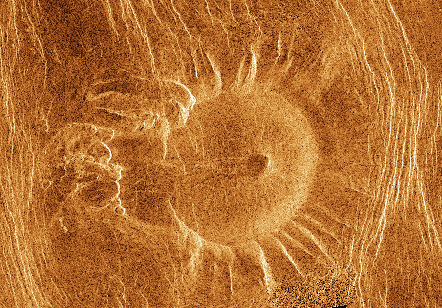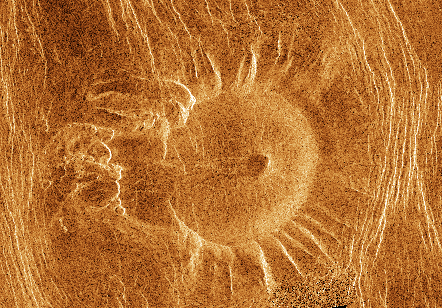
August 23, 1995 A Venusian Tick Credit: NASA, Magellan Project Explanation: Data from the Magellan spacecraft has shown the Face of Venus to contain a host of volcanic features. This image shows an example of a fairly common type of venusian volcanic feature. Known as a "tick" it represents a volcano about 20 miles wide at the summit with ridges and valleys radiating down its sides lending it an insect like appearance. Scientists are particularly interested in exploring the geology of Venus. Because of its similarity with the Earth in size, density, and overall location in the solar system, Venus may offer key insights into the workings of our own planet. Do the familiar processes of volcanism and plate tectonics occur on our sister planet as well as our own? The detailed radar mapping of the planet performed by the Magellan probe has gone a long way toward answering this question.
23 de agosto de 1995 Una Garrapata Venusina Crédito: NASA, Proyecto Magellan Explicación: Los datos de la nave espacial Magellan han mostrado que la Faz de Venus contiene una multitud de características volcánicas. Esta imagen muestra un ejemplo de un tipo bastante común de característica volcánica venusina. Conocida como "garrapata", representa un volcán de aproximadamente 20 millas de ancho en la cumbre con crestas y valles que se irradian por sus lados, dándole una apariencia similar a un insecto. Los científicos están particularmente interesados en explorar la geología de Venus. Debido a su similitud con la Tierra en tamaño, densidad y ubicación general en el sistema solar, Venus puede ofrecer conocimientos clave sobre el funcionamiento de nuestro propio planeta. ¿Ocurren en nuestro planeta hermano los procesos familiares de vulcanismo y tectónica de placas así como en el nuestro? El mapeo detallado por radar del planeta realizado por la sonda Magellan ha contribuido en gran medida a responder esta pregunta.