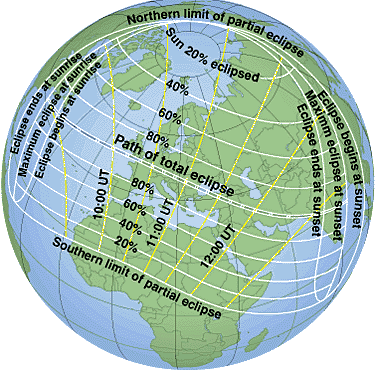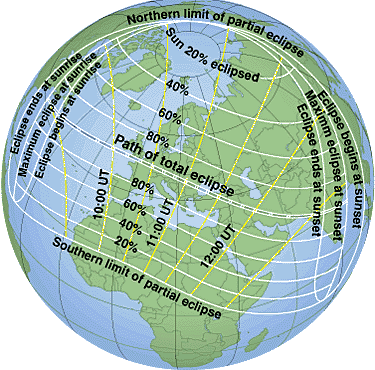
The last total solar eclipse of this millennium will be visible for a few minutes tomorrow from a narrow path in Europe and Asia. There, millions of sightseers will witness the Moon move directly between the Earth and Sun, covering up the Sun completely. Observers not besieged by clouds may get to see the Sun's large and flowing corona first hand. A partial eclipse of the Sun, where part of the Sun is still visible, can be witnessed throughout the rest of Europe and much of Northern Africa and Asia. Precise locations of total and partial eclipse are shown on the above map. In modern times, eclipses are precisely predicted and well understood. In fact, anyone can see this total solar eclipse live on the web. In ancient times, though, eclipses frequently startled large populations, who interpreted them in ways that changed the course of wars and empires.
El último eclipse solar total de este milenio será visible durante unos pocos minutos mañana desde una estrecha franja en Europa y Asia. Allí, millones de observadores serán testigos de cómo la Luna se interpone directamente entre la Tierra y el Sol, cubriéndolo por completo. Los observadores que no se vean obstaculizados por las nubes podrán contemplar en persona la extensa y dinámica corona solar. Un eclipse parcial del Sol, donde parte del astro rey permanece visible, podrá observarse en el resto de Europa y gran parte del norte de África y Asia. Las ubicaciones precisas del eclipse total y parcial se muestran en el mapa anterior. En la era moderna, los eclipses se predicen con exactitud y se comprenden perfectamente. De hecho, cualquier persona puede ver este eclipse solar total en directo a través de internet. En la antigüedad, sin embargo, los eclipses solían causar gran conmoción entre las poblaciones, quienes los interpretaban de maneras que llegaron a cambiar el curso de guerras e imperios.