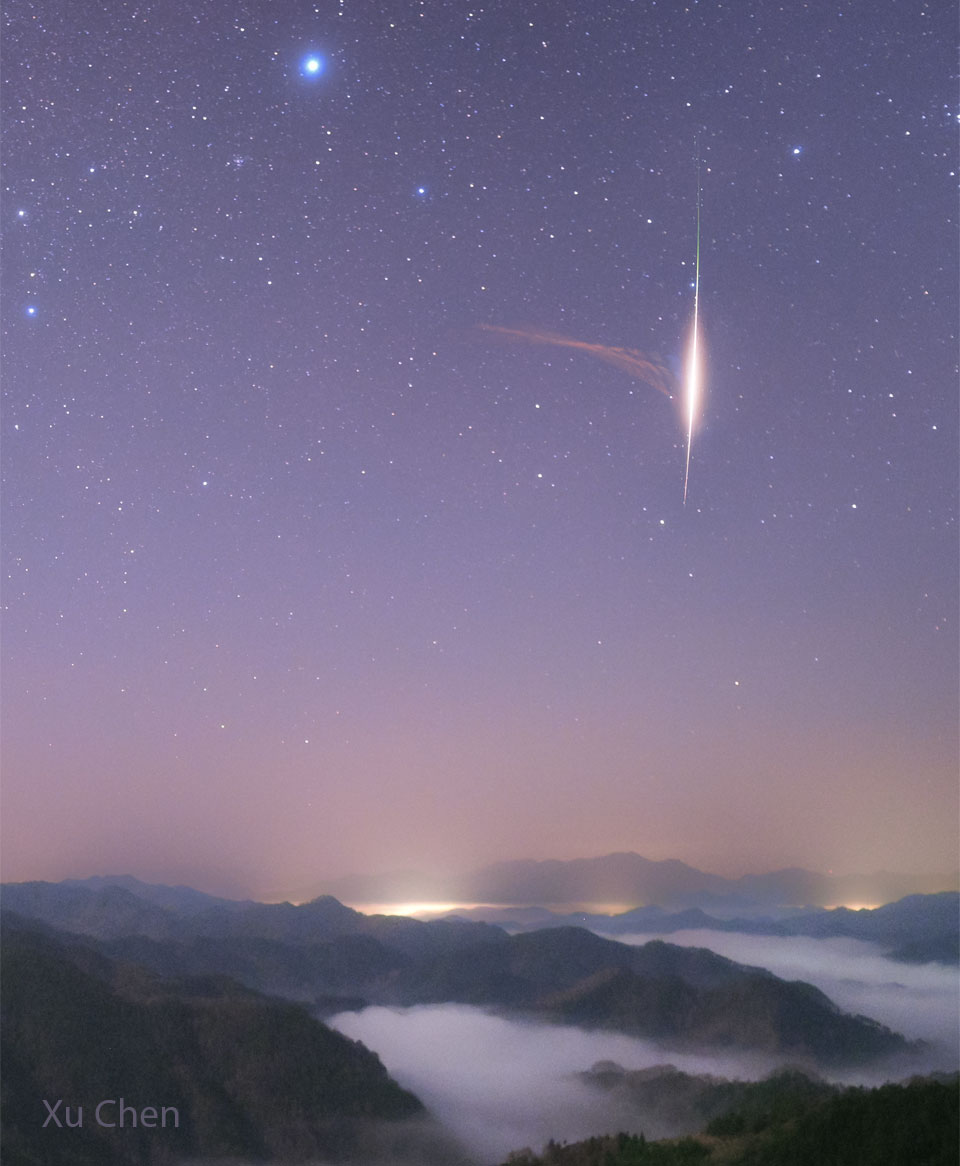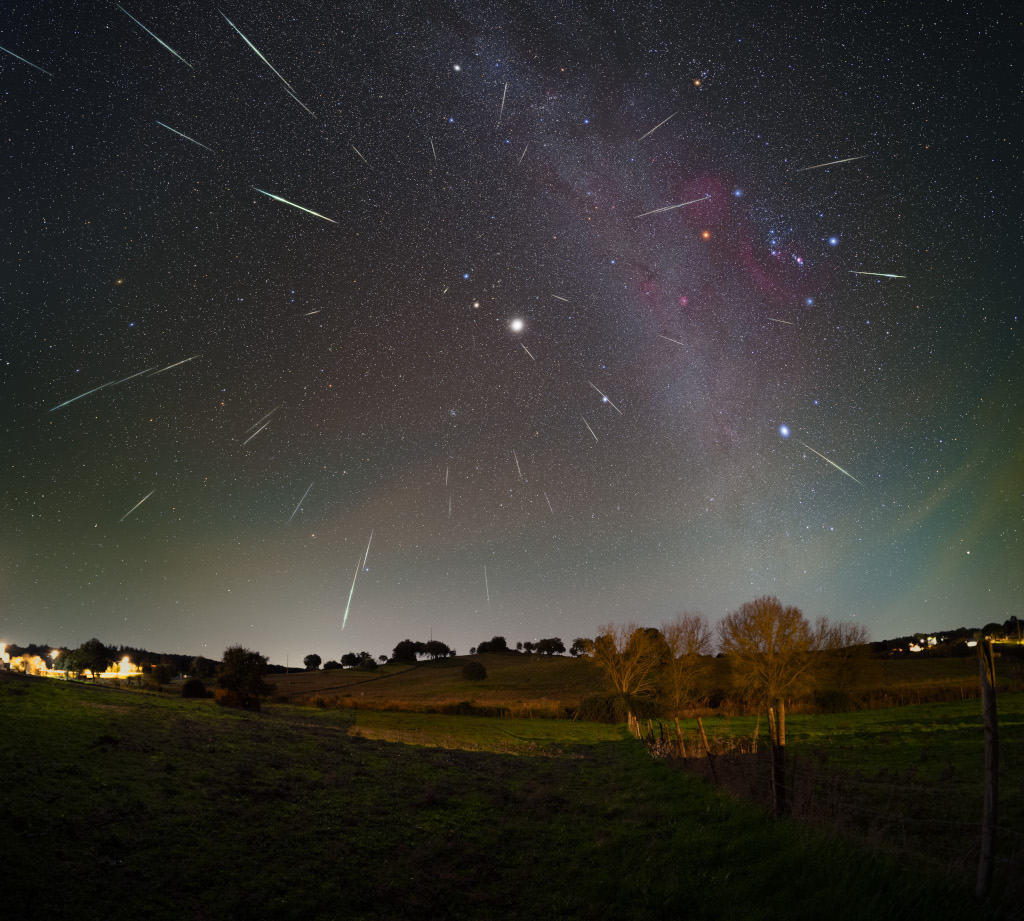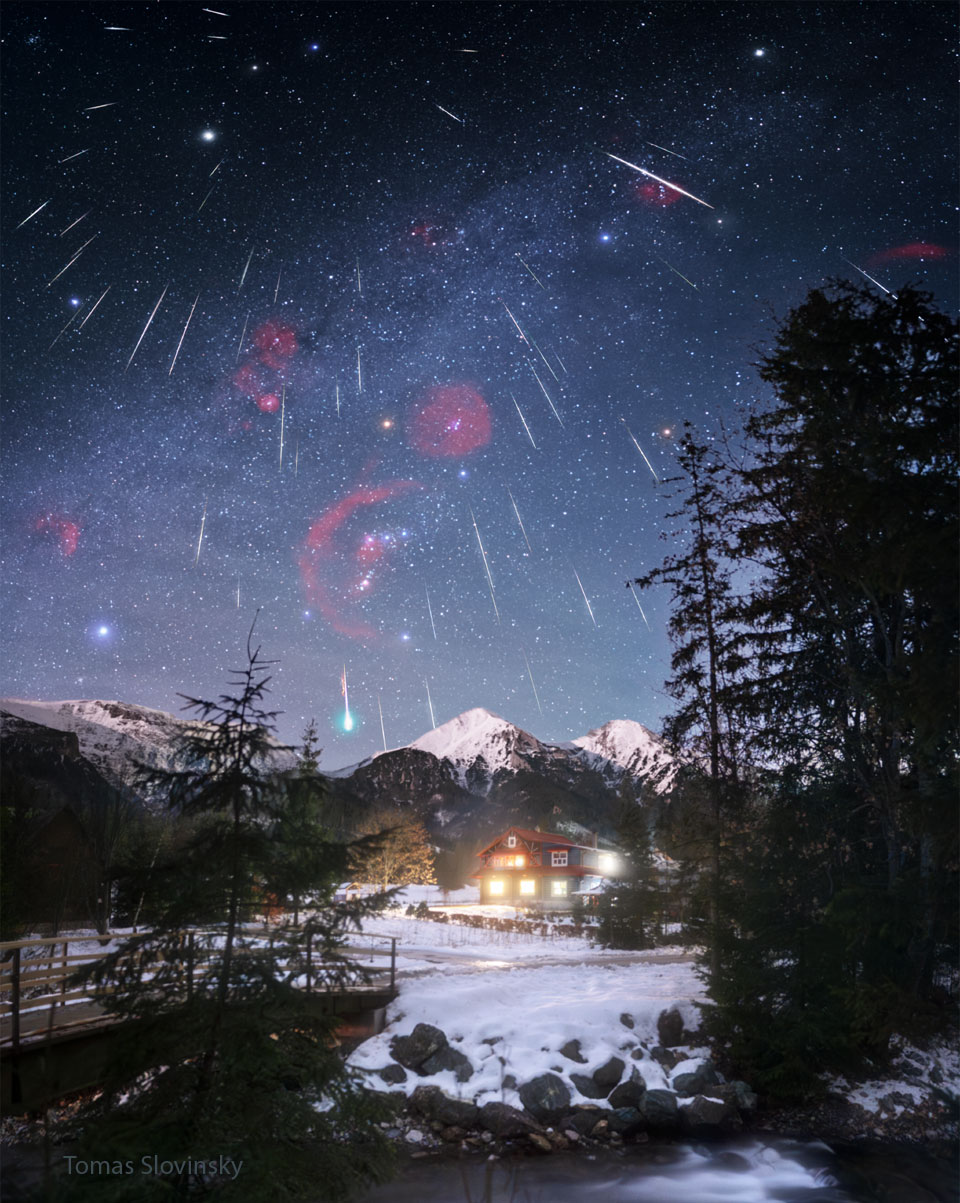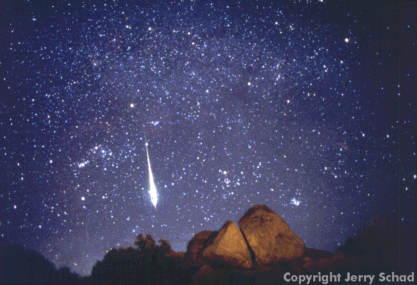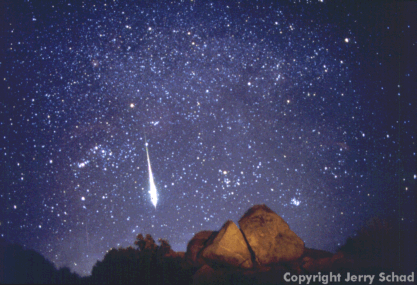
Meteors will be flashing across your skies over the next two nights. Specifically, the Perseid Meteor Shower should be at its best just before each morning's dawn. Observers at dark locations might see as much as a meteor a minute. Perseid meteors are bits of dirt that blew off Comet Swift-Tuttle and that burn up as they fall to Earth. Exciting expectations of a new filament in the Perseids might be tested this year. Pictured above is a meteor from the most active meteor shower of last year: the Leonids. Pictured above, a Leonid meteor was caught in November outshining even the brightest stars over the Anza-Borrego Desert in California. The Leonids will peak again this November and might provide an ever better show.
Durante las próximas dos noches, meteoros cruzarán velozmente los cielos. En particular, la lluvia de meteoros de las Perseidas debería alcanzar su máximo esplendor justo antes del amanecer de cada mañana. Los observadores en lugares oscuros podrían llegar a ver hasta un meteoro por minuto. Los meteoros de las Perseidas son fragmentos de polvo desprendidos del cometa Swift-Tuttle que se incendian al caer hacia la Tierra. Este año podrían ponerse a prueba las expectativas sobre la aparición de un nuevo filamento en las Perseidas. En la imagen se muestra un meteoro de la lluvia de meteoros más activa del año pasado: las Leónidas. Este meteoro leonida fue captado en noviembre superando en brillo incluso a las estrellas más luminosas sobre el desierto de Anza-Borrego, en California. Las Leónidas volverán a alcanzar su máximo este noviembre y podrían ofrecer un espectáculo aún más impresionante.