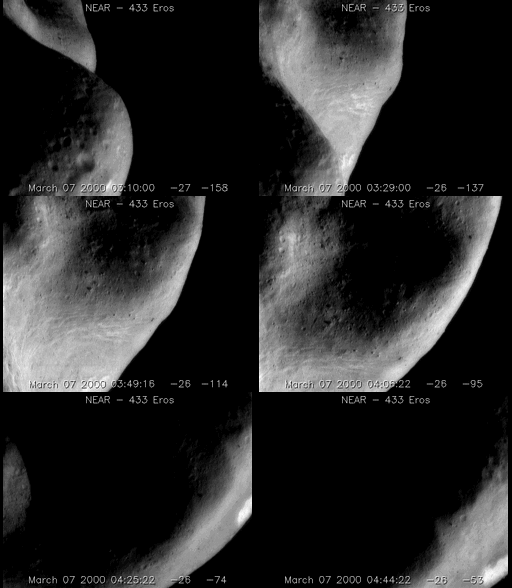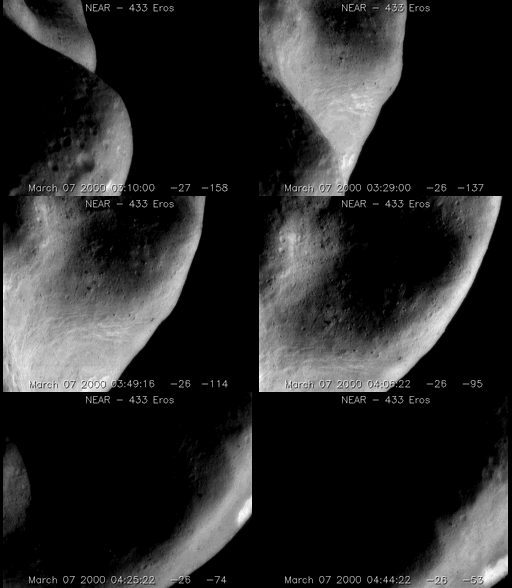
What would it look like to fly over an asteroid? Spacecraft NEAR Shoemaker in orbit around asteroid 433 Eros found out earlier this month when it recorded its first fly-over sequence. The saddle region of the Sun-orbiting space-mountain appears to zip past the camera in this condensed hour-long time-lapse sequence. The spacecraft was orbiting about 200 kilometers above the asteroid. Movies such as this are scientifically useful for discerning between regions that are naturally dark and regions that have their brightness dominated by shadows. The week before, a bright X-ray burst from the Sun allowed NEAR's X-ray spectrometer to detect the presence of several elements on Eros' surface by their X-ray fluorescent signatures.
¿Cómo se vería sobrevolar un asteroide? La nave espacial NEAR Shoemaker, en órbita alrededor del asteroide 433 Eros, lo descubrió a principios de este mes cuando registró su primera secuencia de sobrevuelo. La región en forma de silla de montar de esta montaña espacial en órbita alrededor del Sol parece desfilar velozmente frente a la cámara en esta condensada secuencia de lapso de tiempo de una hora. La nave espacial orbitaba a unos 200 kilómetros sobre el asteroide. Películas como esta son científicamente útiles para distinguir entre regiones que son naturalmente oscuras y regiones cuyo brillo está dominado por las sombras. La semana anterior, un intenso destello de rayos X proveniente del Sol permitió al espectrómetro de rayos X de NEAR detectar la presencia de varios elementos en la superficie de Eros mediante sus firmas de fluorescencia de rayos X.