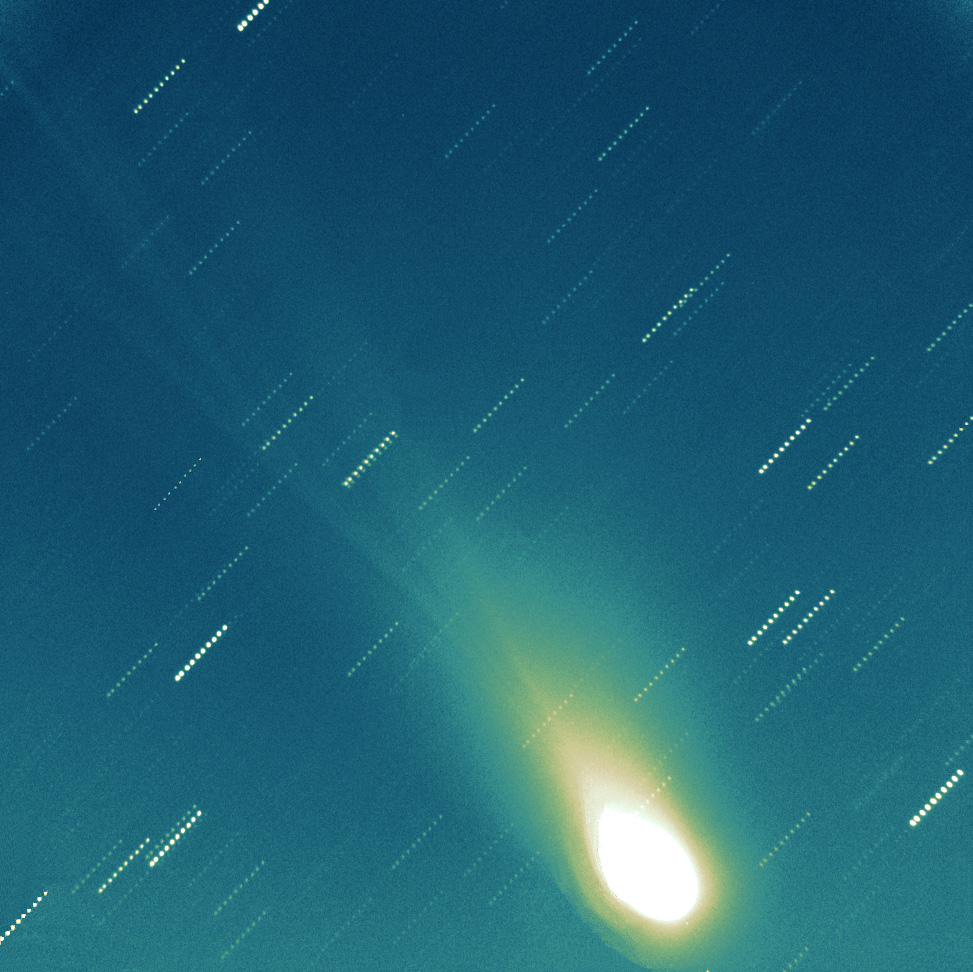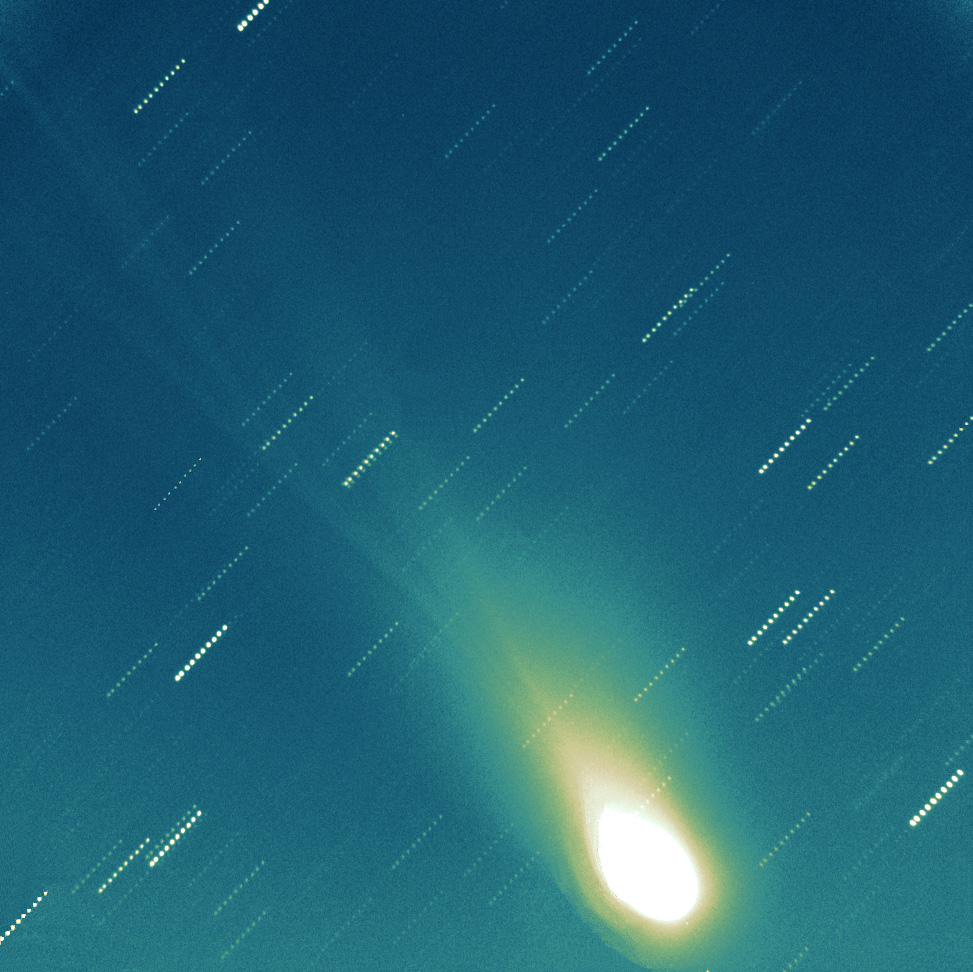
Comet C/1999 S4 LINEAR is only one of many comets discovered with the Lincoln Near Earth Asteroid Research (LINEAR) telescope operating near Soccoro, New Mexico, USA. Traveling steadily southward through Earth's night sky, C/1999 S4 passed perihelion (closest approach to the Sun) yesterday on what is likely its first trip through the inner solar system. Now fading, comet LINEAR became no brighter than about 6th magnitude, but is still easily visible with binoculars in northern hemisphere skies. While the memorable comets Hale-Bopp and Hyakutake were much brighter, comet LINEAR is displaying delightful tails evident in this false-color composite image from the Crni Vrh Observatory in Slovenia. The combined series of exposures made on July 22nd are registered on the comet. In the resulting picture, stars appear as rows of dots, but the faint structures in the comet's tail are beautifully recorded. Presently seen moving from Ursa Major to Leo this comet LINEAR will begin to shine in southern hemisphere skies in August.
El cometa C/1999 S4 LINEAR es solo uno de los muchos cometas descubiertos con el telescopio Lincoln Near Earth Asteroid Research (LINEAR), que opera cerca de Socorro, Nuevo México, EE. UU. Desplazándose de manera constante hacia el sur por el cielo nocturno de la Tierra, C/1999 S4 alcanzó el perihelio (el punto de máximo acercamiento al Sol) ayer, en lo que probablemente sea su primer viaje a través del sistema solar interior. Ahora en proceso de desvanecimiento, el cometa LINEAR no llegó a superar la magnitud 6, pero sigue siendo fácilmente visible con binoculares en los cielos del hemisferio norte. Si bien los memorables cometas Hale-Bopp y Hyakutake fueron mucho más brillantes, el cometa LINEAR muestra encantadoras colas que se aprecian en esta imagen compuesta en falso color obtenida desde el Observatorio Crni Vrh, en Eslovenia. La serie combinada de exposiciones realizadas el 22 de julio está registrada sobre el cometa. En la imagen resultante, las estrellas aparecen como hileras de puntos, pero las tenues estructuras en la cola del cometa quedan magníficamente registradas. Actualmente visible desplazándose desde Ursa Major hacia Leo, el cometa LINEAR comenzará a brillar en los cielos del hemisferio sur en agosto.