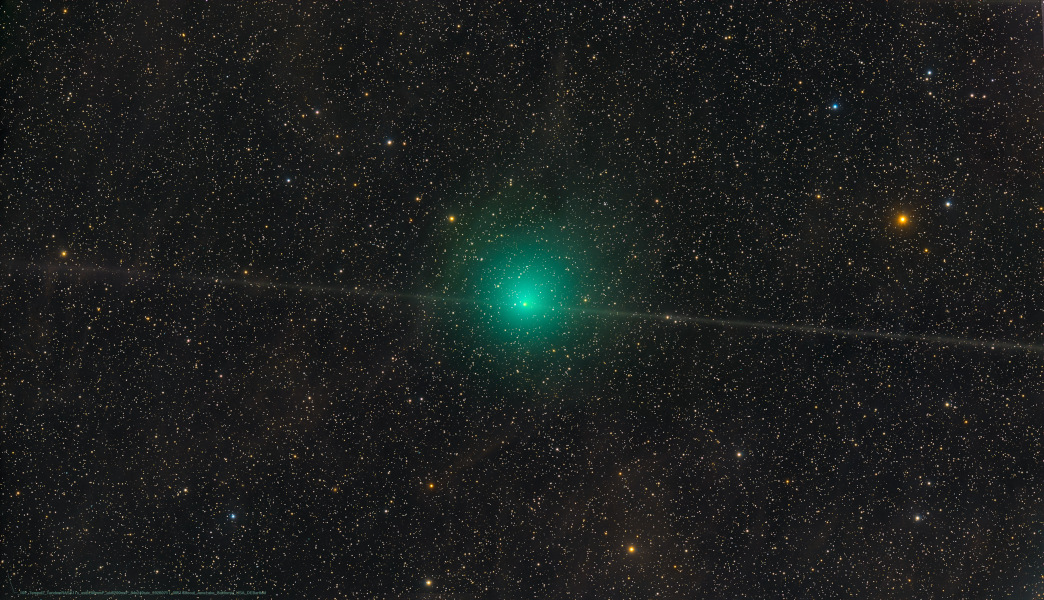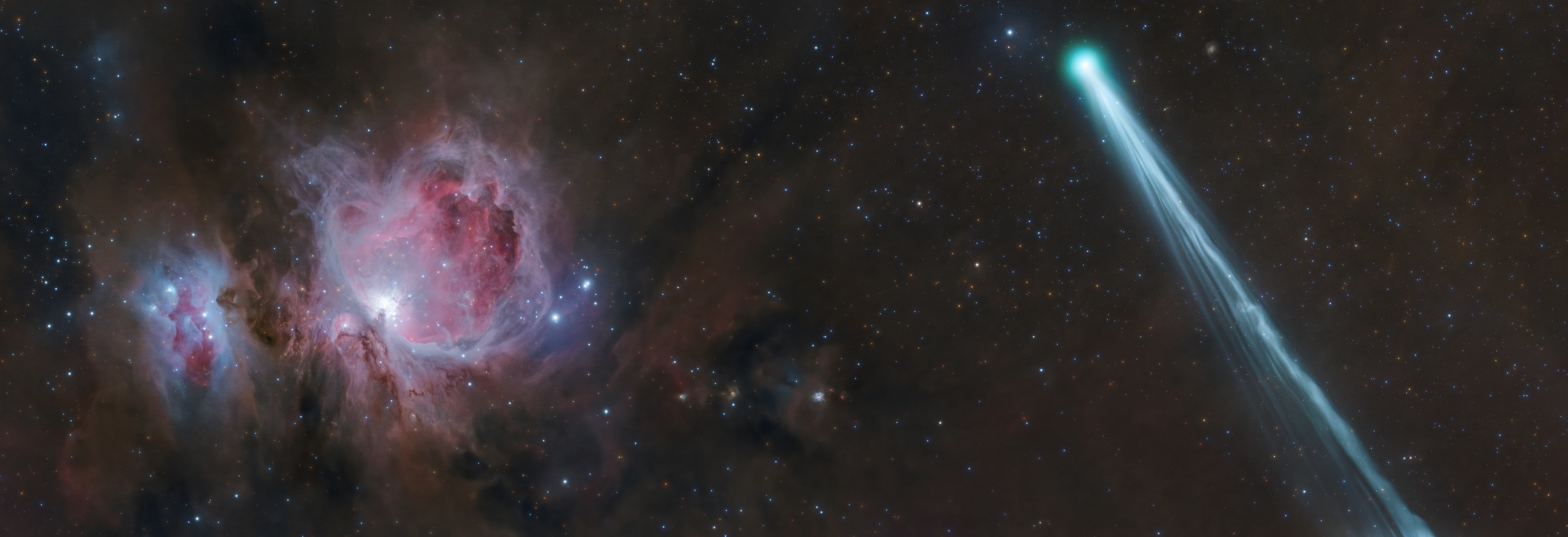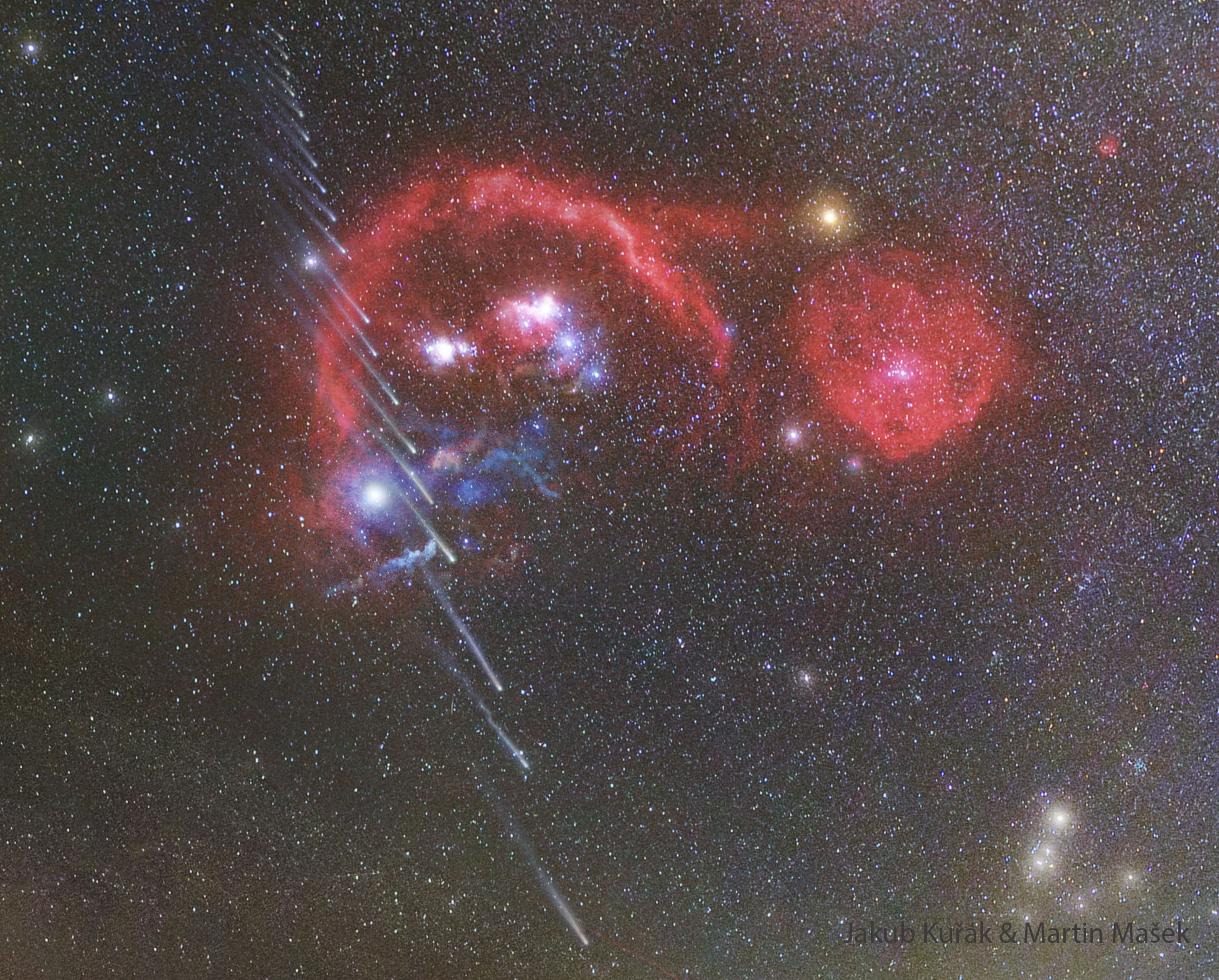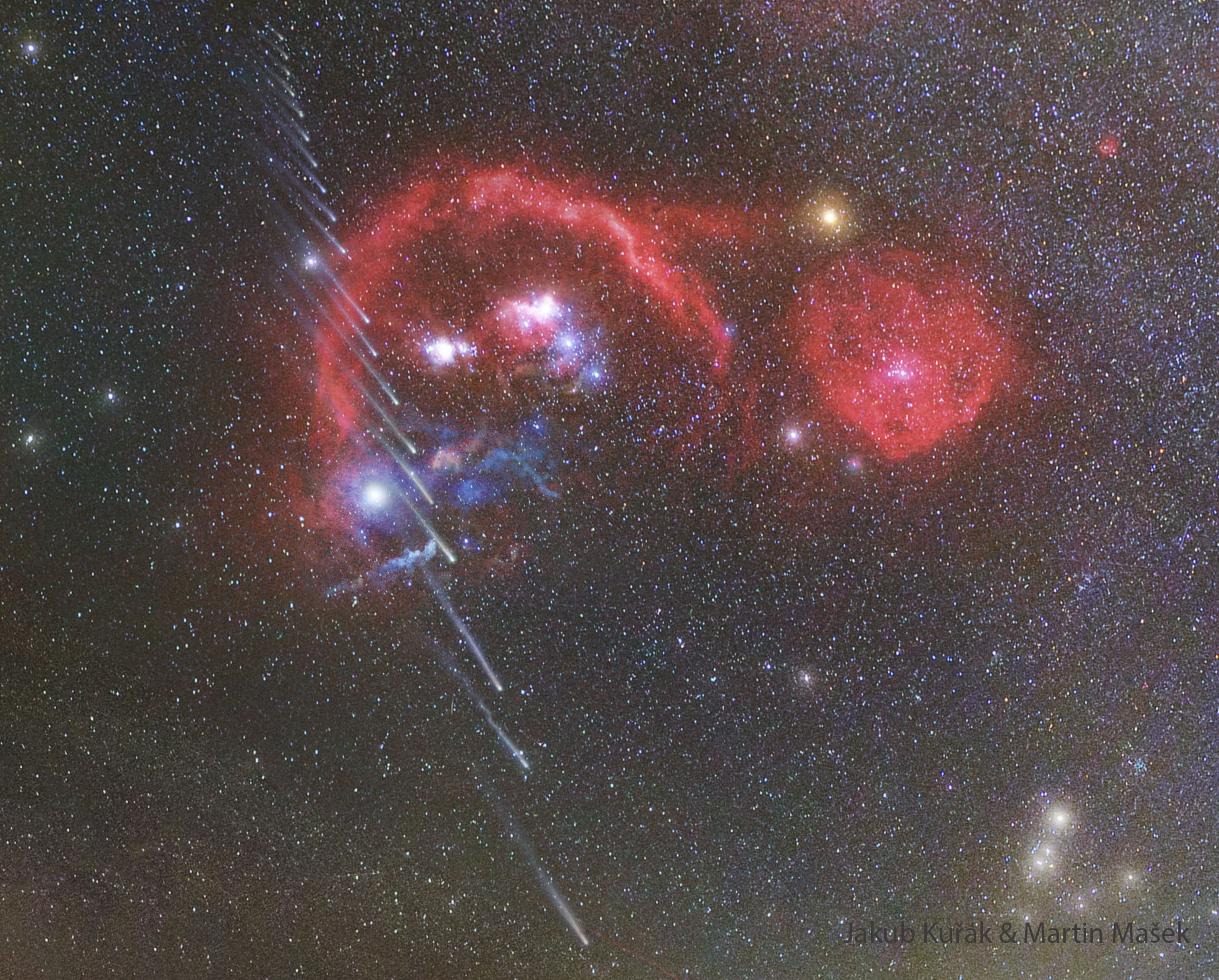
What happens to a comet as it leaves our inner Solar System? Now, the arrival of a comet into the inner Solar System is typically heralded with great fanfare and high hopes that the comet will become bright and photogenic. But on the way out, the comet's nucleus is less warmed by the Sun, less gas and dust are expelled, the bright coma around the nucleus shrinks and fades, and the tail length drops off. Many comets will then return to the outer Solar System and only return in hundreds or thousands of years. In contrast, some comets -- like Comet C/2025 R3 (PanSTARRS) -- receive a gravitational kick from the planets and so will never return. Pictured, Comet R3 PanSTARRs was imaged deeply many nights in early to mid-May near Cerro Paranal in Chile. Later images appear closer to the top and clearly show the shrinking ion tail. Comet R3 Gallery: Comet R3 PanSTARRS in 2026
¿Qué le ocurre a un cometa cuando abandona el Sistema Solar interior? La llegada de un cometa al Sistema Solar interior suele ser anunciada con gran expectación y la esperanza de que se vuelva brillante y fotogénico. Pero en su trayecto de salida, el núcleo del cometa recibe menos calor del Sol, se expulsan menos gases y polvo, la brillante coma que rodea al núcleo se contrae y se atenúa, y la longitud de la cola disminuye. Muchos cometas regresan entonces al Sistema Solar exterior y solo vuelven al interior en cientos o miles de años. En contraste, algunos cometas —como el Cometa C/2025 R3 (PanSTARRS)— reciben un impulso gravitacional de los planetas y, por lo tanto, no regresarán jamás. En la imagen, el Cometa R3 PanSTARRS fue fotografiado en largas exposiciones durante varias noches a principios y mediados de mayo, cerca de Cerro Paranal, en Chile. Las imágenes más recientes aparecen más cerca de la parte superior y muestran claramente la reducción progresiva de la cola iónica.