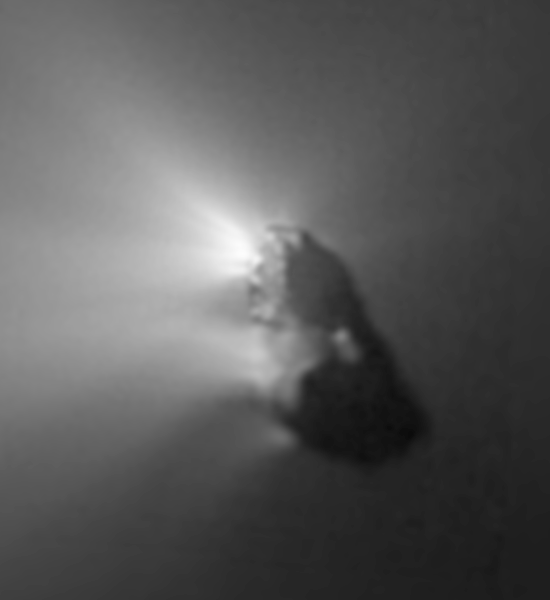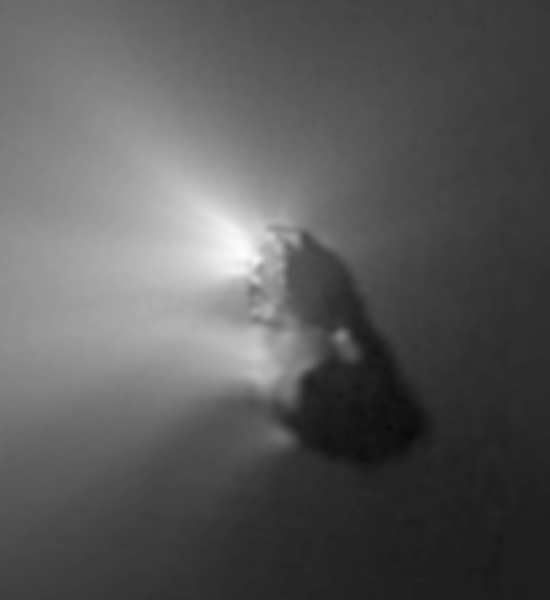
What does a comet nucleus look like? Formed from the primordial stuff of the solar system, it is thought to resemble a very dirty iceberg. But for active comets, telescopic images only reveal the surrounding cloud of gas and dust, the comet's coma, and the characteristic cometary tails. In 1986, the European spacecraft Giotto encountered the nucleus of Halley's comet as it approached the sun. Data from Giotto's camera was used to generate this enhanced image of the potato shaped nucleus which measures roughly 15 kilometers across. It shows surface features on the dark nucleus against the bright background of the coma as the icy material is vaporized by the Sun's heat. Every 76 years Comet Halley returns to the inner solar system and each time the nucleus sheds about a 6 meter deep layer of its ice and rock into space. This debris composes Halley's tails and leaves an orbiting trail responsible for the Orionids meteor shower.
¿Cómo es el núcleo de un cometa? Formado a partir de la materia primordial del sistema solar, se cree que se asemeja a un iceberg muy sucio. Sin embargo, en el caso de los cometas activos, las imágenes telescópicas solo revelan la nube circundante de gas y polvo —la coma del cometa— y las características colas cometarias. En 1986, la nave espacial europea Giotto se aproximó al núcleo del cometa Halley mientras este se acercaba al Sol. Los datos de la cámara de Giotto se utilizaron para generar esta imagen procesada del núcleo con forma de patata, que mide aproximadamente 15 kilómetros de diámetro. La imagen muestra rasgos superficiales del oscuro núcleo en contraste con el brillante fondo de la coma, mientras el material helado es vaporizado por el calor del Sol. Cada 76 años, el cometa Halley regresa al sistema solar interior y, en cada pasaje, el núcleo desprende hacia el espacio una capa de hielo y roca de unos 6 metros de profundidad. Este material forma las colas del cometa Halley y deja una estela en órbita responsable de la lluvia de meteoros de las Oriónidas.