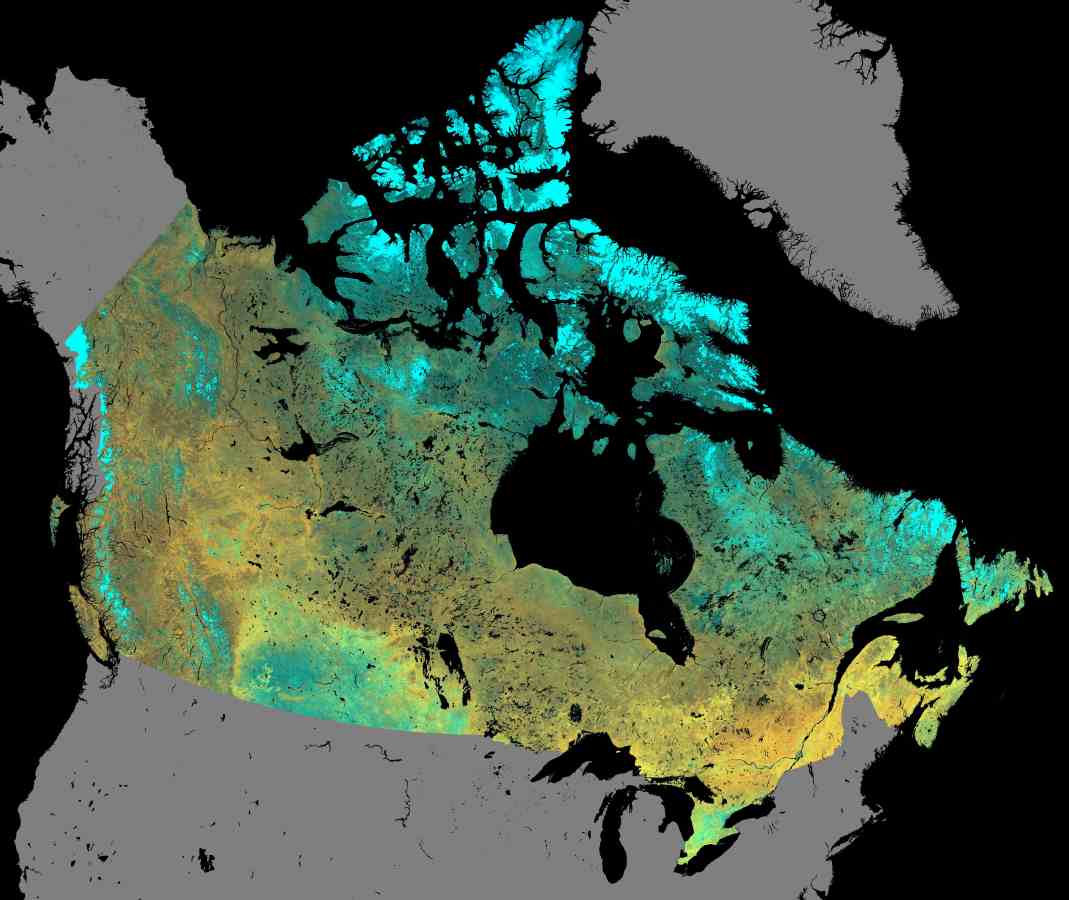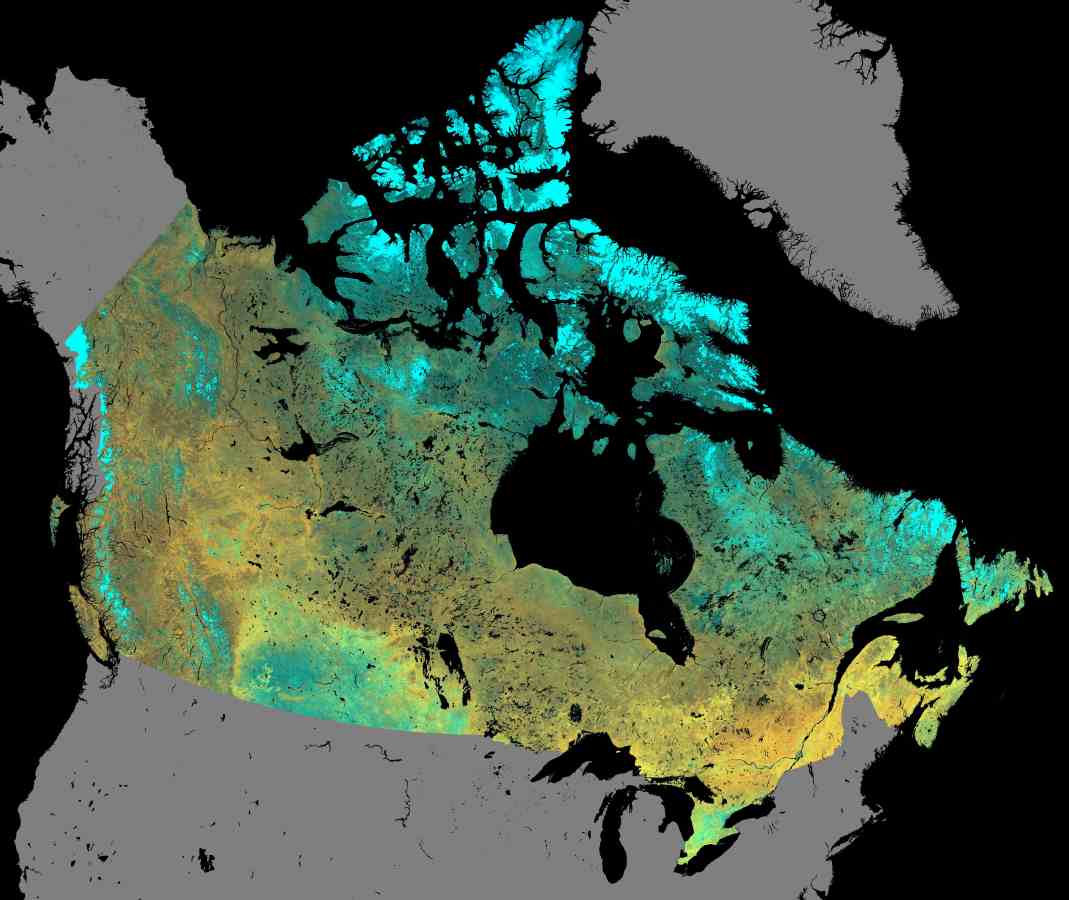
A magnetic compass does not point toward the true North Pole of the Earth. Rather, it more closely points toward the North Magnetic Pole of the Earth. The North Magnetic Pole is currently located in northern Canada. It wanders in an elliptical path each day, and moves, on the average, more than forty meters northward each day. Evidence indicates that the North Magnetic Pole has wandered over much of the Earth's surface in the 4.5 billion years since the Earth formed. The Earth's magnetic field is created by Earth's partially ionized outer core, which rotates more rapidly than the Earth's surface. Indicated in the above picture is Ellef Ringnes Island, the current location of Earth's North Magnetic Pole.
Una brújula magnética no apunta hacia el Polo Norte geográfico de la Tierra. En cambio, apunta aproximadamente hacia el Polo Magnético Norte terrestre. El Polo Magnético Norte se encuentra actualmente en el norte de Canadá. Cada día describe un recorrido en trayectoria elíptica y se desplaza, en promedio, más de cuarenta metros hacia el norte por día. Las evidencias indican que el Polo Magnético Norte ha vagado por gran parte de la superficie terrestre durante los 4.500 millones de años transcurridos desde la formación de la Tierra. El campo magnético terrestre es generado por el núcleo externo parcialmente ionizado de la Tierra, el cual rota más rápidamente que la superficie terrestre. En la imagen superior se indica la isla Ellef Ringnes, la ubicación actual del Polo Magnético Norte de la Tierra.