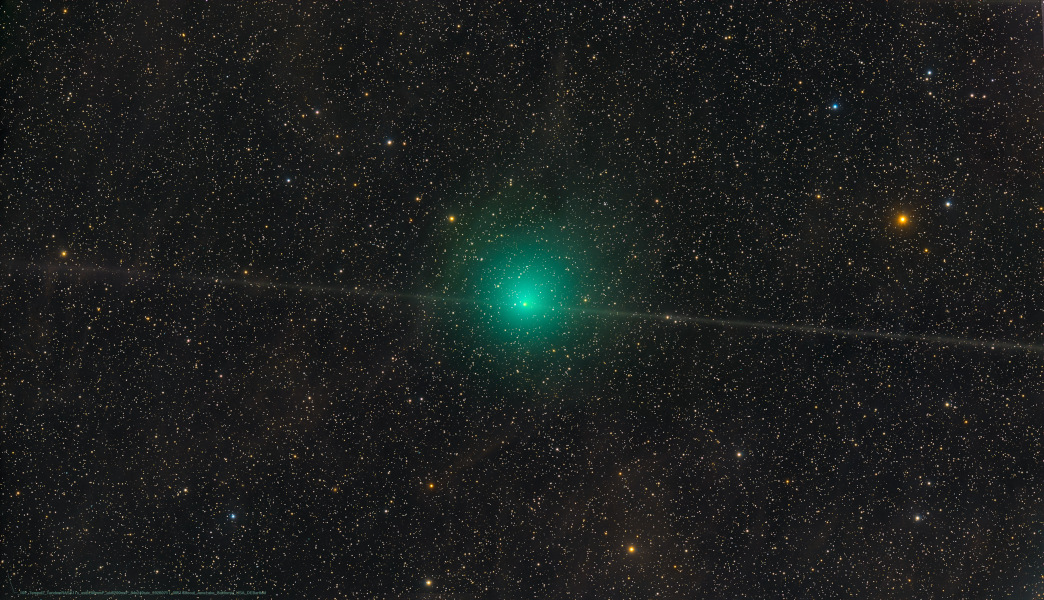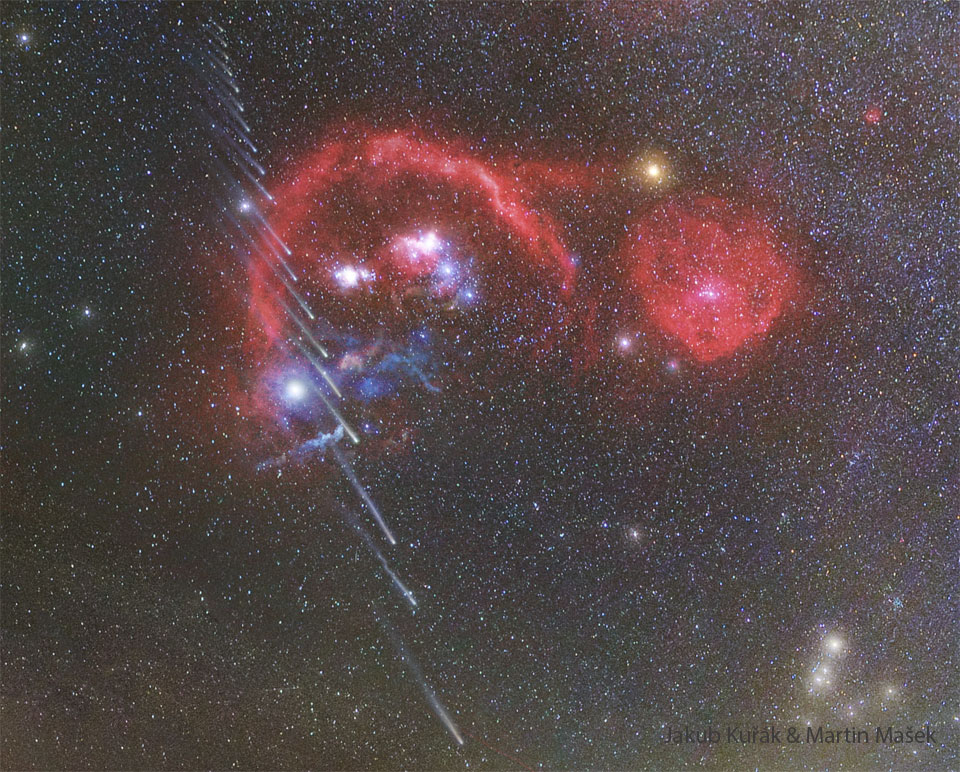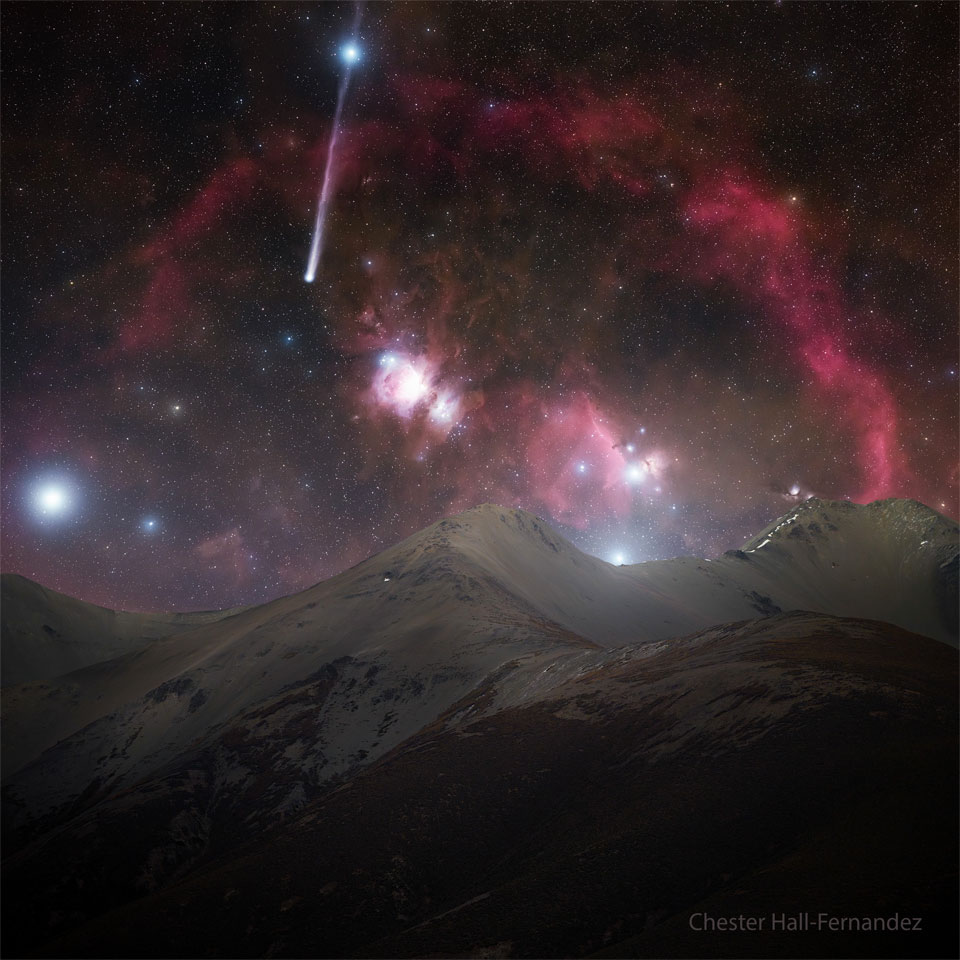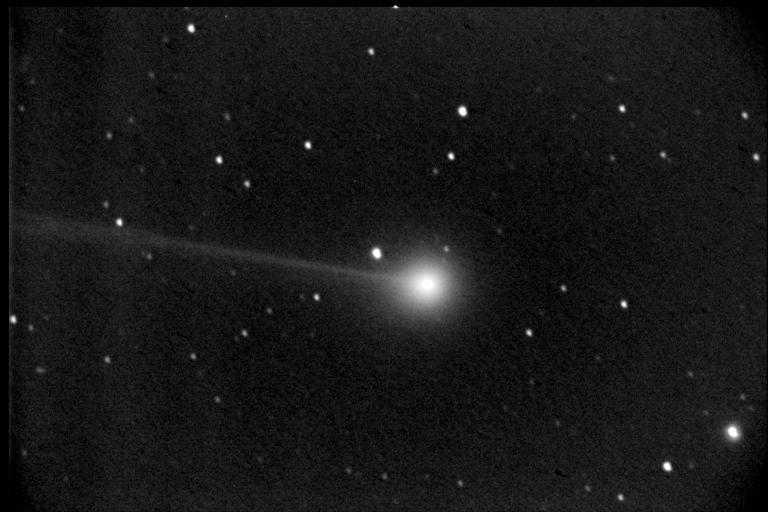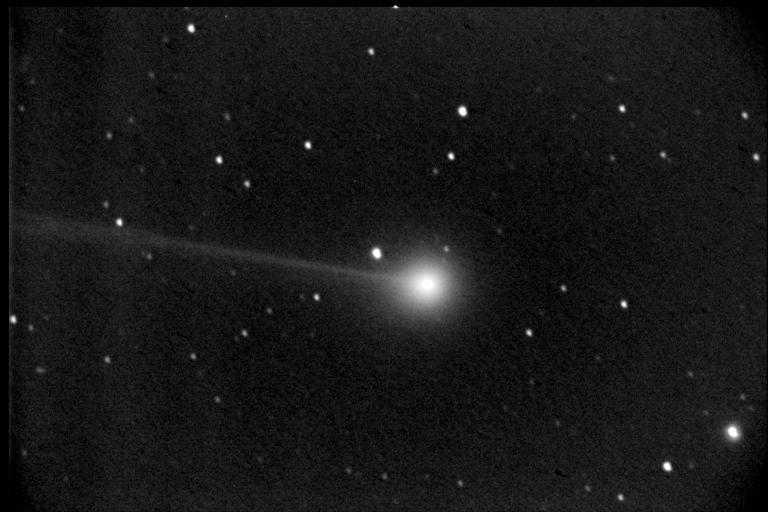
Comet Ikeya-Zhang is presently heading north in planet Earth's sky, framed by stars of the constellation Cetus. The comet was discovered as a faint, telescopic object near the western horizon on the evening of February 1st independently by Kaoru Ikeya of Shizuoka prefecture, Japan, Daqing Zhang in Henan province, China, and later by observer Paulo Raymundo of Salvador, Brazil. But Ikeya-Zhang is expected to brighten significantly and in March and April could become visible to the unaided eye. This picture, taken near Tucson, Arizona, USA on the evening of February 9th, covers a field a bit less than the width of the full moon showing the comet's condensed coma and narrow, developing tail. Ikeya-Zhang should pass closest to the Sun (perihelion) on March 18 at a point roughly midway between the orbits of Mercury and Venus. Based on preliminary calculations of this comet's orbit, Ikeya-Zhang is suspected of being a periodic comet, returning to the inner Solar System every 500 years or so. In fact, it is speculated that Ikeya-Zhang may be directly connected with a historic bright comet seen in 1532.
El cometa Ikeya-Zhang se dirige actualmente hacia el norte en el cielo del planeta Tierra, enmarcado por estrellas de la constelación de Cetus. El cometa fue descubierto como un objeto tenue y telescópico cerca del horizonte occidental la noche del 1 de febrero, independientemente por Kaoru Ikeya de la prefectura de Shizuoka, Japón, Daqing Zhang en la provincia de Henan, China, y posteriormente por el observador Paulo Raymundo de Salvador, Brasil. Se espera que el cometa Ikeya-Zhang brille significativamente y en marzo y abril podría llegar a ser visible a simple vista. Esta fotografía, tomada cerca de Tucson, Arizona, EE.UU., la noche del 9 de febrero, abarca un campo un poco menor que el ancho de la Luna llena, mostrando la coma condensada del cometa y su cola estrecha y en desarrollo. El cometa Ikeya-Zhang pasará más cerca del Sol (perihelio) el 18 de marzo en un punto aproximadamente a mitad de camino entre las órbitas de Mercurio y Venus. Basándose en cálculos preliminares de la órbita de este cometa, se sospecha que Ikeya-Zhang es un cometa periódico que regresa al interior del sistema solar aproximadamente cada 500 años. De hecho, se especula que Ikeya-Zhang puede estar directamente conectado con un cometa brillante histórico visto en 1532.