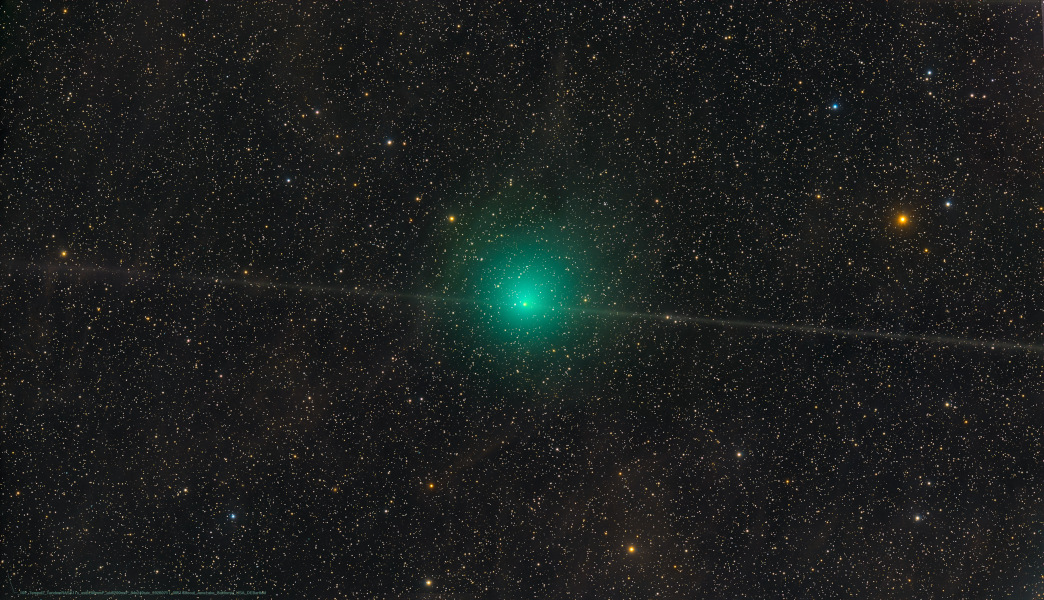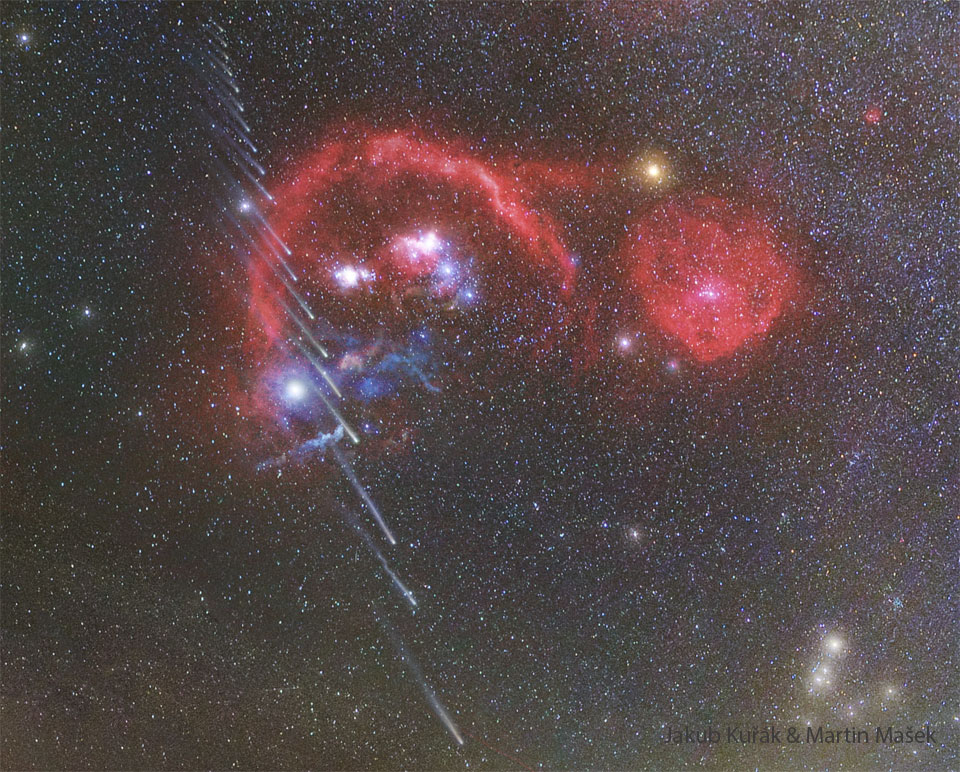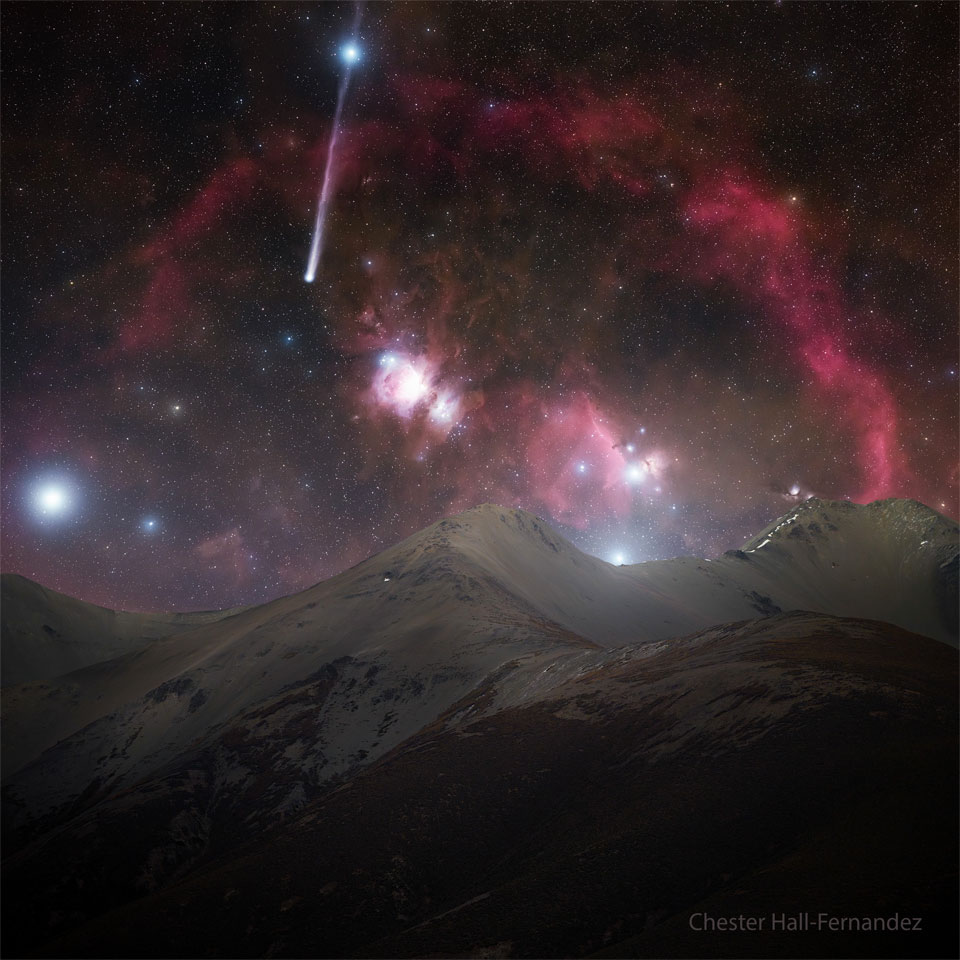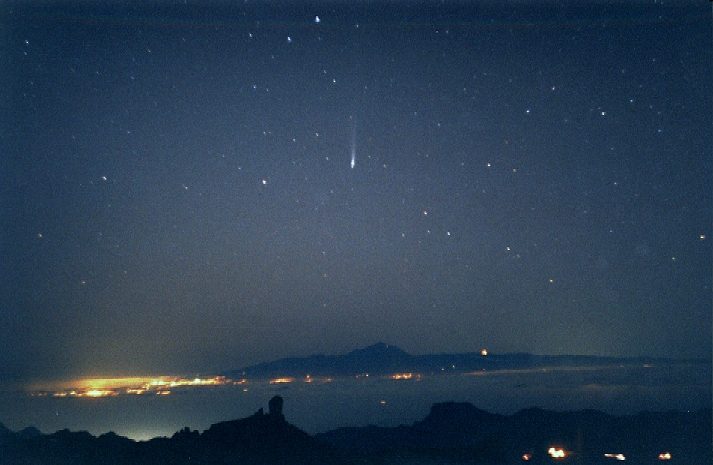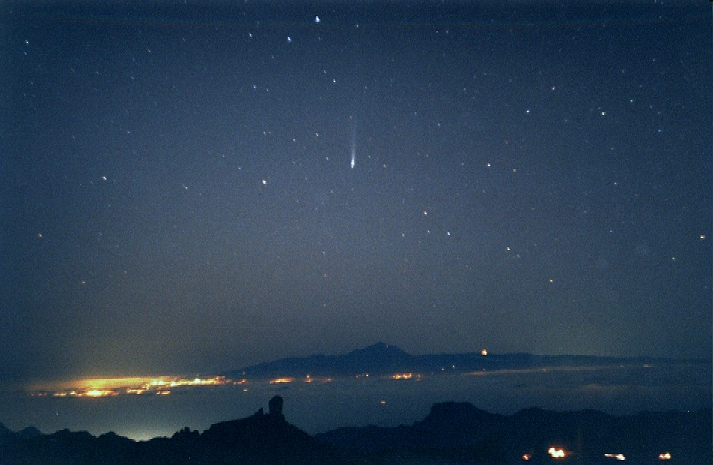
Comet Ikeya-Zhang has become bright enough to stand out in the night sky. Discovered February 1, the comet has now just rounded the Sun and has likely attained its peak brightness. The comet appears near the Sun and over the next week moves from the evening sky (just after sunset) to the morning sky (just before sunrise). Many observers report a current brightness approaching third magnitude. The comet is actually a giant snowball created during the early days of our Solar System and pushed out by the gravitational tugs by massive planets. Comet Ikeya-Zhang has been back to the inner Solar System at least once before in 1661. Above, the comet was photographed above Tenerife, one the Canary Islands, Spain.
El cometa Ikeya-Zhang se ha vuelto lo suficientemente brillante como para destacar en el cielo nocturno. Descubierto el 1 de febrero, el cometa acaba de rodear el Sol y probablemente ha alcanzado su brillo máximo. El cometa aparece cerca del Sol y durante la próxima semana se desplaza del cielo vespertino (justo después de la puesta de sol) al cielo matutino (justo antes de la salida de sol). Muchos observadores reportan un brillo actual cercano a la tercera magnitud. El cometa es en realidad una bola de nieve gigante creada durante los primeros días de nuestro Sistema Solar y expulsada por los tirones gravitacionales de planetas masivos. El cometa Ikeya-Zhang ha regresado al Sistema Solar interior al menos una vez antes, en 1661. En la imagen superior, el cometa fue fotografiado sobre Tenerife, una de las islas Canarias, España.