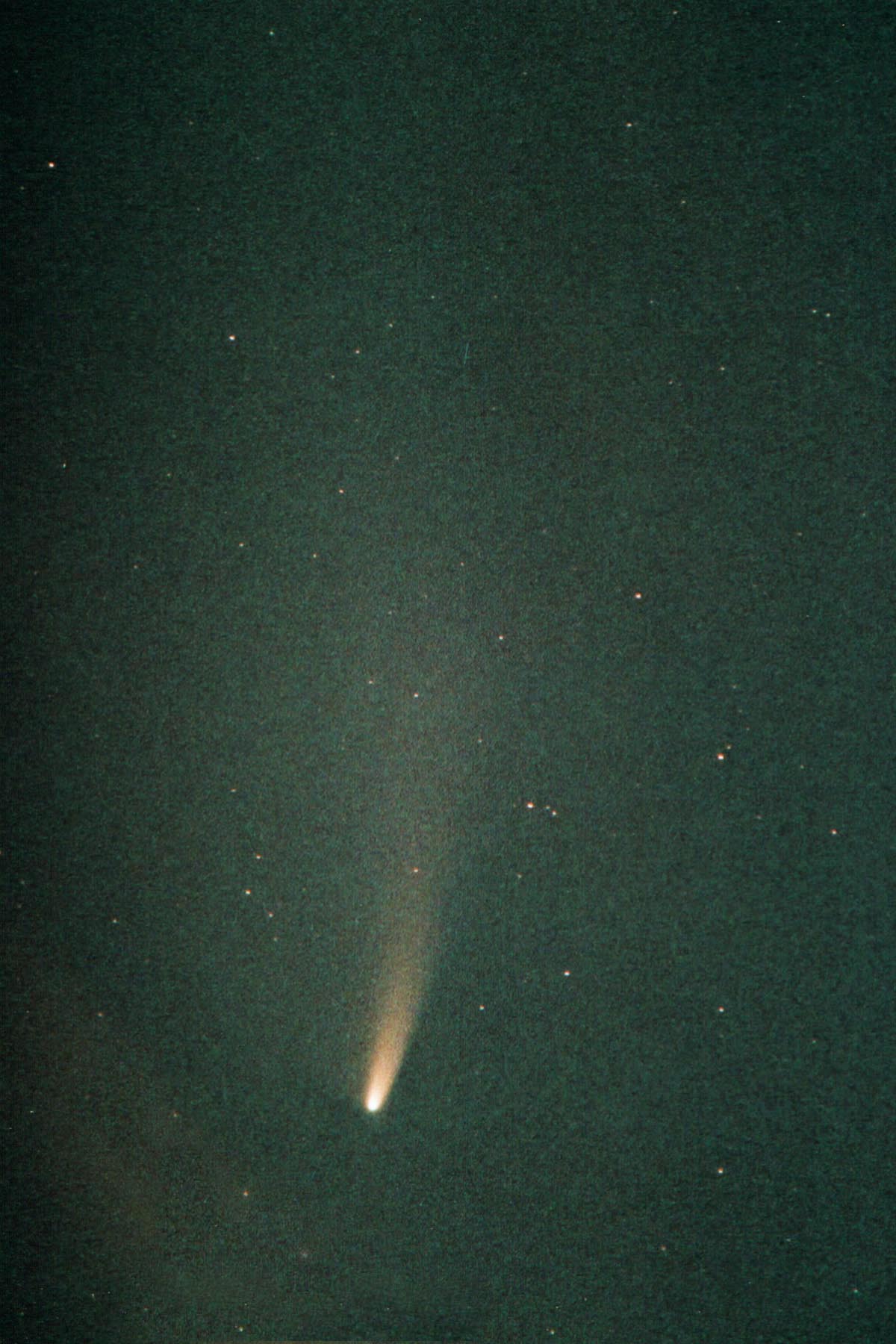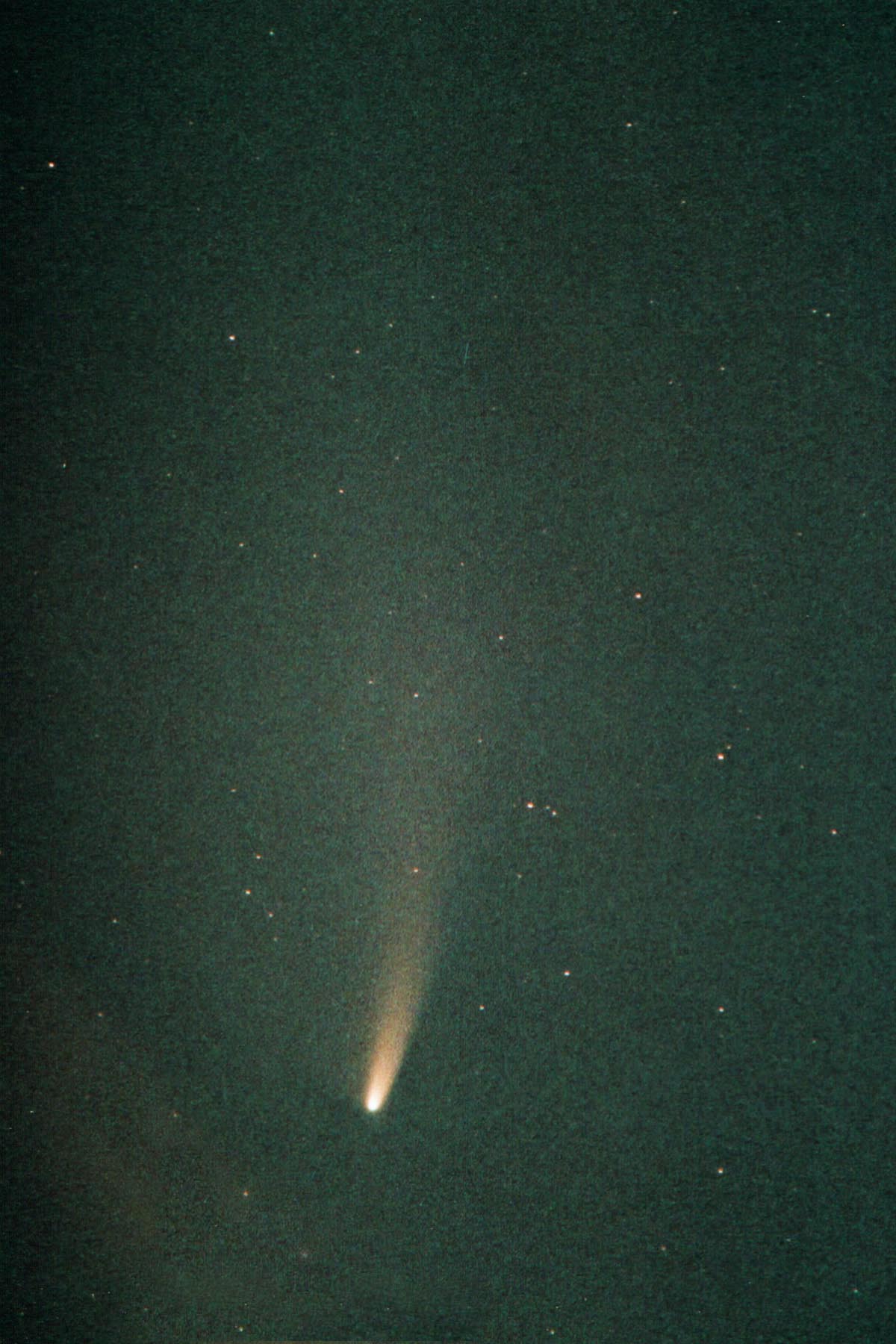
After last month's dramatic swoop past the Sun, Comet NEAT (C/2002 V1) appeared as a naked-eye comet, emerging from the evening twilight in planet Earth's southern skies. On March 1st, New Zealand photographer Noel Munford captured this telephoto view of the outbound comet close to the southwestern horizon against the faint stars of the constellation Sculptor. He reports that the picture is a good representation of the comet's visual appearance on that date and estimates the impressive tail to be five or six degrees long. Discovered last November as part of the Near-Earth Asteroid Tracking program, there was some speculation that this comet would not survive its close encounter with the Sun. However, Comet NEAT is now returning to the outer solar system, diving southward and fading fast.
Después de su dramático acercamiento al Sol el mes anterior, el Cometa NEAT (C/2002 V1) se convirtió en un cometa visible a simple vista, emergiendo del crepúsculo vespertino en los cielos australes del planeta Tierra. El 1 de marzo, el fotógrafo neozelandés Noel Munford capturó esta vista telefotográfica del cometa en su recorrido de salida cerca del horizonte suroeste, contra las débiles estrellas de la constelación de Escultor. Según reporta, la fotografía es una buena representación de la apariencia visual del cometa en esa fecha, y estima que la impresionante cola medía entre cinco o seis grados de largo. Descubierto en noviembre anterior como parte del programa de Rastreo de Asteroides Cercanos a la Tierra, hubo especulación sobre si este cometa sobreviviría a su cercano encuentro con el Sol. Sin embargo, el Cometa NEAT ahora regresa al sistema solar exterior, dirigiéndose hacia el sur y desapareciendo rápidamente.