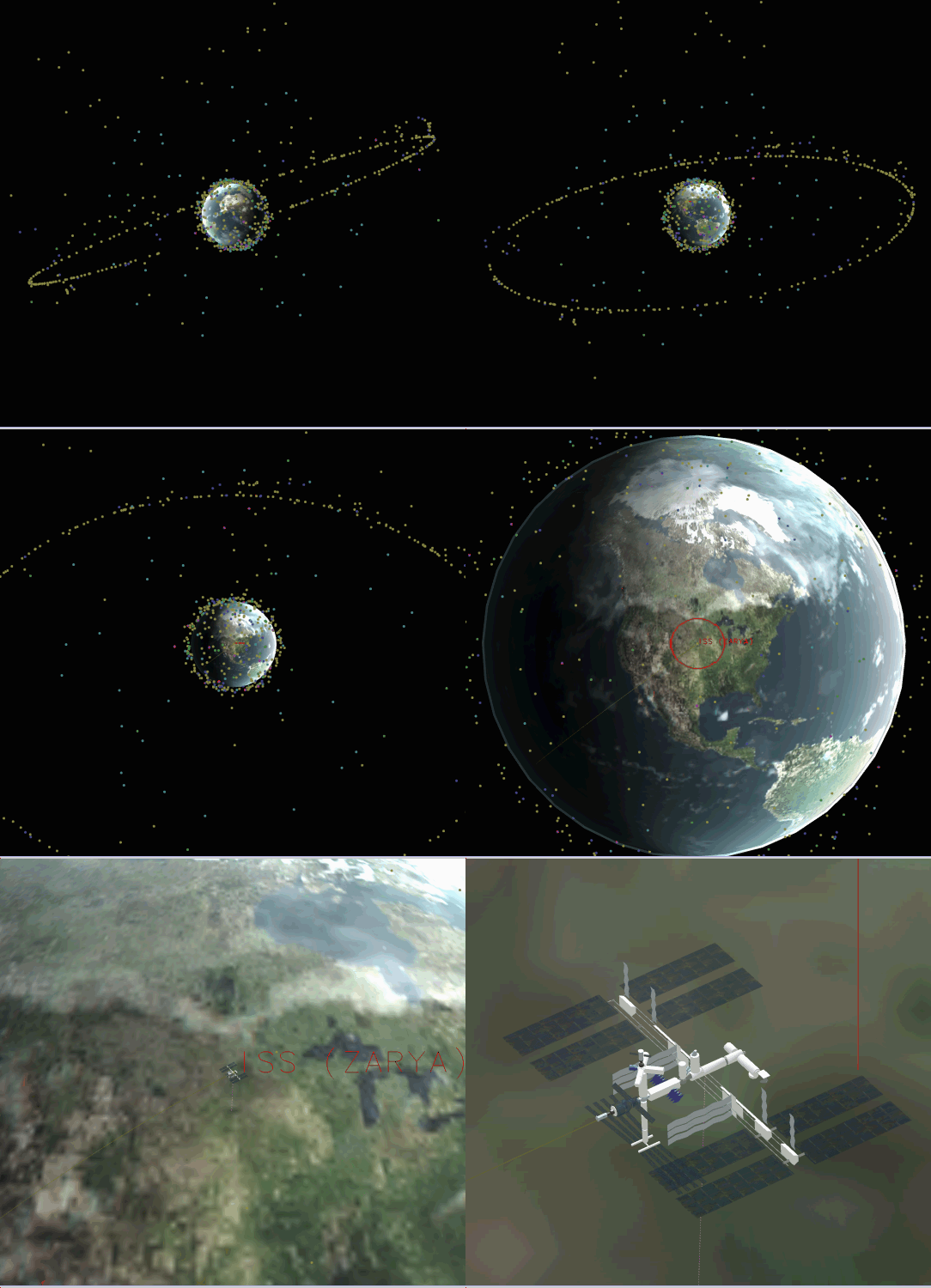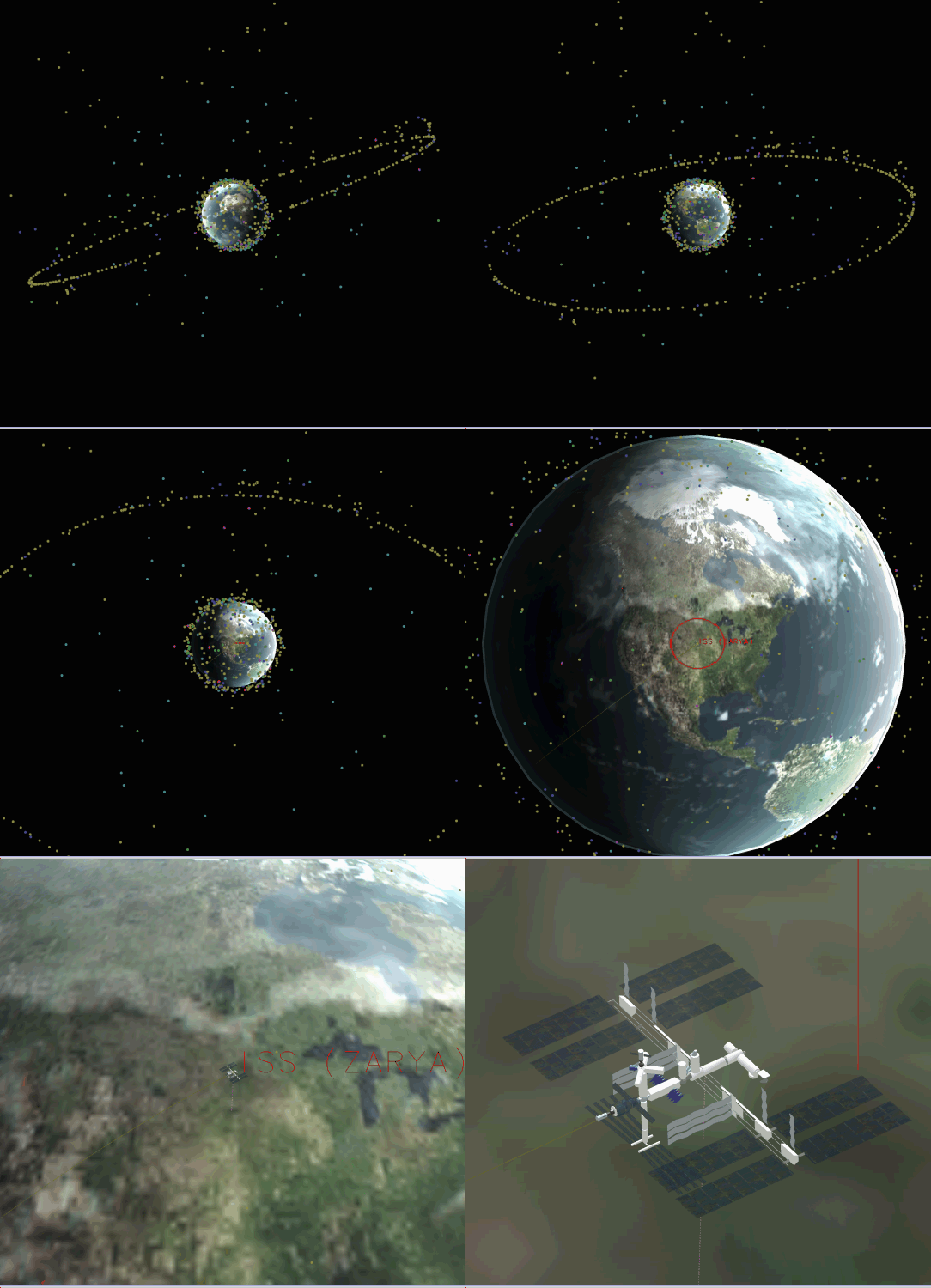
Thousands of satellites orbit the Earth. Costing billions of dollars, this swarm of high altitude robots is now vital to communication, orientation, and imaging both Earth and space. One common type of orbit is geostationary where a satellite will appear to hover above one point on Earth's equator. Geostationary orbits are very high up -- over five times the radius of the Earth -- and possible only because the satellite orbital period is exactly one day. It is usually cheaper to place a satellite in low Earth orbit, around 500 kilometers, just high enough to avoid the effect of Earth's atmosphere. The above animated sequence starts by showing the halo of Earth's satellites, including the ring at geostationary, and finishes by zooming in on the only one currently hosting humans: the International Space Station.
Miles de satélites orbitan la Tierra. Este enjambre de robots de gran altitud, que cuesta miles de millones de dólares, es ahora vital para las comunicaciones, la orientación y la obtención de imágenes tanto de la Tierra como del espacio. Un tipo de órbita común es la geoestacionaria, en la que un satélite parecerá permanecer suspendido sobre un punto del ecuador terrestre. Las órbitas geoestacionarias están muy altas —más de cinco veces el radio de la Tierra— y son posibles solo porque el período orbital del satélite es exactamente de un día. Generalmente es más económico colocar un satélite en órbita baja terrestre, alrededor de 500 kilómetros, justo lo suficientemente alto para evitar el efecto de la atmósfera de la Tierra. La secuencia animada anterior comienza mostrando el halo de satélites de la Tierra, incluido el anillo geoestacionario, y termina acercándose al único que actualmente alberga humanos: la Estación Espacial Internacional.