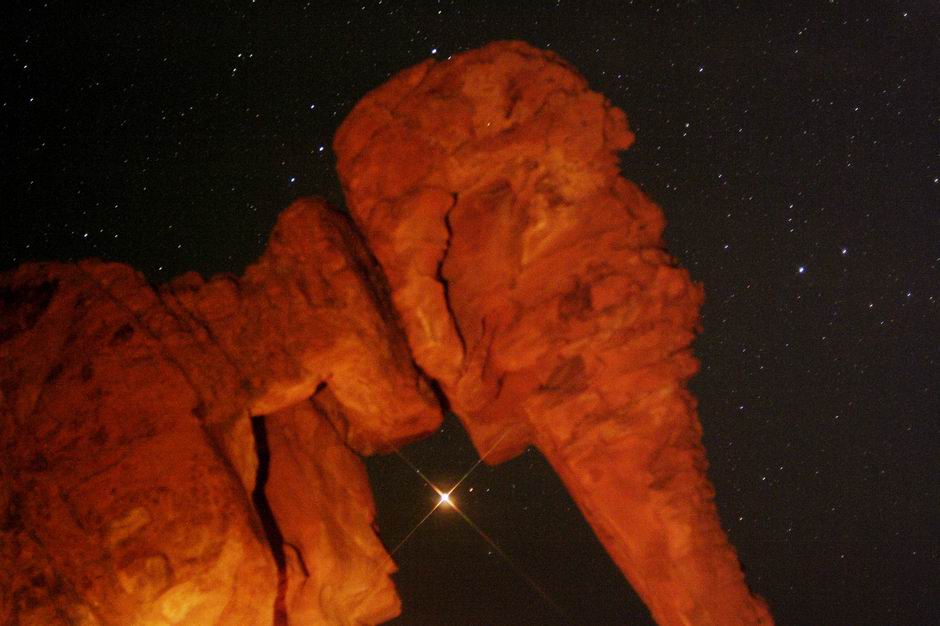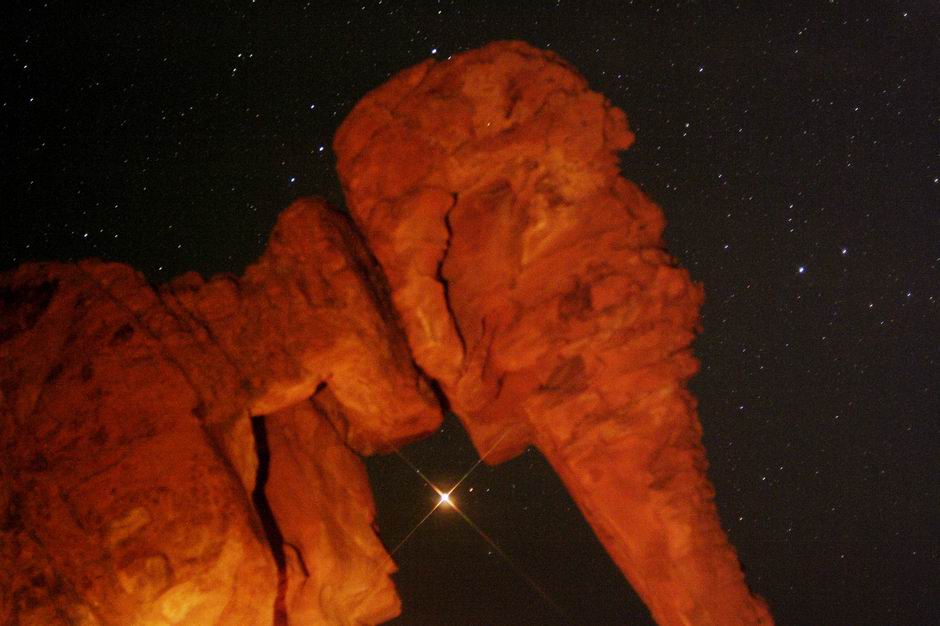
Yesterday, at about 10 am Universal Time, Mars and Earth passed closer than in nearly 60,000 years. Mars, noticeably red, remains the brightest object in the eastern sky just after sunset. The best views of Mars, however, will continue to be from the robot spacecraft currently orbiting Mars: the Mars Global Surveyor and the Mars Odyssey. The current pass sparked the launching of four new spacecraft toward Mars, some of which will deploy landers early next year and likely return even more spectacular views of our planetary neighbor. Pictured above, Mars was photographed rising in the southeast behind Elephant Rock in the Valley of Fire State Park, Nevada, USA.
Ayer, aproximadamente a las 10 de la mañana Tiempo Universal, Marte y la Tierra pasaron más cerca que en casi 60.000 años. Marte, notoriamente rojo, sigue siendo el objeto más brillante en el cielo oriental justo después de la puesta de sol. Sin embargo, las mejores vistas de Marte continuarán siendo desde las naves espaciales robóticas que actualmente orbitan Marte: la Mars Global Surveyor y la Mars Odyssey. Este acercamiento cercano impulsó el lanzamiento de cuatro nuevas naves espaciales hacia Marte, algunas de las cuales desplegarán módulos de aterrizaje a principios del próximo año y probablemente proporcionarán vistas aún más espectaculares de nuestro planeta vecino. En la imagen superior, Marte fue fotografiado ascendiendo en el sureste detrás de la Roca del Elefante en el Parque Estatal Valley of Fire, Nevada, EE.UU.