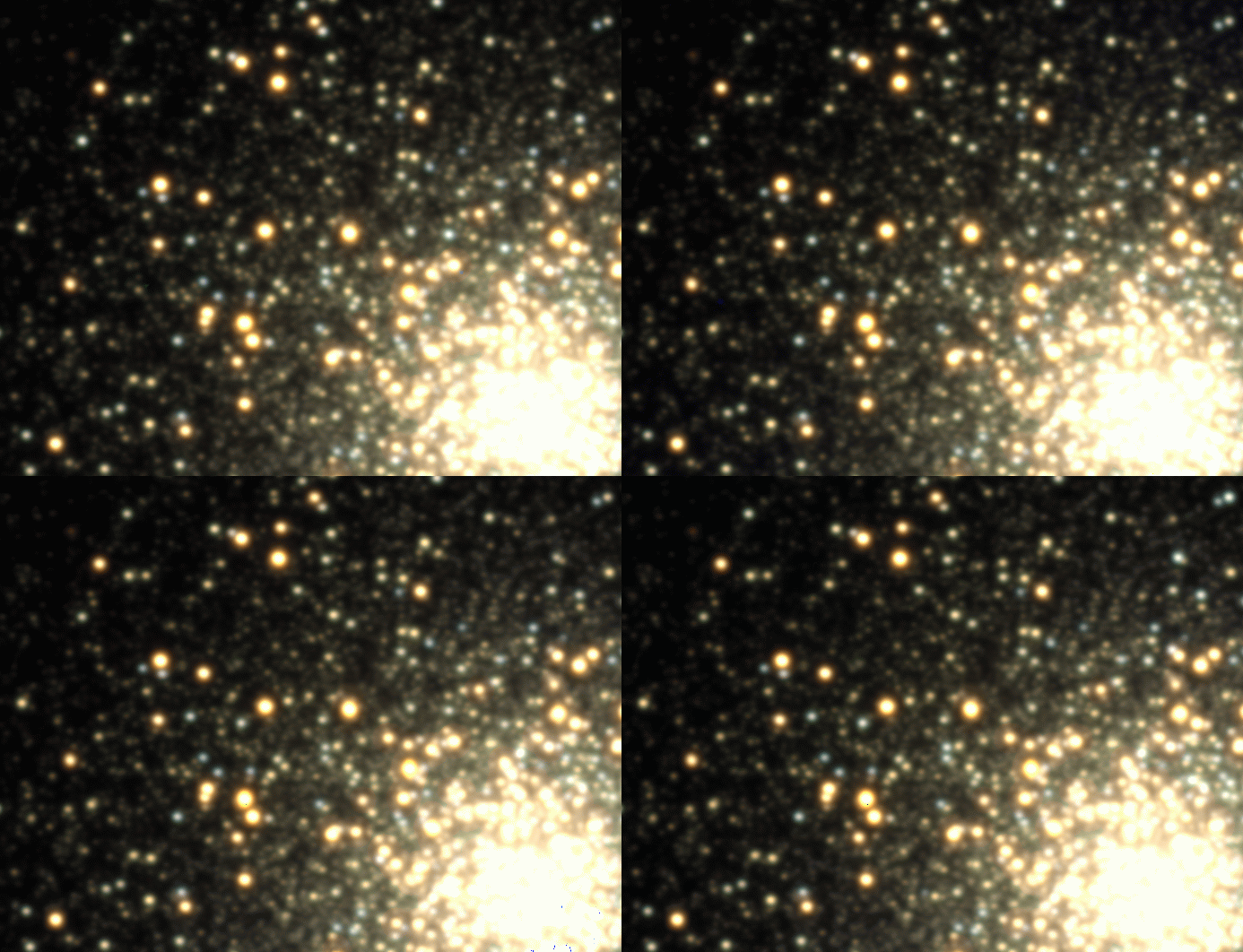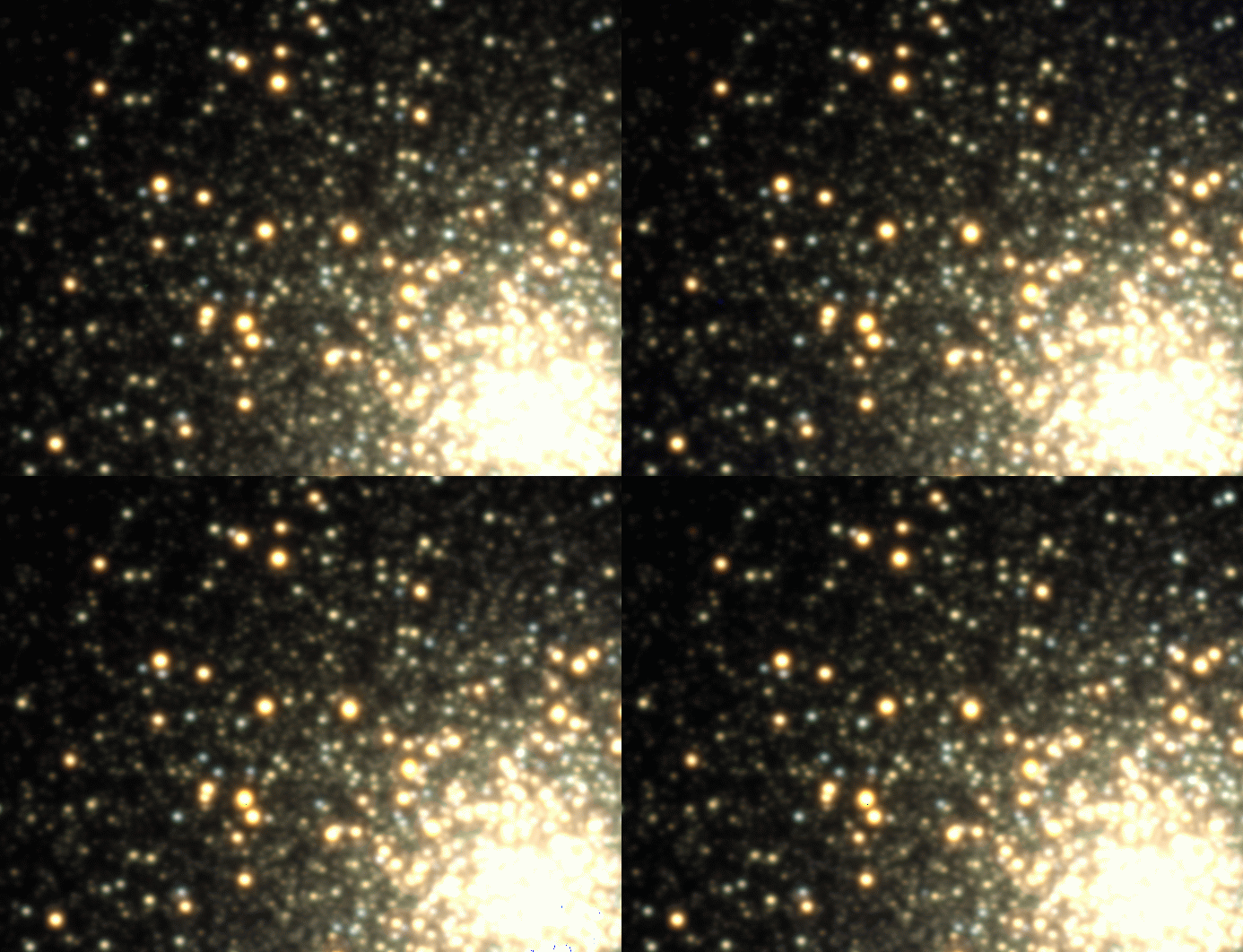
Star clusters appear constant because photographs of them are frozen in time. In reality, though, cluster stars swarm the center and frequently fluctuate in brightness. Although the time it takes for stars to cross a cluster is about 100,000 years, the time it takes for a star to fluctuate noticeably can be less than one night. In fact, the above time lapse movie of bright globular cluster M3 was taken over a single night. Most of the variable stars visible above are RR Lyrae stars, stars that can quickly double their brightness while becoming noticeably bluer. Furthermore, RR Lyrae stars vary their light in a distinctive pattern that allows unique identification. Lastly, since RR Lyrae stars all have the same intrinsic brightness, identifying them and measuring how dim they appear tells how far they are, since faintness means farness. These distances, in turn, help calibrate the scale of the entire universe.
Los cúmulos de estrellas parecen constantes porque las fotografías de ellos quedan congeladas en el tiempo. Sin embargo, en realidad, las estrellas del cúmulo se agolpan en el centro y fluctúan frecuentemente en brillo. Aunque el tiempo que tarda una estrella en cruzar un cúmulo es de aproximadamente 100.000 años, el tiempo que tarda una estrella en fluctuar notoriamente puede ser menos de una noche. De hecho, la película de lapso de tiempo anterior del brillante cúmulo globular M3 fue tomada en una sola noche. La mayoría de las estrellas variables visibles arriba son estrellas RR Lyrae, estrellas que pueden duplicar rápidamente su brillo mientras se vuelven notoriamente más azules. Además, las estrellas RR Lyrae varían su luz en un patrón distintivo que permite una identificación única. Por último, dado que las estrellas RR Lyrae tienen el mismo brillo intrínseco, identificarlas y medir cuán débiles parecen nos dice qué tan lejos están, ya que la debilidad significa lejanía. Estas distancias, a su vez, ayudan a calibrar la escala de todo el universo.