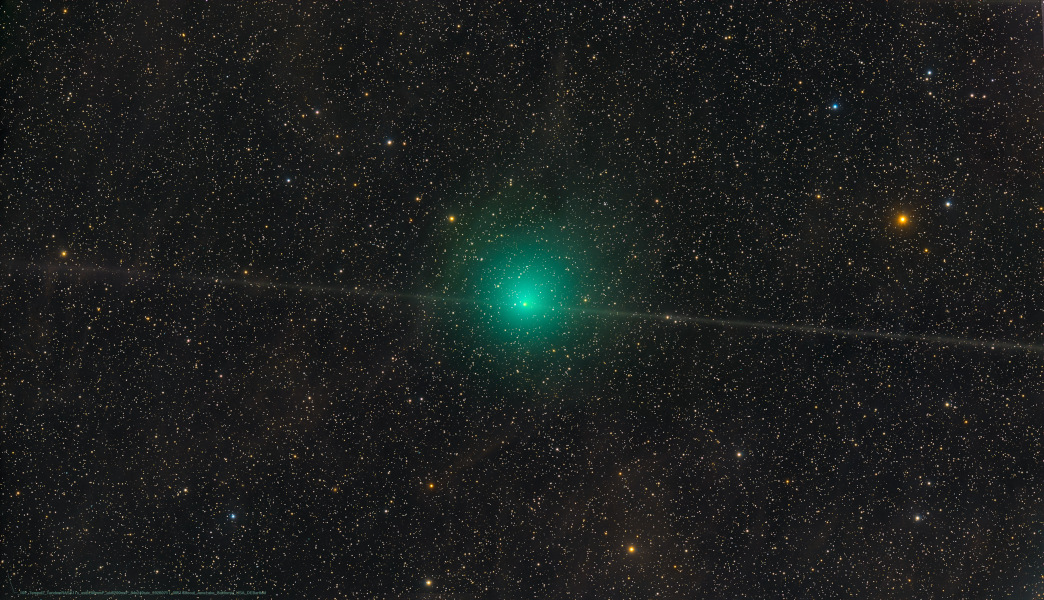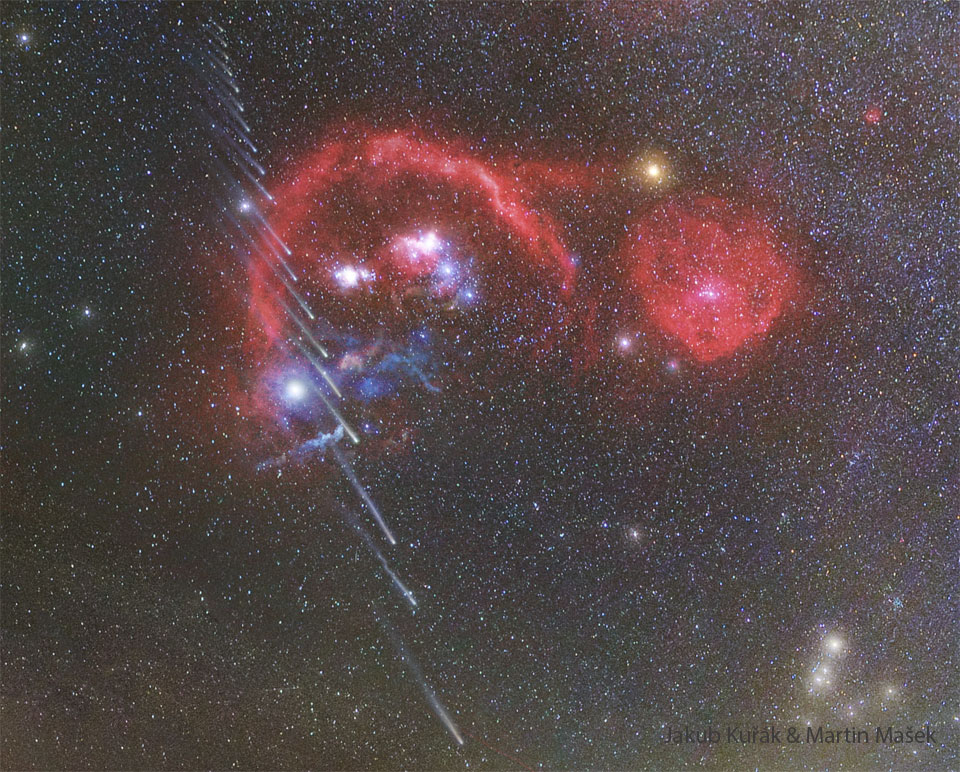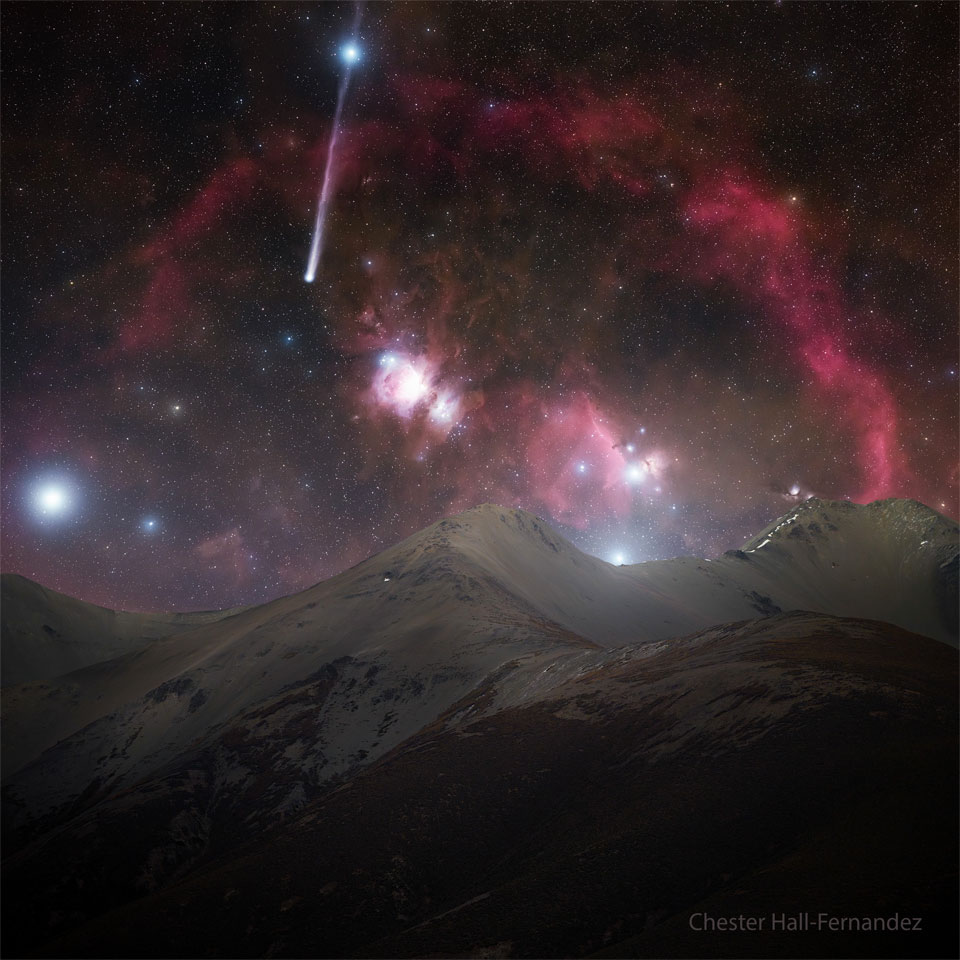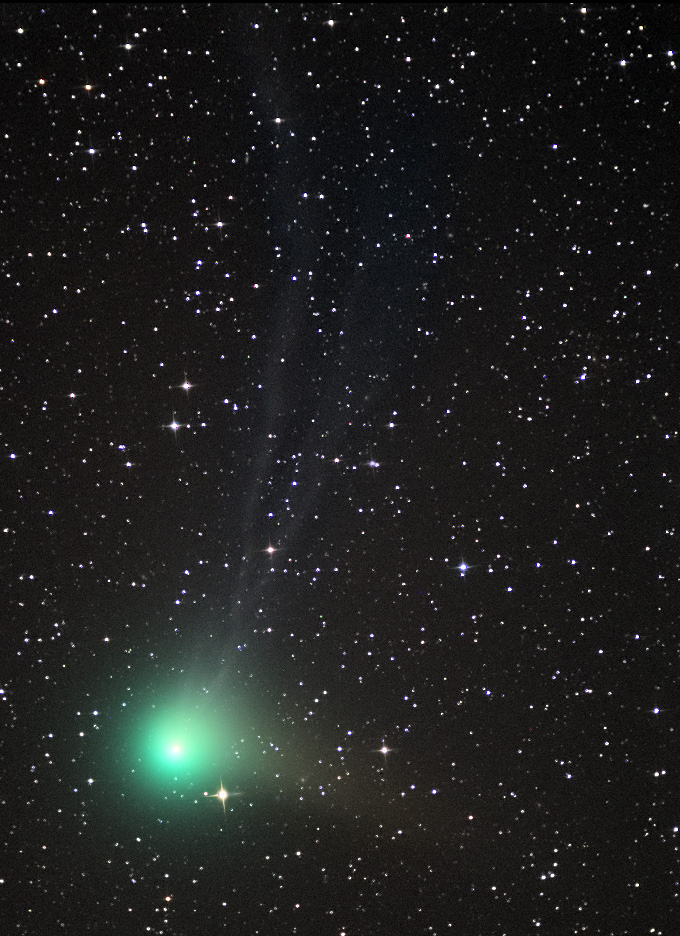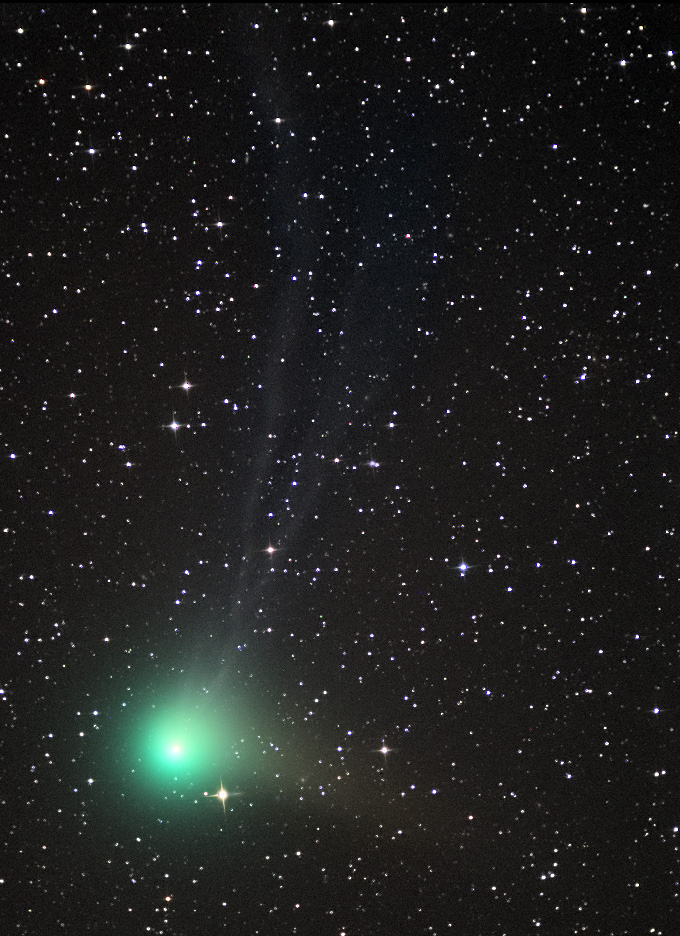
A comet discovered only this summer is brightening quickly and already visible to the unaided eye. Comet C/2004 Q2 (Machholz) is currently best visible in Earth's Southern Hemisphere where some observers report it brighter than magnitude 5. The comet is moving rapidly to northern skies and should continue to brighten until early January. By coincidence, Comet Machholz will be easy to view as it will be nearly opposite the Sun when appearing its brightest. How bright Comet Machholz will become then remains uncertain, but it will surely stay in northern skies for much of 2005, even approaching Polaris in early March. Pictured above, Comet Machholz was captured in early December already sporting a bright surrounding coma, a white oblong dust tail fading off toward the bottom, and a long wispy ion tail toward the right with a kink near the end.
Un cometa descubierto apenas este verano se está iluminando rápidamente y ya es visible a simple vista. El Cometa C/2004 Q2 (Machholz) actualmente es mejor visible en el Hemisferio Sur terrestre, donde algunos observadores reportan su brillo mayor que magnitud 5. El cometa se está moviendo rápidamente hacia los cielos del norte y debe continuar iluminándose hasta principios de enero. Por coincidencia, el Cometa Machholz será fácil de observar ya que estará casi opuesto al Sol cuando alcance su máximo brillo. Cuán brillante se volverá entonces el Cometa Machholz permanece incierto, pero sin duda permanecerá en los cielos del norte durante gran parte de 2005, incluso aproximándose a la Estrella Polar a principios de marzo. En la imagen superior, el Cometa Machholz fue capturado a principios de diciembre mostrando ya una coma brillante y envolvente, una cola de polvo blanca y oblonga desvaneciendo hacia el fondo, y una larga y etérea cola iónica hacia la derecha con un pliegue cerca del extremo.