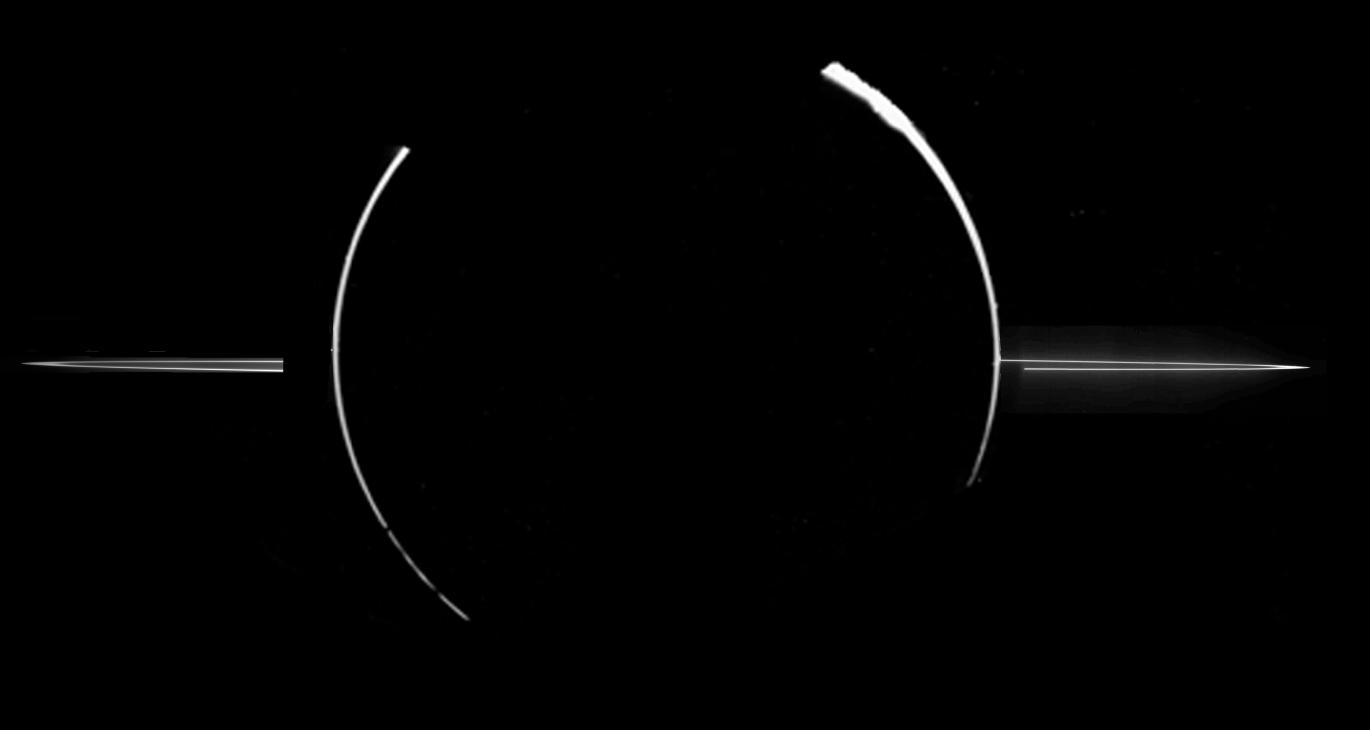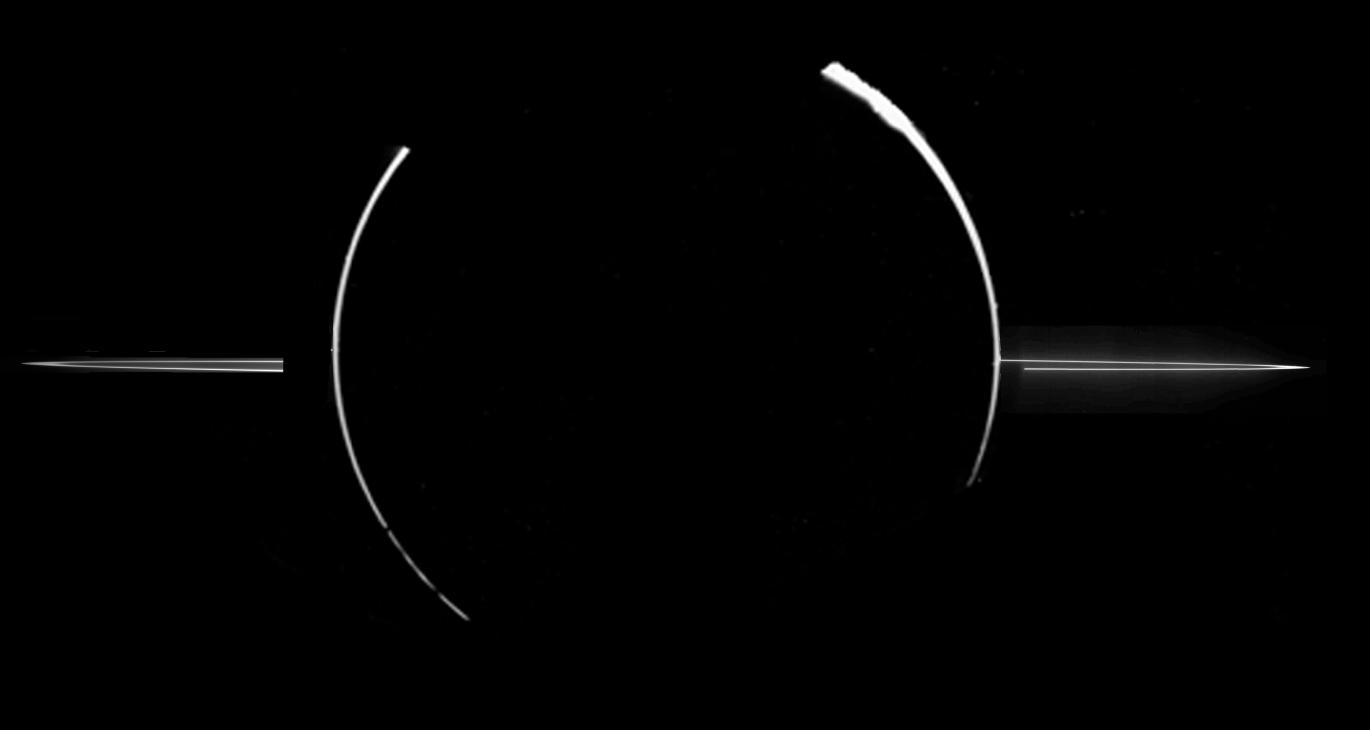
Why does Jupiter have rings? Jupiter's rings were discovered in 1979 by the passing Voyager 1 spacecraft, but their origin was a mystery. Data from the Galileo spacecraft that orbited Jupiter from 1995 to 2003 later confirmed that these rings were created by meteoroid impacts on small nearby moons. As a small meteoroid strikes tiny Adrastea, for example, it will bore into the moon, vaporize, and explode dirt and dust off into a Jovian orbit. Pictured above is an eclipse of the Sun by Jupiter, as viewed from Galileo. Small dust particles high in Jupiter's atmosphere, as well as the dust particles that compose the rings, can be seen by reflected sunlight.
¿Por qué Júpiter tiene anillos? Los anillos de Júpiter fueron descubiertos en 1979 por la sonda Voyager 1 durante su paso, pero su origen era un misterio. Los datos de la sonda Galileo, que orbitó Júpiter de 1995 a 2003, confirmaron posteriormente que estos anillos fueron creados por impactos de meteoroides en pequeñas lunas cercanas. Cuando un pequeño meteoroide choca contra Adrastea, por ejemplo, se incrusta en la luna, se vaporiza y expulsa tierra y polvo hacia una órbita joviana. La imagen superior muestra un eclipse del Sol por Júpiter, visto desde Galileo. Las pequeñas partículas de polvo en lo alto de la atmósfera de Júpiter, así como las partículas de polvo que componen los anillos, pueden ser observadas por la luz solar reflejada.