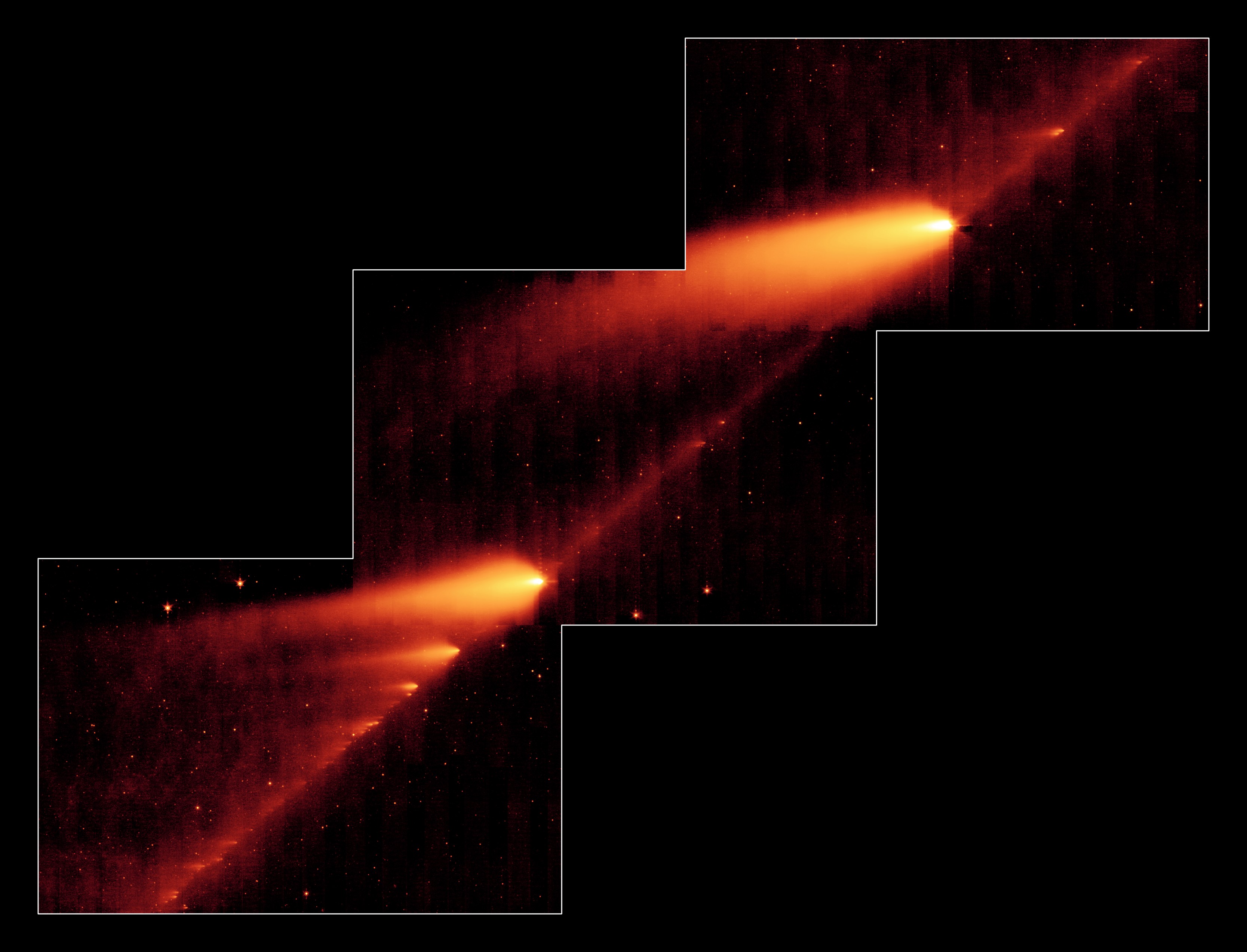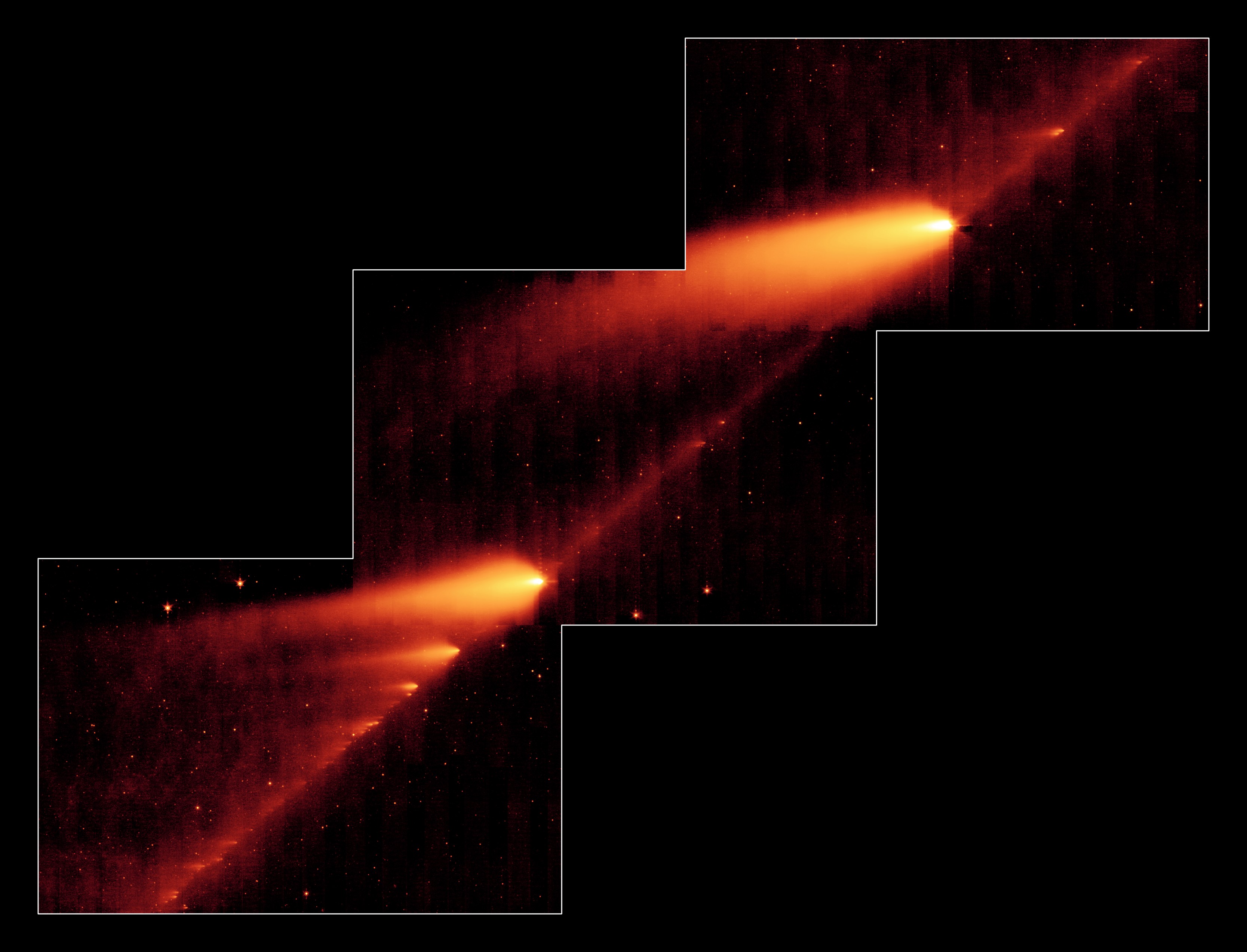
This false-color mosaic of crumbling comet Schwassmann-Wachmann 3 spans about 6 degrees (12 full moons) along the comet's orbit. Recorded on May 4-6 by an infrared camera on board the Spitzer Space Telescope, the picture captures about 45 of the 60 or more alphabetically cataloged large comet fragments. The brightest fragment at the upper right of the track is Fragment C. Bright Fragment B is below and left of center. Looking for clues to how the comet broke up, Spitzer's infrared view also captures the trail of dust left over as the comet deteriorated during previous passes. Emission from the dust particles warmed by sunlight appears to fill the space along the cometary orbit. The fragments are near their closest approach in the coming days, about 10 million kilometers away, and none pose any danger to our fair planet.
Este mosaico en falso color del cometa Schwassmann-Wachmann 3 desintegrándose abarca aproximadamente 6 grados (12 lunas llenas) a lo largo de la órbita del cometa. Registrado entre el 4 y el 6 de mayo por una cámara infrarroja a bordo del Telescopio Espacial Spitzer, la imagen captura alrededor de 45 de los 60 o más fragmentos grandes del cometa catalogados alfabéticamente. El fragmento más brillante en la parte superior derecha de la trayectoria es el Fragmento C. El fragmento brillante B se encuentra debajo y a la izquierda del centro. Buscando pistas sobre cómo se desintegró el cometa, la vista infrarroja de Spitzer también captura el rastro de polvo dejado mientras el cometa se deterioraba durante pasos anteriores. La emisión de las partículas de polvo calentadas por la luz solar parece llenar el espacio a lo largo de la órbita cometaria. Los fragmentos están cerca de su aproximación más cercana en los próximos días, aproximadamente 10 millones de kilómetros de distancia, y ninguno representa peligro alguno para nuestro hermoso planeta.