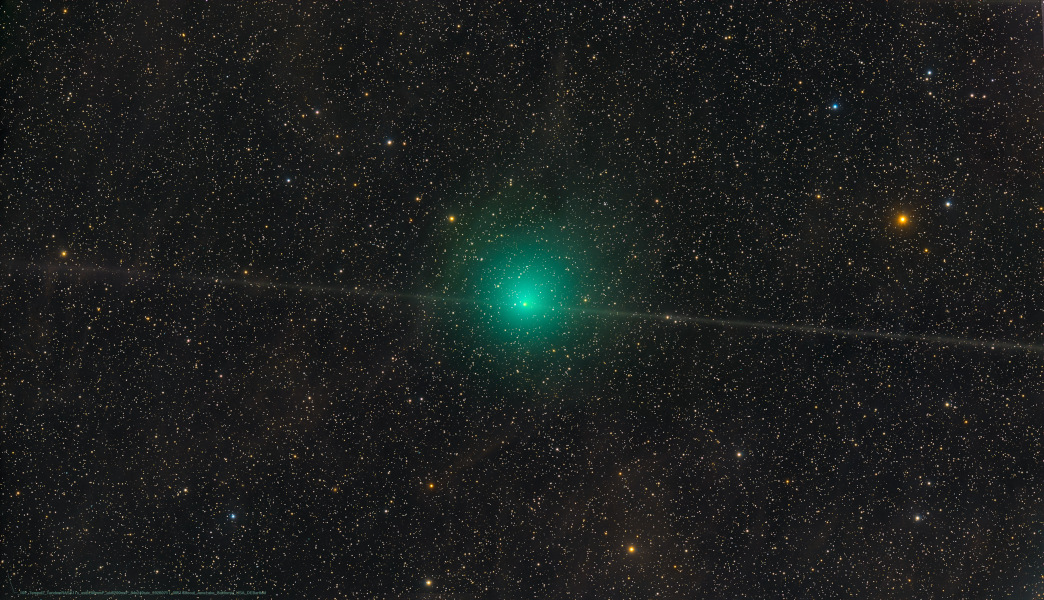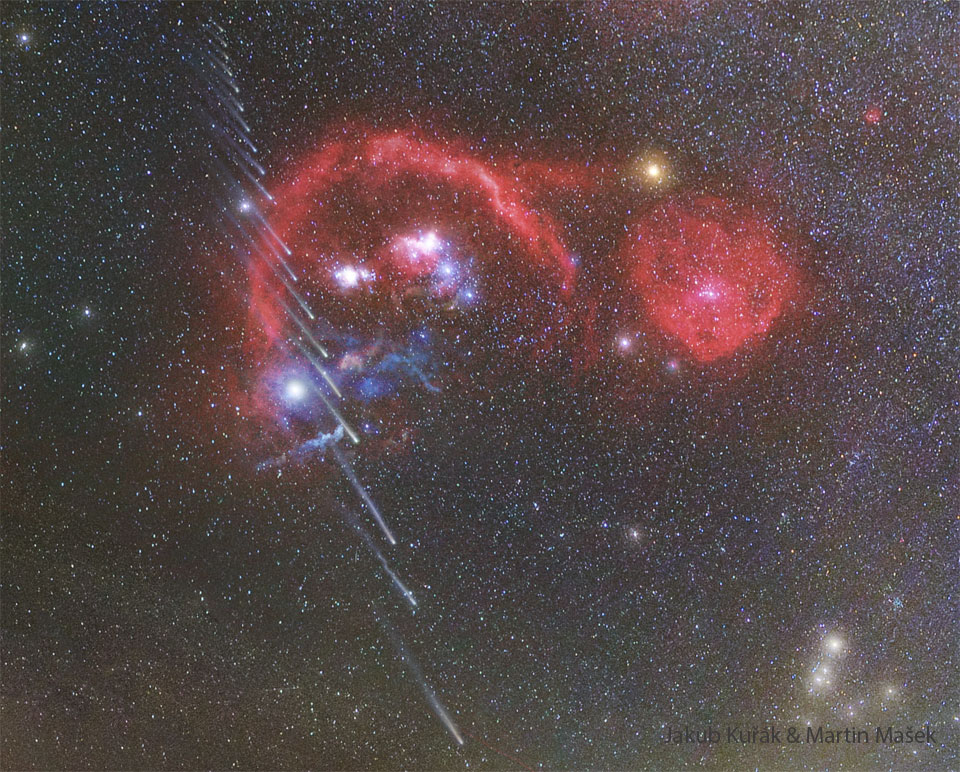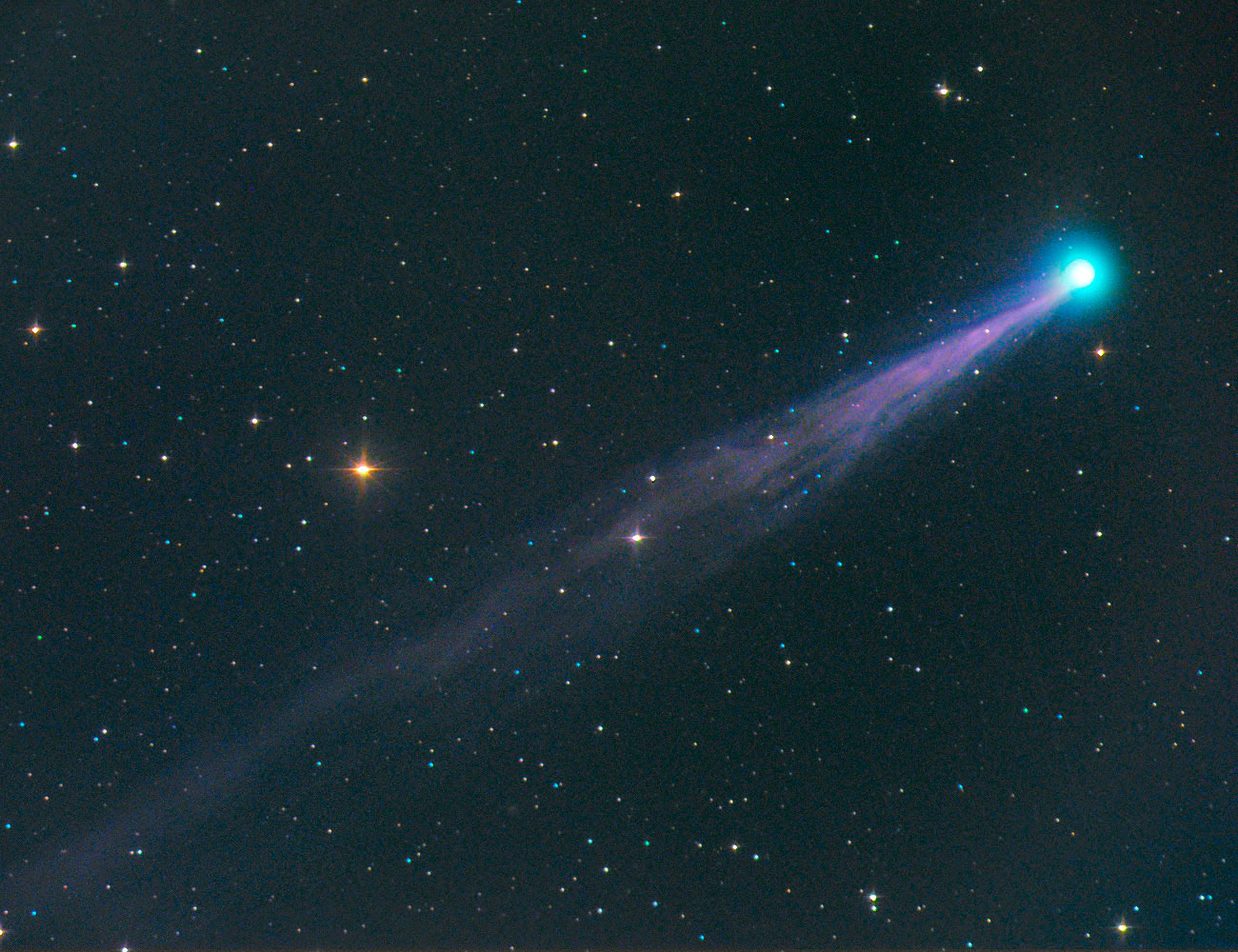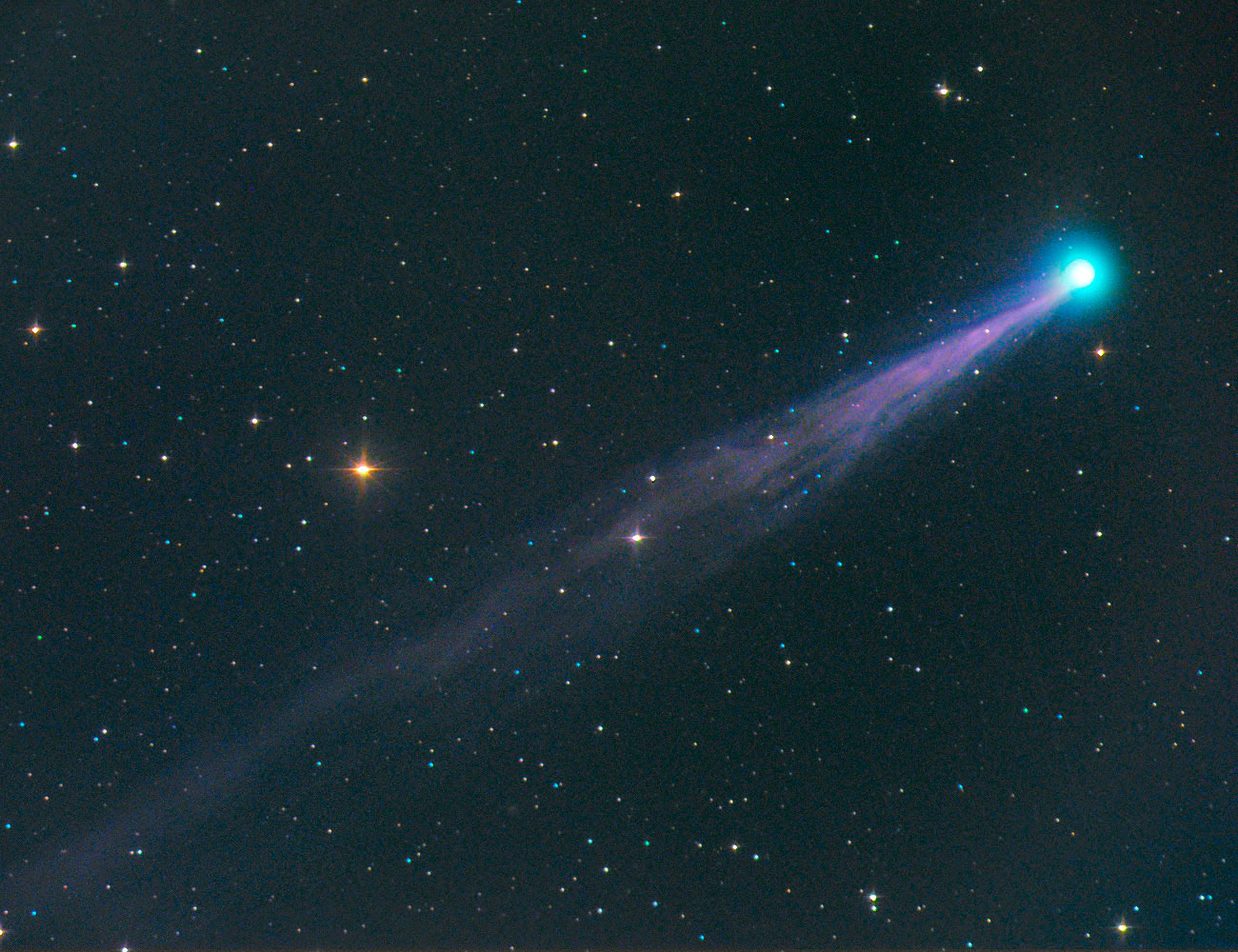
A newly discovered comet has brightened enough to be visible this week with binoculars. The picturesque comet is already becoming a favored target for northern sky imagers. Pictured above just last week, Comet SWAN showed a bright blue-green coma and an impressive tail. Comet C/2006 M4 (SWAN) was discovered in June in public images from the Solar Wind Anisotropies (SWAN) instrument of NASA and ESA's Sun-orbiting SOHO spacecraft. Comet SWAN, near magnitude six, will be visible with binoculars in the northeastern sky not far from the Big Dipper over the next few days before dawn. The comet is expected to reach its peak brightness this week. Passing its closest to the Sun two days ago, Comet SWAN and will be at its closest to the Earth toward the end of this month. Comet SWAN's unusual orbit appears to be hyperbolic, meaning that it will likely go off into interstellar space, never to return.
Un cometa recientemente descubierto ha aumentado su brillo lo suficiente como para ser visible esta semana con binoculares. El pintoresco cometa ya se ha convertido en un objetivo favorito para los fotógrafos del cielo del norte. En la imagen de arriba, tomada solo la semana pasada, el cometa SWAN mostraba una coma brillante de color azul-verde y una cola impresionante. El cometa C/2006 M4 (SWAN) fue descubierto en junio en imágenes públicas del instrumento Solar Wind Anisotropies (SWAN) de la nave espacial SOHO de la NASA y la ESA, que orbita alrededor del Sol. El cometa SWAN, con una magnitud cercana a seis, será visible con binoculares en el cielo nordeste, cerca de la Osa Mayor, durante los próximos días antes del amanecer. Se espera que el cometa alcance su máximo brillo esta semana. Ayer, el cometa pasó a su distancia más cercana del Sol, y llegará a su punto más cercano a la Tierra hacia el final de este mes. La órbita inusual del cometa SWAN parece ser hiperbólica, lo que significa que probablemente se alejará hacia el espacio interestelar, sin regresar nunca.