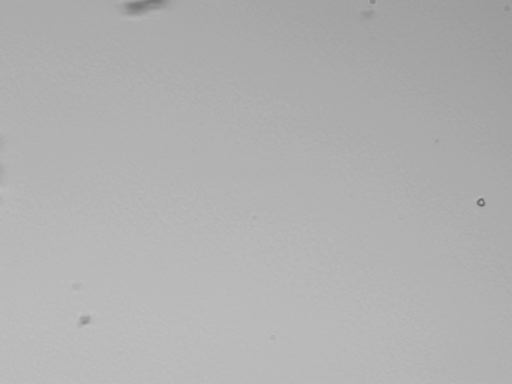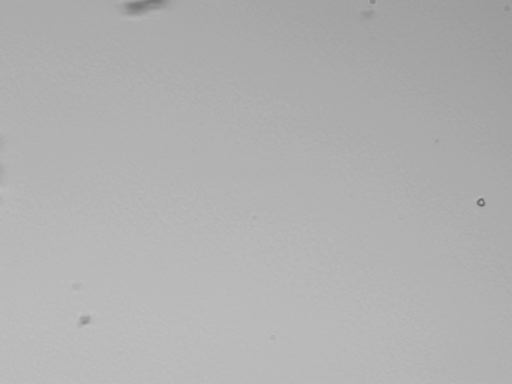
What caused that hole? The hole in question appears as a small dark circle on the far right. If the above image of aerogel seems dull and uninteresting, then welcome to one aspect of real world science. The interesting part is that something created that dark hole, and it might well be one of the first pieces of matter ever captured from outside our Solar System. Whatever created that hole was captured by the aerogel of the robotic Stardust spacecraft that flew across our Solar System for years and then returned a capsule to Earth. Scientists are now poring over the aerogel, looking to see what particles have become trapped. Many particles are surely from local Comet Wild 2, which Stardust flew past in 2004. Just a few particles, though, perhaps 10 or less, are expected to be from outside our Solar System. It is so difficult to find them that the Stardust team has created a downloadable interactive microscope program to allow anyone with a standard computer to help inspect aerogel slices and look for interstellar dust tracks. Good candidate tracks will later be inspected in great detail by members of the Stardust team.
¿Qué causó ese agujero? El agujero en cuestión aparece como un pequeño círculo oscuro en la parte más a la derecha. Si la imagen de aerogel de arriba parece aburrida e insulsa, bienvenido a un aspecto de la ciencia real. La parte interesante es que algo creó ese agujero oscuro, y podría ser una de las primeras muestras de materia capturada jamás obtenida desde fuera de nuestro Sistema Solar. Lo que causó ese agujero fue capturado por el aerogel de la nave espacial robótica Stardust, que voló a través de nuestro Sistema Solar durante años y luego devolvió una cápsula a la Tierra. Los científicos ahora están analizando el aerogel, buscando ver qué partículas se han quedado atrapadas. Muchas partículas seguramente provienen del cometa local Wild 2, del cual Stardust pasó cerca en 2004. Solo unas pocas partículas, quizás 10 o menos, se espera que provengan del exterior de nuestro Sistema Solar. Es tan difícil encontrarlas que el equipo de Stardust ha creado un programa interactivo de microscopio descargable que permite a cualquier persona con una computadora estándar ayudar a inspeccionar rebanadas de aerogel y buscar pistas de polvo interestelar. Las pistas candidatas prometedoras serán posteriormente examinadas en detalle por miembros del equipo de Stardust.