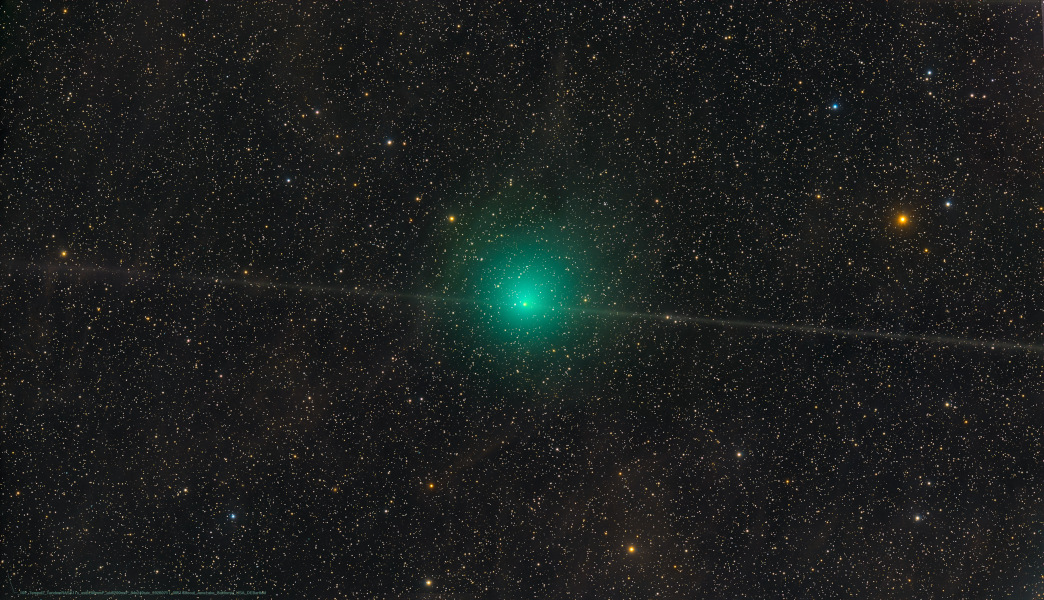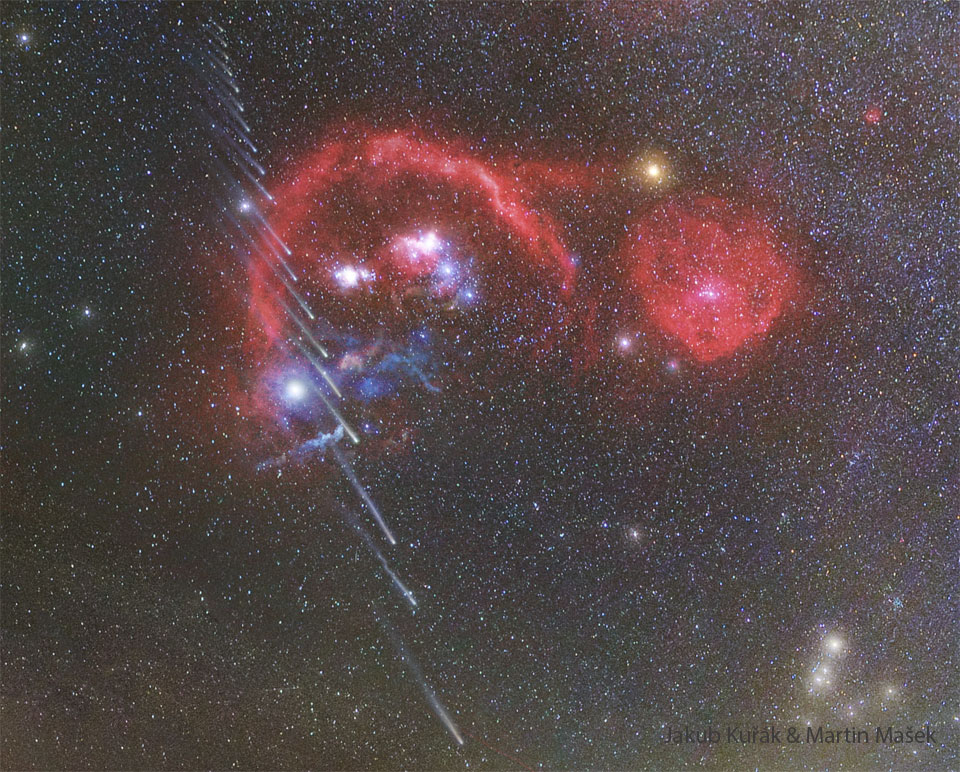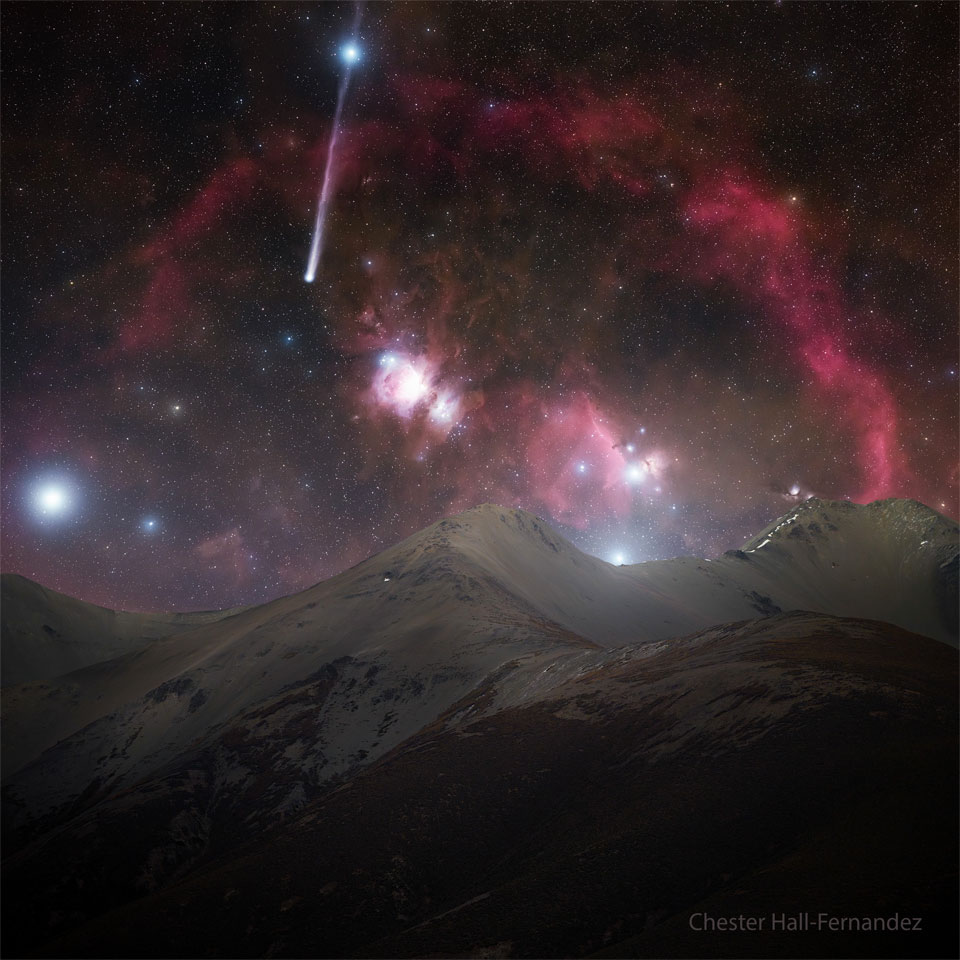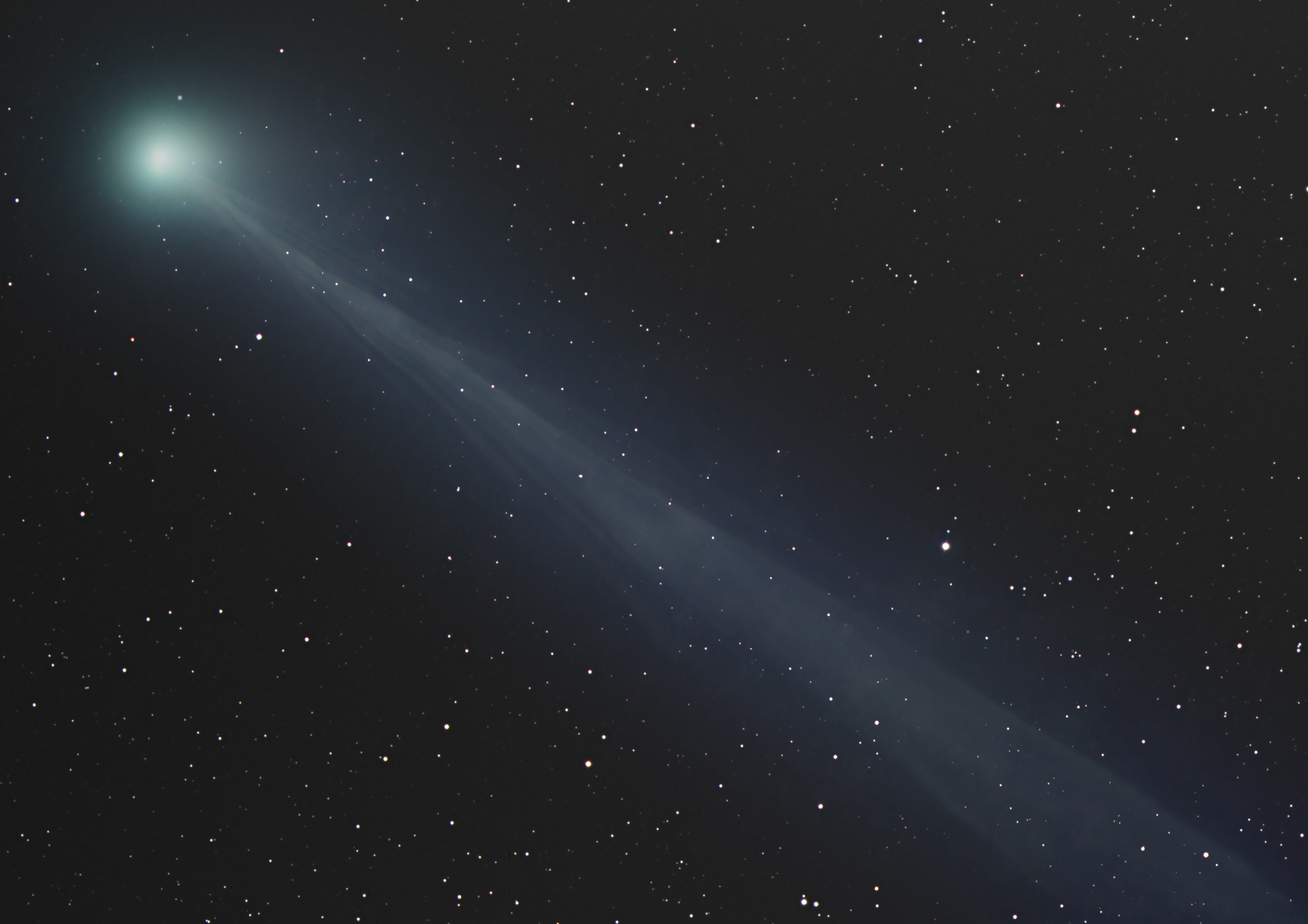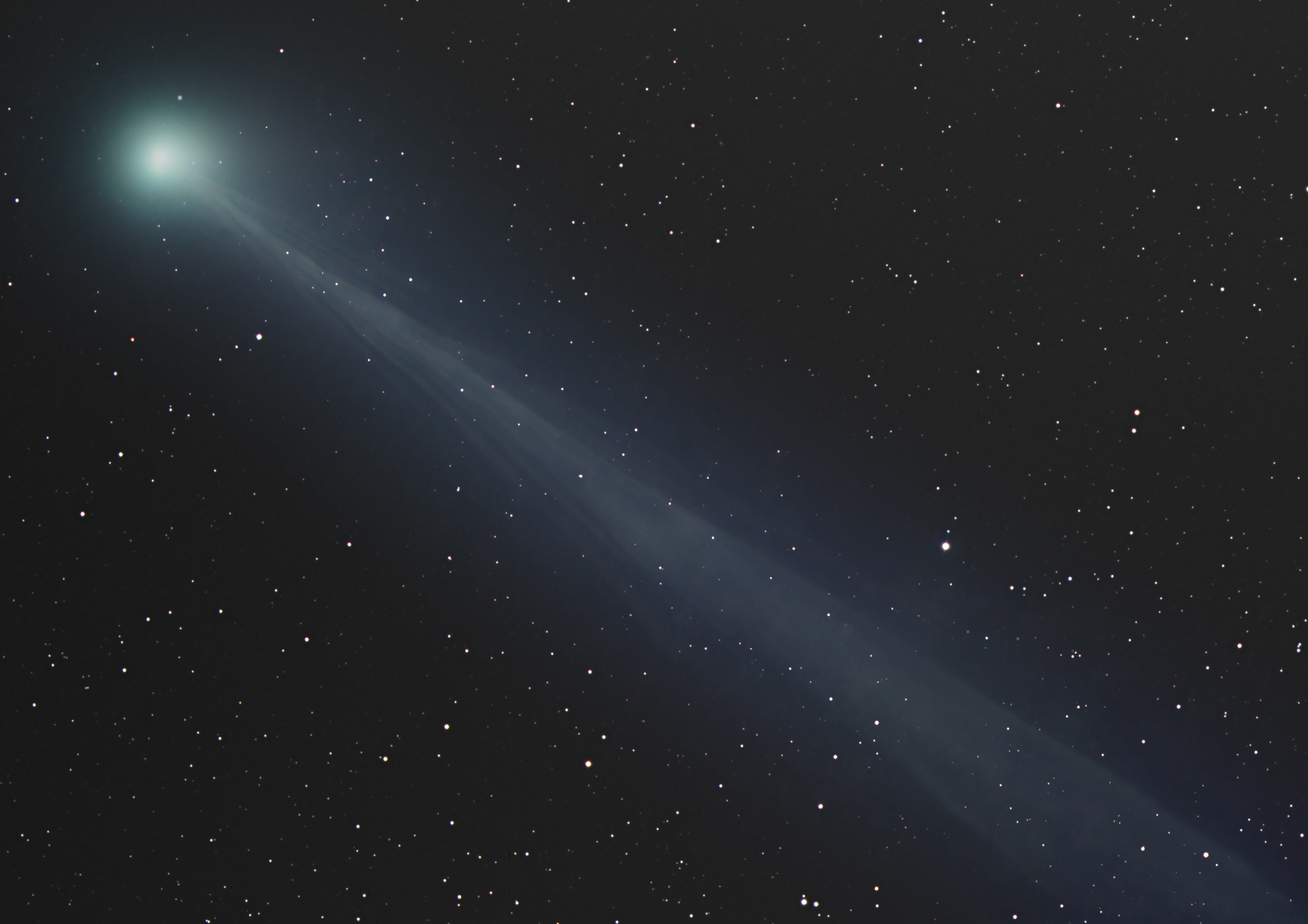
What causes the structure in Comet SWAN's tail? Comet SWAN, which unexpectedly flared up to naked-eye brightness last week, has been showing detail in its ion tail that might be described as ghostly. The ion tail is made of ionized gas, energized by ultraviolet light from the Sun and pushed outward by the solar wind. The solar wind itself is quite structured and sculpted by the Sun's complex and ever changing magnetic field. Following the wind, structure in Comet SWAN's tail can be seen to move outward from the Sun even alter its wavy appearance over time. The blue color of the ion tail is dominated by recombining carbon monoxide atoms. The color of the coma surrounding the head of the comet is tinged green by slight amounts of the molecule cyanogen. The above image was taken last week from California, USA. This week may be the best remaining chance for northern hemisphere observers to see the fading interplanetary snowball. SWAN has now passed both the Earth and the Sun and will fade as it moves away from the Earth and heads out into the vast space between the stars.
¿Qué causa la estructura en la cola del cometa SWAN? El cometa SWAN, que inesperadamente aumentó su brillo hasta ser visible a simple vista la semana pasada, ha mostrado detalles en su cola iónica que podrían describirse como fantasmales. La cola iónica está compuesta por gas ionizado, energizado por la luz ultravioleta del Sol y empujado hacia afuera por el viento solar. El viento solar mismo tiene una estructura bastante definida y es moldeado por el complejo y en constante cambio campo magnético del Sol. Siguiendo al viento, se puede observar que la estructura en la cola del cometa SWAN se mueve hacia afuera desde el Sol y que su apariencia ondulada cambia con el tiempo. El color azul de la cola iónica es dominado por átomos de monóxido de carbono que se recombinan. El color de la coma que rodea la cabeza del cometa tiene un tono verde debido a pequeñas cantidades de la molécula cianógeno. La imagen mostrada fue tomada la semana pasada desde California, Estados Unidos. Esta semana podría ser la mejor oportunidad restante para los observadores del hemisferio norte para ver la bola de nieve interestelar que se está desvaneciendo. SWAN ha pasado ya tanto la Tierra como el Sol y se atenuará a medida que se aleje de la Tierra y se dirija hacia el vasto espacio entre las estrellas.