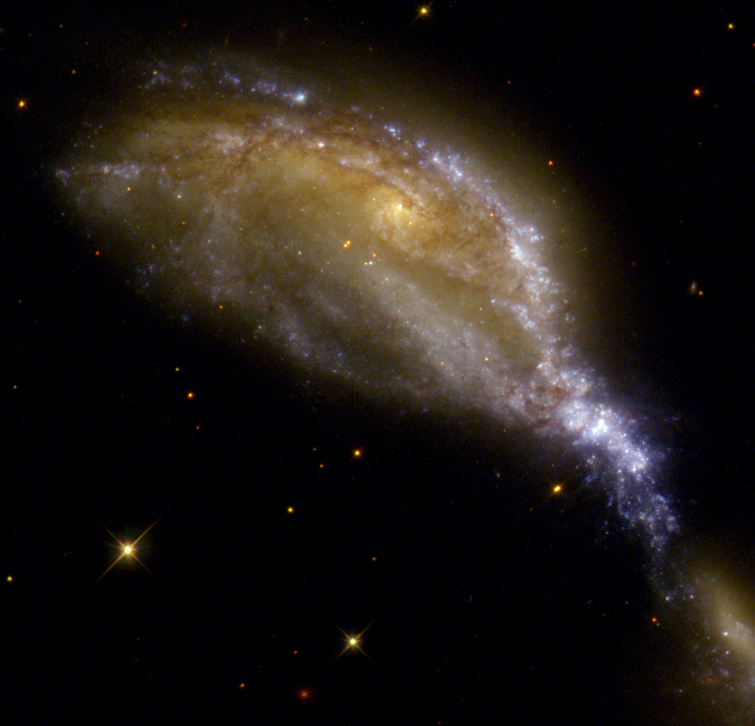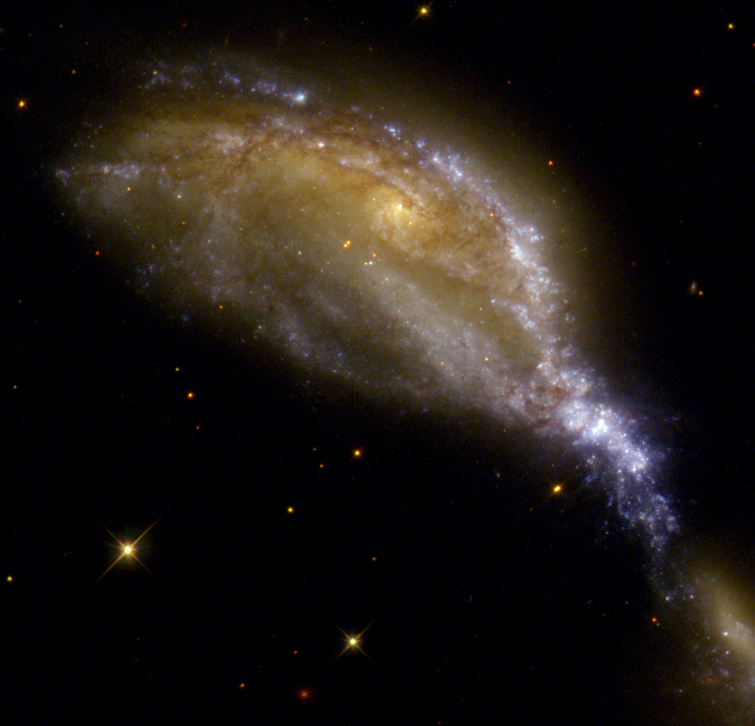
Galaxies don't normally look like this. NGC 6745 actually shows the results of two galaxies that have been colliding for only hundreds of millions of years. Just off the above photograph to the lower right is the smaller galaxy, moving away. The larger galaxy, pictured above, used to be a spiral galaxy but now is damaged and appears peculiar. Gravity has distorted the shapes of the galaxies. Although it is likely that no stars in the two galaxies directly collided, the gas, dust, and ambient magnetic fields do interact directly. In fact, a knot of gas pulled off the larger galaxy on the lower right has now begun to form stars. NGC 6745 spans about 80 thousand light-years across and is located about 200 million light-years away.
Las galaxias normalmente no se ven así. NGC 6745 muestra en realidad los resultados de la colisión de dos galaxias que ha estado ocurriendo durante solo cientos de millones de años. Justo fuera del borde inferior derecho de la fotografía se encuentra la galaxia más pequeña, alejándose. La galaxia más grande, mostrada en la imagen, solía ser una galaxia espiral, pero ahora está dañada y aparece como peculiar. La gravedad ha distorsionado las formas de las galaxias. Aunque es probable que ninguna estrella de las dos galaxias haya colisionado directamente, el gas, el polvo y los campos magnéticos circundantes sí interactúan directamente. De hecho, un nudo de gas arrancado de la galaxia más grande en la parte inferior derecha ya ha comenzado a formar estrellas. NGC 6745 abarca aproximadamente 80 000 años luz de ancho y se encuentra a unos 200 millones de años luz de distancia.