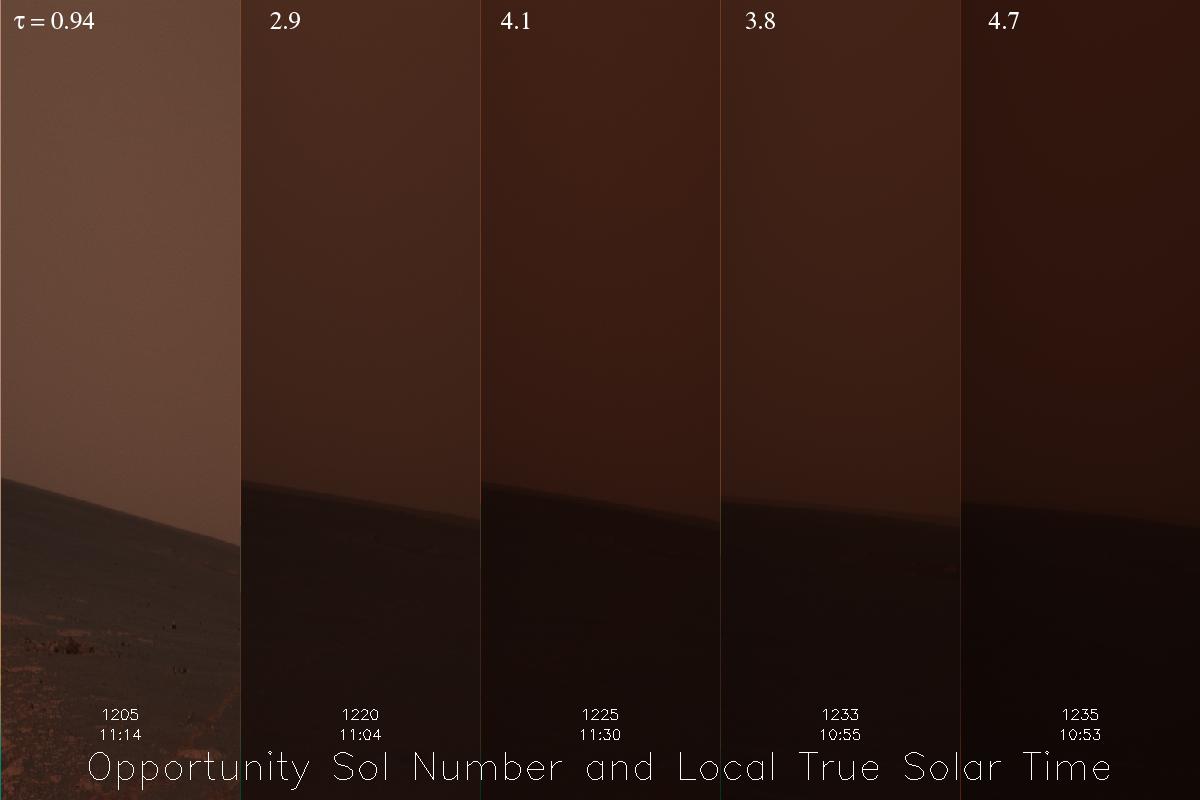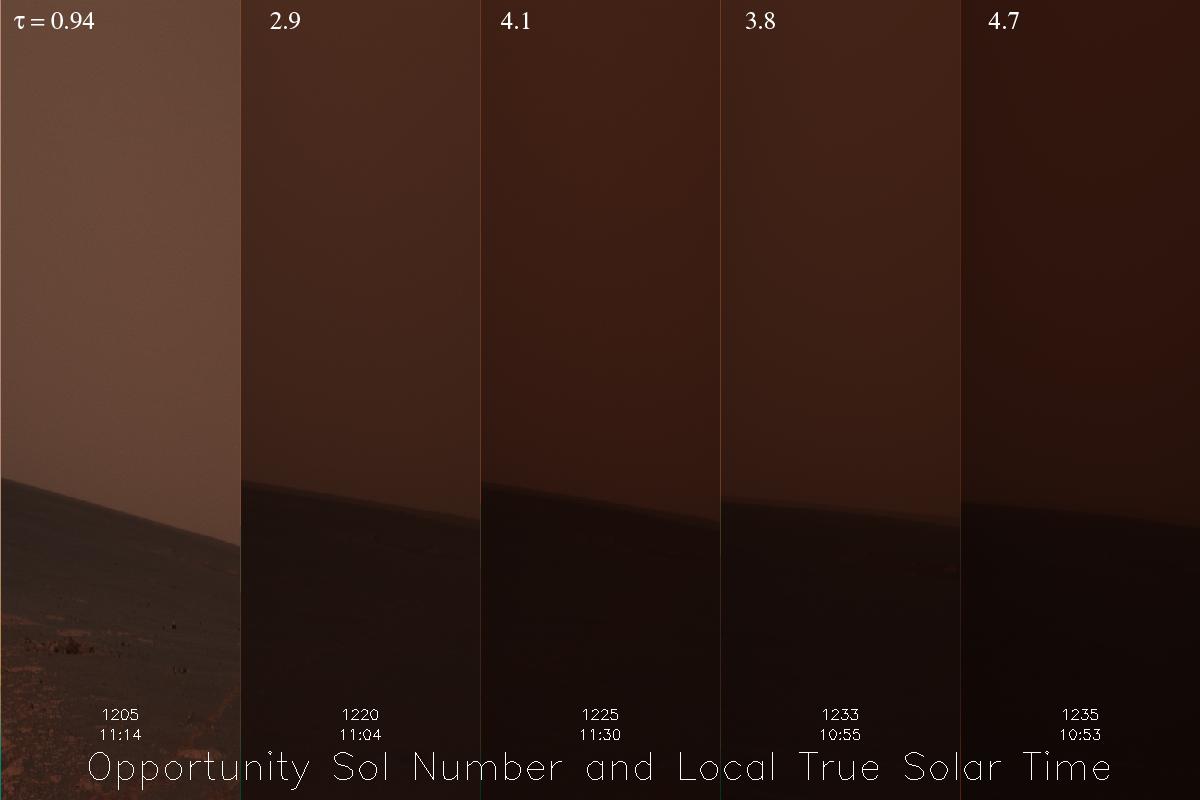
Will global dust storms terminate the robotic Martian rovers? Over the past month, windy dust storms have blocked much needed sunlight from reaching the solar panels of both the Spirit and Opportunity rovers exploring Mars. At times, as much as 99 percent of direct sunlight has been obscured, causing worry that the batteries might run out of energy before the storms end -- which may be as long as weeks. In an effort to weather these storms, Earth controllers have programmed the rovers to restrict movements and to use as little power as possible. Although the rovers have been working for a remarkable three years past their planned three month lifetimes, their immediate future is now uncertain. Pictured above, the Opportunity rover perched on the edge of Victoria Crater peered for a month into the distance as dust made the Martian air increasingly opaque.
¿Terminarán las tormentas de polvo global con los róveres robóticos marcianos? Durante el mes pasado, tormentas de polvo ventosas han bloqueado la luz solar necesaria que llega a los paneles solares de ambos róveres Spirit y Opportunity que exploran Marte. En ciertos momentos, hasta el 99 por ciento de la luz solar directa ha sido oscurecida, causando preocupación de que las baterías podrían agotarse antes de que las tormentas terminen, lo que podría durar semanas. En un esfuerzo por resistir estas tormentas, los controladores terrestres han programado los róveres para restringir movimientos y usar la menor cantidad de energía posible. Aunque los róveres han estado funcionando durante un notable período de tres años más allá de sus vidas útiles planeadas de tres meses, su futuro inmediato es ahora incierto. En la imagen superior, el róver Opportunity, encaramado en el borde del Cráter Victoria, escudriñó durante un mes la distancia mientras el polvo hacía el aire marciano cada vez más opaco.