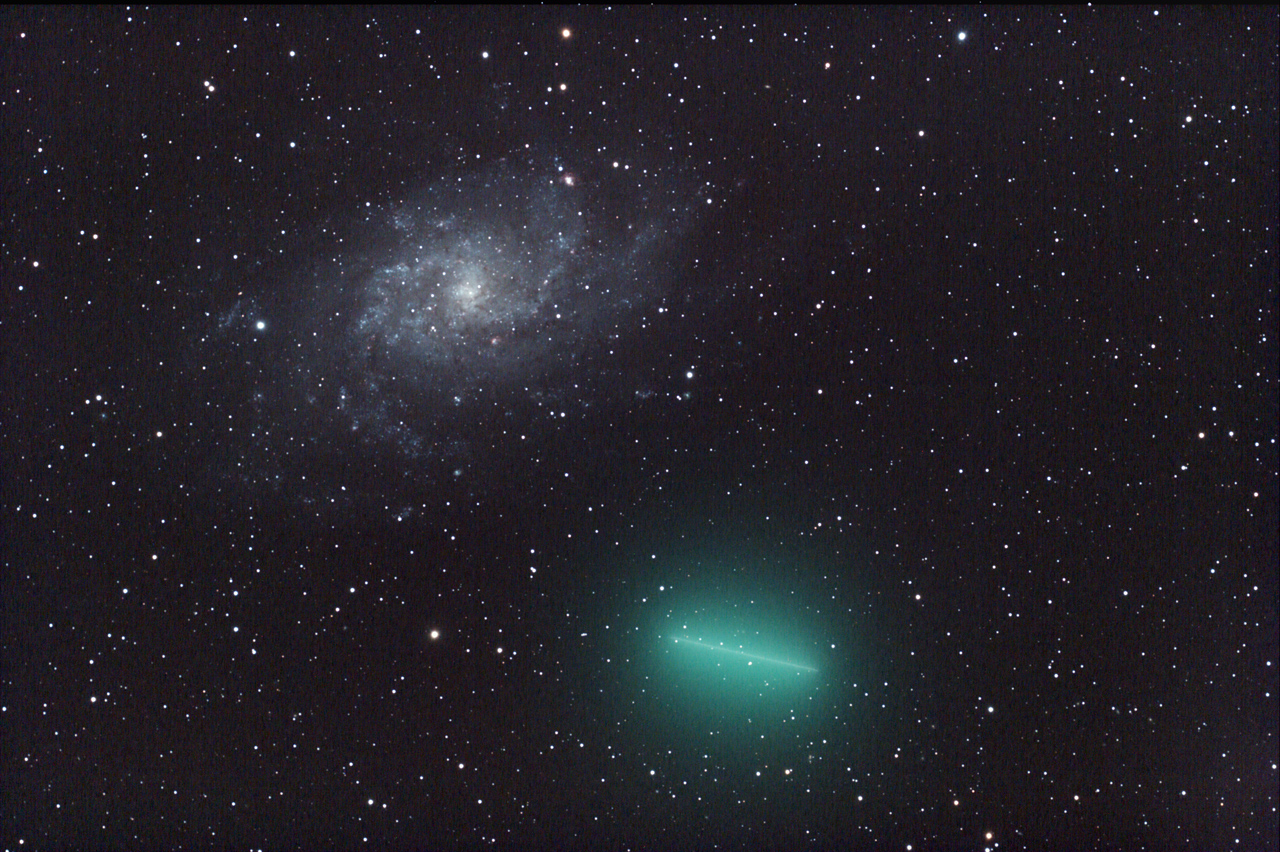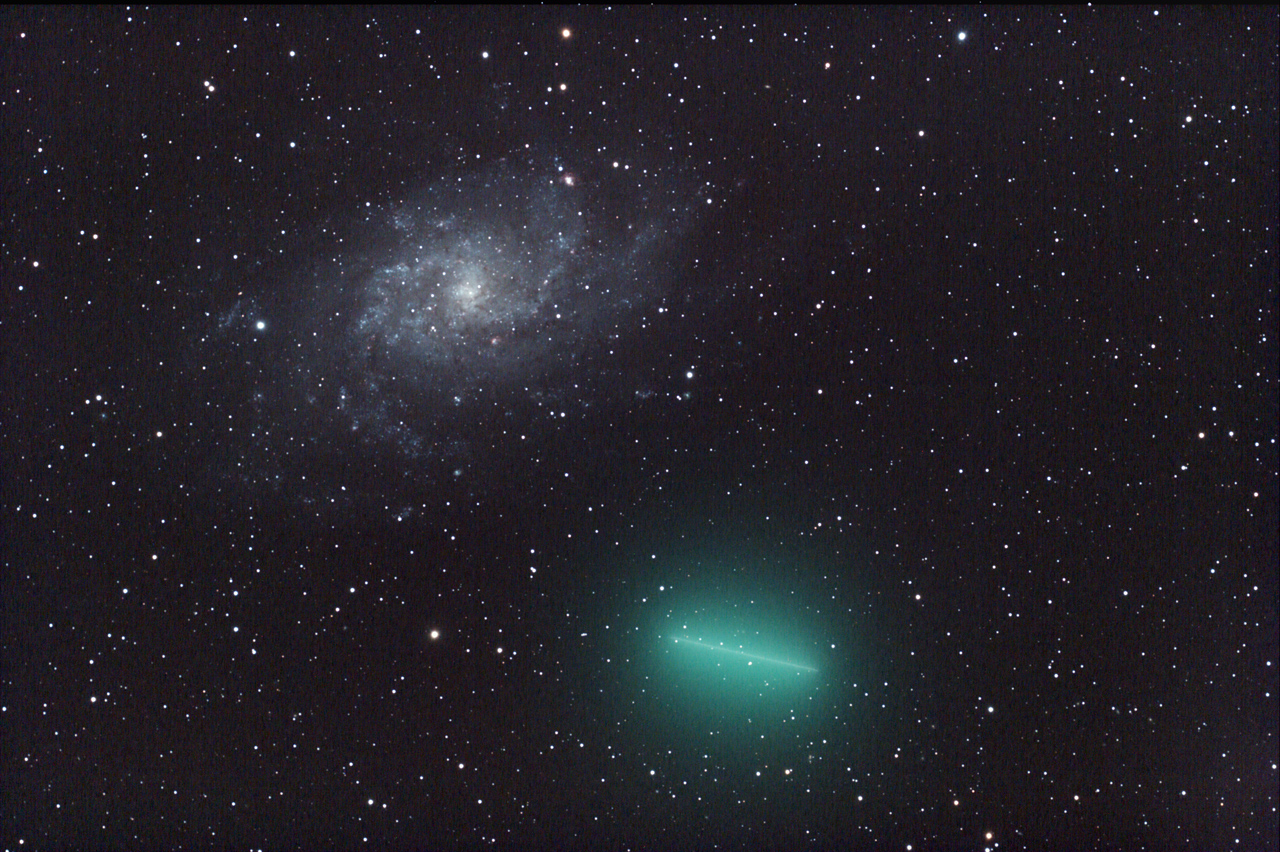
This gorgeous galaxy and comet portrait was recorded on December 30th, in the skies over Hoogeveen, The Netherlands. The combined series of 60 x 60 second exposures finds the lovely green coma of Comet 8P/Tuttle near its predicted conjunction with the Triangulum Galaxy. Aligning each exposure with the stars shows the comet as a streak, slowly moving against the background stars and galaxy. An alternative composition with exposures centered on the comet, shows the background stars and galaxy as streaks. The alluring celestial scene would also have been a rewarding one for the influential 18th century comet hunter Charles Messier. While Messier scanned French skies for comets, he carefully cataloged positions of things which were fuzzy and comet-like in appearance but did not move against the background stars and so were definitely not comets. The Triangulum Galaxy, also known as M33, is the 33rd object in his famous not-a-comet catalog. The modern understanding holds that the Triangulum Galaxy is a large spiral galaxy some 3 million light-years distant. Comet 8P/Tuttle, just bright enough to be visible to the unaided eye in dark, northern skies, is about 40 million kilometers (2 light-minutes) away. The Amateur Astronomers Association of New York Presents: APOD Editor's Lecture: January 4th - American Museum of Natural History
Este magnífico retrato de galaxia y cometa fue registrado el 30 de diciembre en los cielos sobre Hoogeveen, Países Bajos. La serie combinada de 60 exposiciones de 60 segundos cada una captura la hermosa coma verde del Cometa 8P/Tuttle cerca de su conjunción predicha con la Galaxia del Triángulo. Al alinear cada exposición con las estrellas, el cometa aparece como una estela, moviéndose lentamente contra las estrellas y la galaxia de fondo. Una composición alternativa con exposiciones centradas en el cometa muestra las estrellas de fondo y la galaxia como estelas. Esta escena celeste cautivadora también habría resultado gratificante para el influyente cazador de cometas del siglo XVIII Charles Messier. Mientras Messier escaneaba los cielos franceses en busca de cometas, catalogó cuidadosamente las posiciones de objetos que eran difusos y tenían apariencia de cometa pero no se movían contra las estrellas de fondo y, por lo tanto, definitivamente no eran cometas. La Galaxia del Triángulo, también conocida como M33, es el 33.er objeto en su famoso catálogo de "no-cometas". El entendimiento moderno sostiene que la Galaxia del Triángulo es una gran galaxia espiral ubicada a unos 3 millones de años luz de distancia. El Cometa 8P/Tuttle, lo suficientemente brillante como para ser visible a simple vista en cielos oscuros del hemisferio norte, se encuentra a aproximadamente 40 millones de kilómetros (2 minutos luz) de distancia.