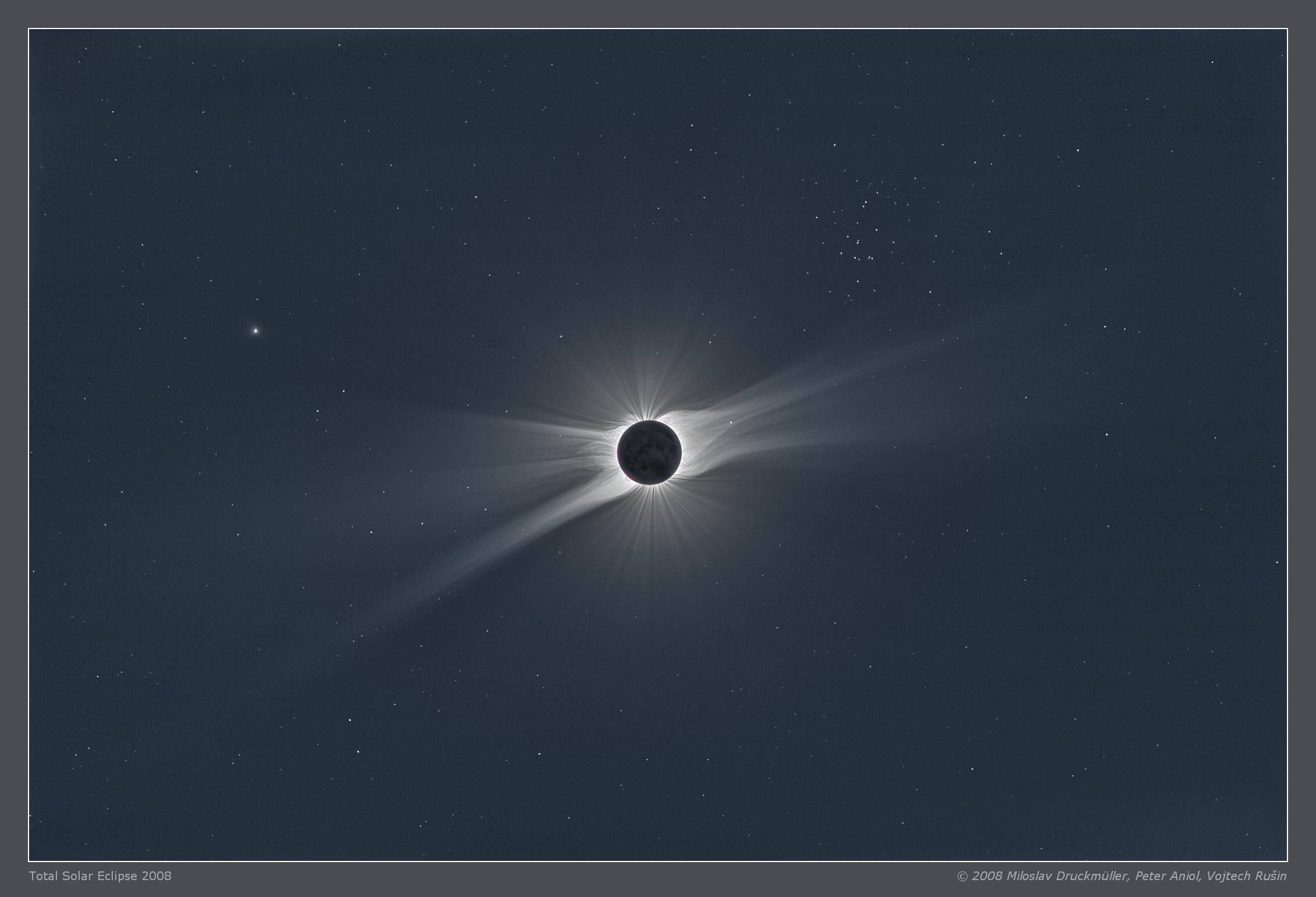
For a moment on August 1st, the daytime sky grew dark along the path of a total solar eclipse. While watching the geocentric celestial event from Mongolia, photographer Miloslav Druckmuller recorded multiple images with two separate cameras as the Moon blocked the bright solar disk and darkened the sky. This final composition consists of 55 frames ranging in exposure time from 1/125 to 8 seconds. It spans nearly 12 degrees, with the relative position of the Moon and Sun corresponding to mid-eclipse. On the left is bright planet Mercury, but many stars are also visible, including the Praesepe star cluster (also known as M44 or the Beehive cluster) in Cancer, above and to the right of the silhouetted Moon. Remarkably, the nearly perfect conditions and wide range in individual exposures allow the composite picture to register the lunar surface and follow the delicate solar corona out to a distance of nearly 20 times the radius of the Sun. In fact, the composite presents a range in brightness beyond what the eye could see during the eclipse.
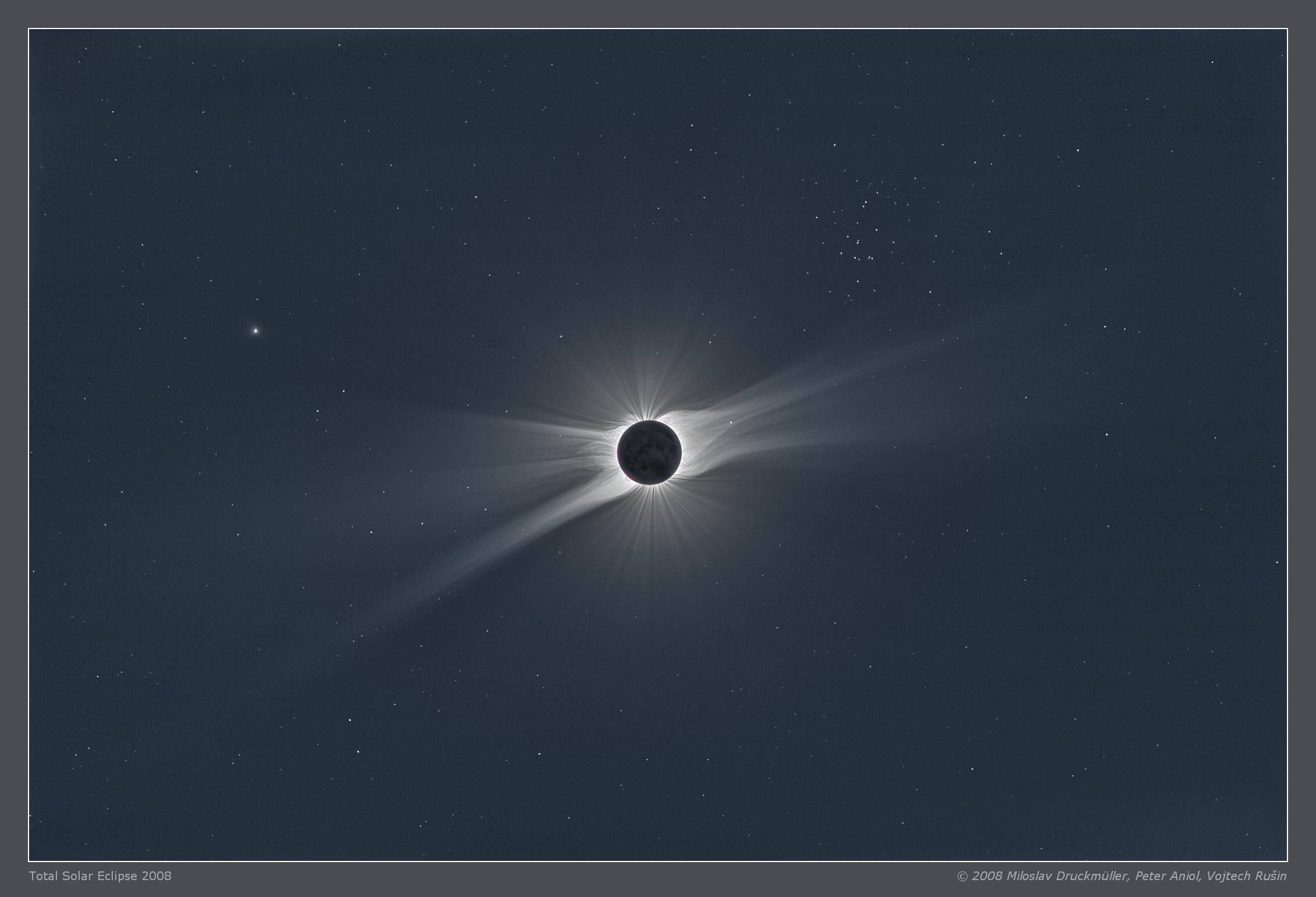
Durante un momento el 1 de agosto, el cielo diurno se oscureció a lo largo de la trayectoria de un eclipse total de sol. Mientras observaba este evento celeste geocéntrico desde Mongolia, el fotógrafo Miloslav Druckmuller registró múltiples imágenes con dos cámaras separadas mientras la Luna bloqueaba el disco solar brillante y oscurecía el cielo. Esta composición final consta de 55 fotogramas con tiempos de exposición que varían de 1/125 a 8 segundos. Abarca casi 12 grados, con la posición relativa de la Luna y el Sol correspondiente al momento del eclipse máximo. A la izquierda se encuentra el brillante planeta Mercurio, pero también son visibles muchas estrellas, incluyendo el cúmulo de estrellas Praesepe (también conocido como M44 o cúmulo de la Colmena) en Cáncer, arriba y a la derecha de la Luna silueteada. Notablemente, las condiciones casi perfectas y el amplio rango de exposiciones individuales permiten que la imagen compuesta registre la superficie lunar y siga la delicada corona solar hasta una distancia de casi 20 veces el radio del Sol. De hecho, la composición presenta un rango de brillo más allá de lo que el ojo podría ver durante el eclipse.