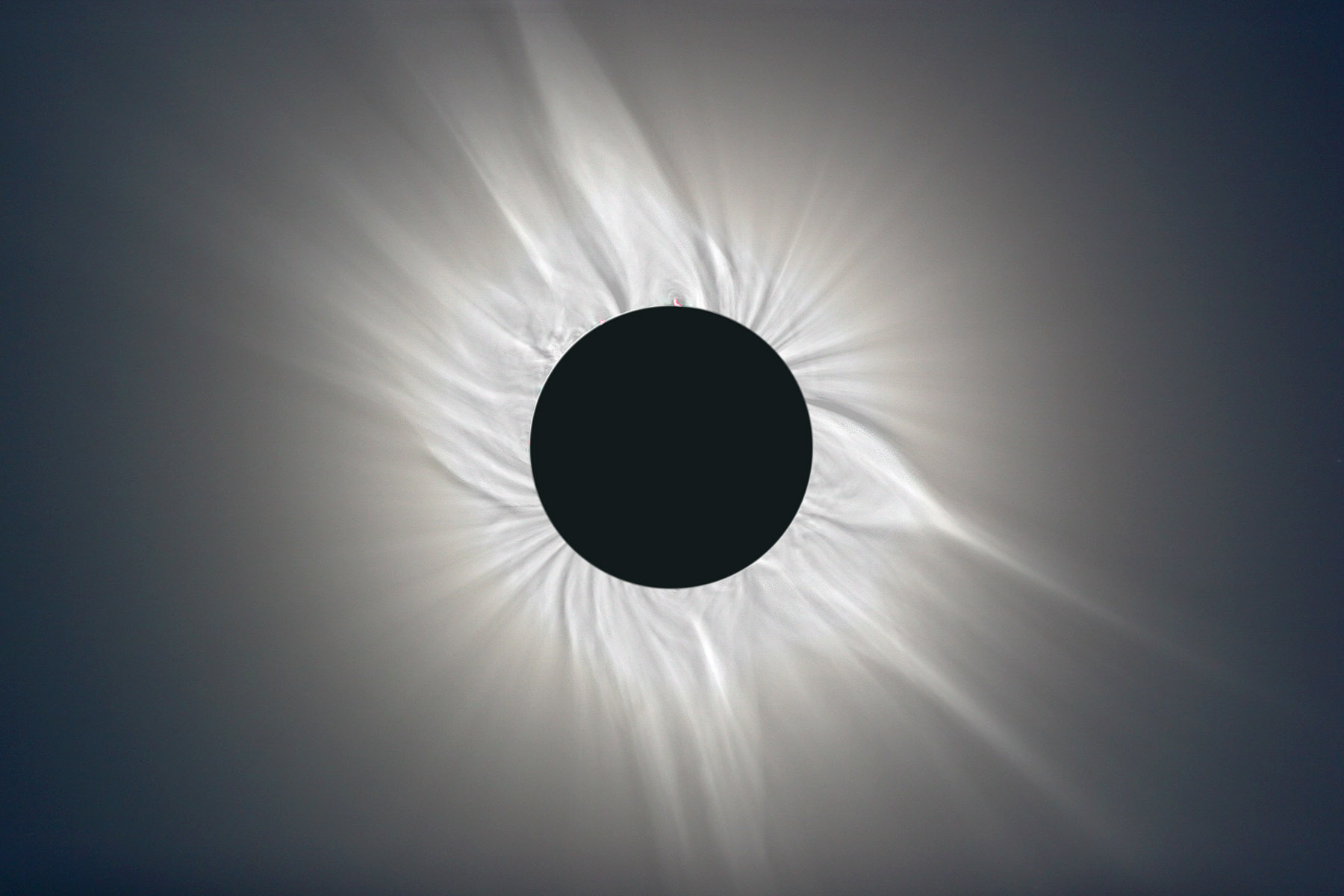
Most photographs don't adequately portray the magnificence of the Sun's corona. Seeing the corona first-hand during a total solar eclipse is best. The human eye can adapt to see features and extent that photographic film usually cannot. Welcome, however, to the digital age. The above picture is a combination of thirty-three photographs that were digitally processed to highlight faint features of a total eclipse that occurred in March of 2006. The images of the Sun's corona were digitally altered to enhance dim, outlying waves and filaments. Shadow seekers need not fret, though, since as yet there is no way that digital image processing can mimic the fun involved in experiencing a total solar eclipse. Last week, a spectacular total solar eclipse occurred over southern Asia, while the The next total solar eclipse will be visible from the South Pacific on 2010 July 11. Note: An APOD editor will review great space images this Saturday night at Ft. Wilkins, Michigan.
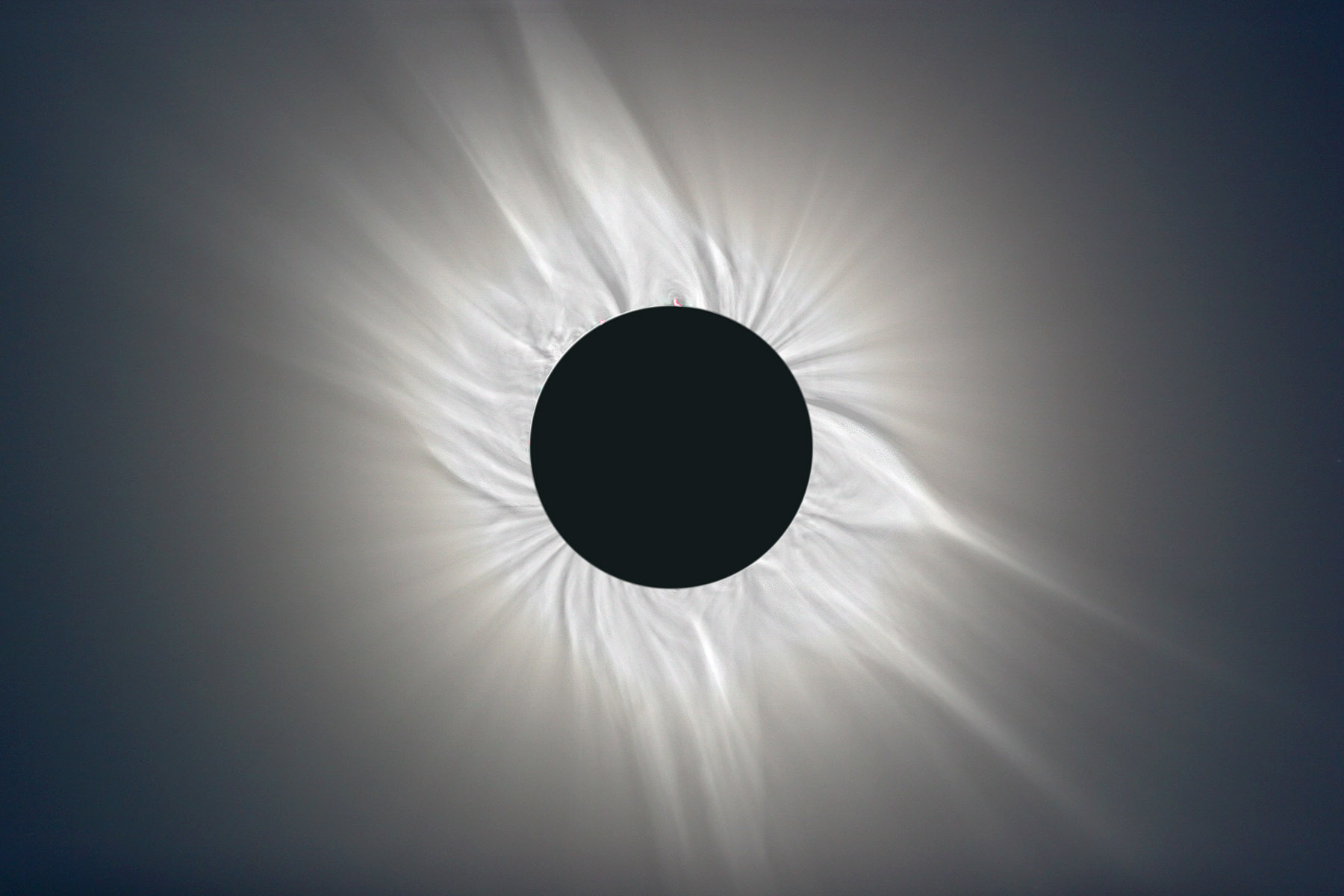
Crédito: NASA, CGRO SSC La mayoría de las fotografías no representan adecuadamente la magnificencia de la corona solar. Ver la corona en persona durante un eclipse solar total es lo mejor. El ojo humano puede adaptarse para ver características y extensiones que la película fotográfica generalmente no puede capturar. Sin embargo, bienvenidos al mundo digital. La imagen de arriba es una combinación de treinta y tres fotografías que fueron procesadas digitalmente para resaltar características tenues de un eclipse total que ocurrió en marzo de 2006. Las imágenes de la corona solar fueron modificadas digitalmente para mejorar las ondas y filamentos tenues y externos. Aunque los amantes de la sombra no deben preocuparse, ya que hasta ahora no hay forma en que el procesamiento de imágenes digitales pueda imitar la diversión que implica experimentar un eclipse solar total. La semana pasada, un espectacular eclipse solar total tuvo lugar sobre el sureste de Asia, mientras que el próximo eclipse solar total será visible desde el Pacífico Sur el 11 de julio de 2010.