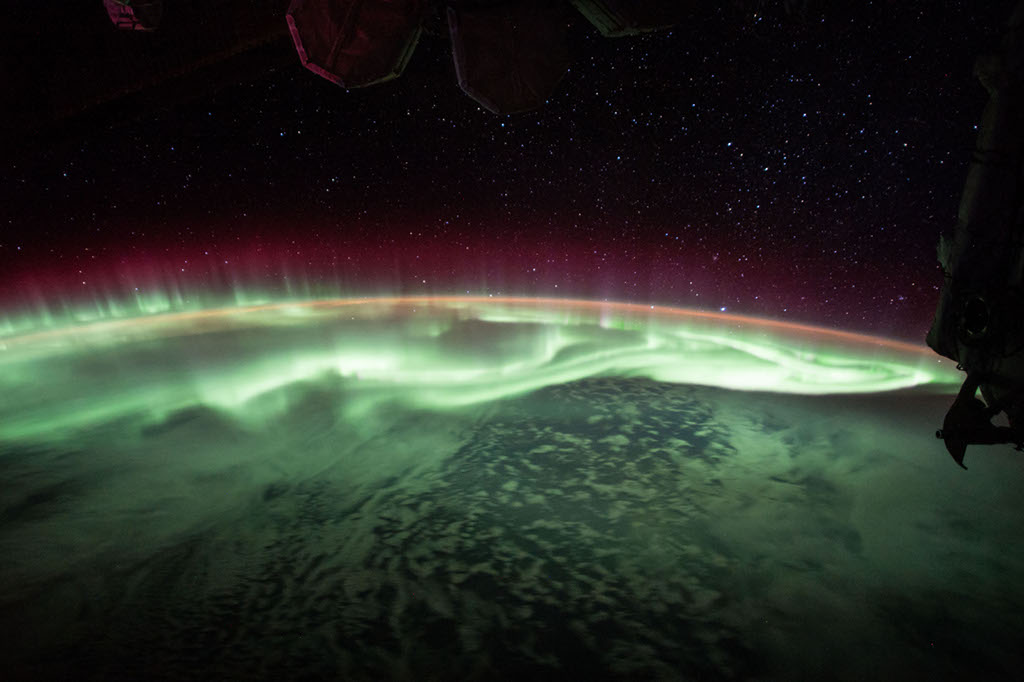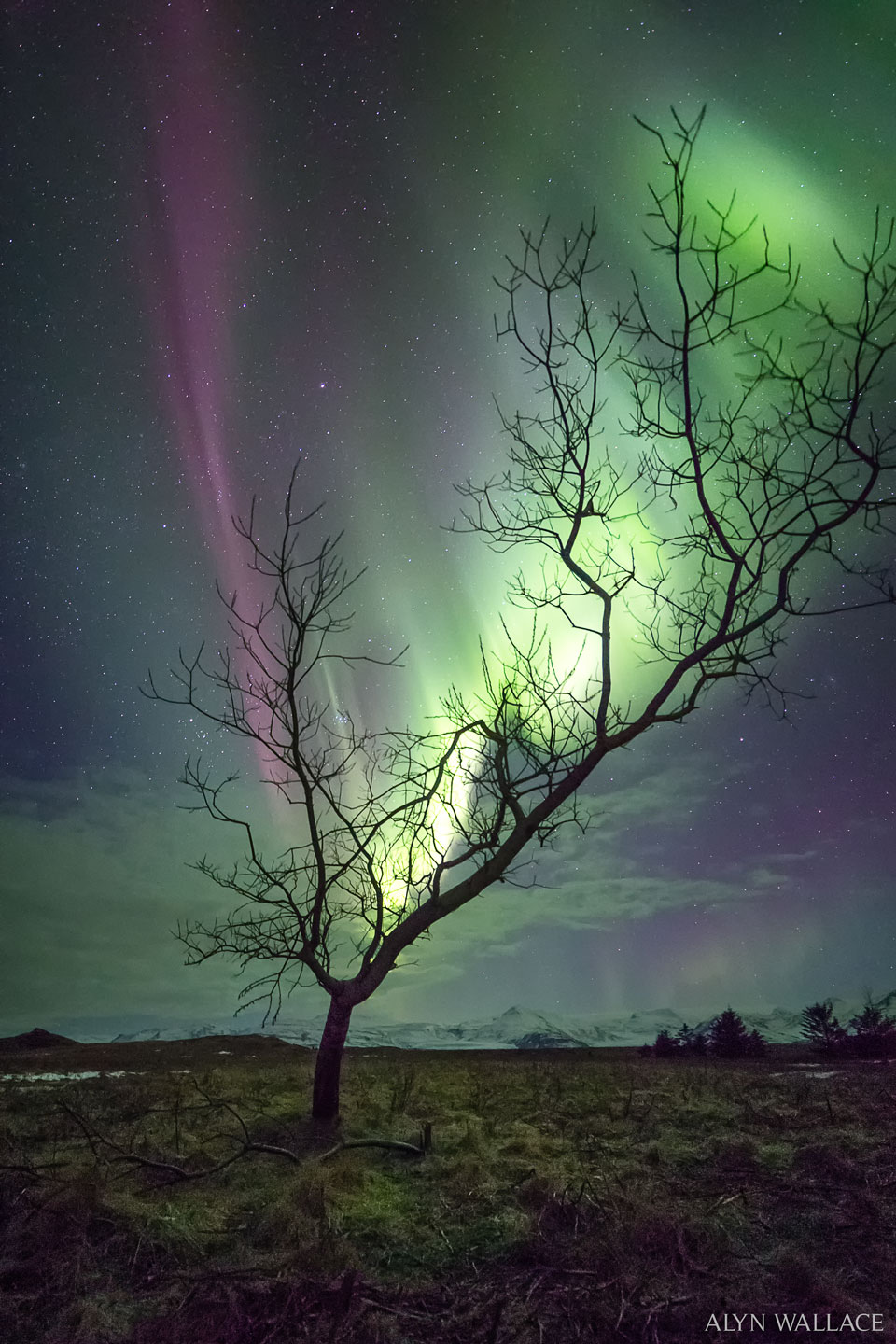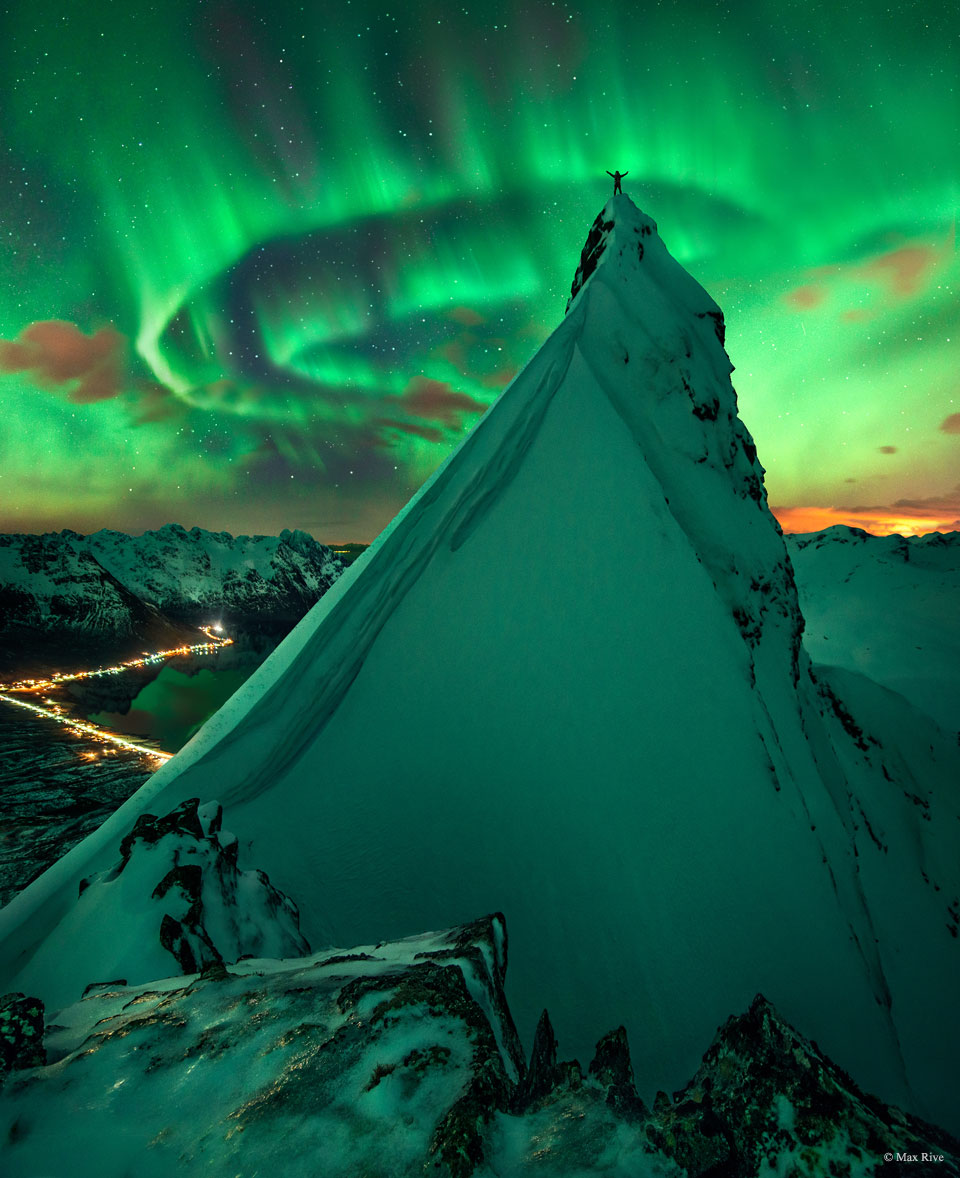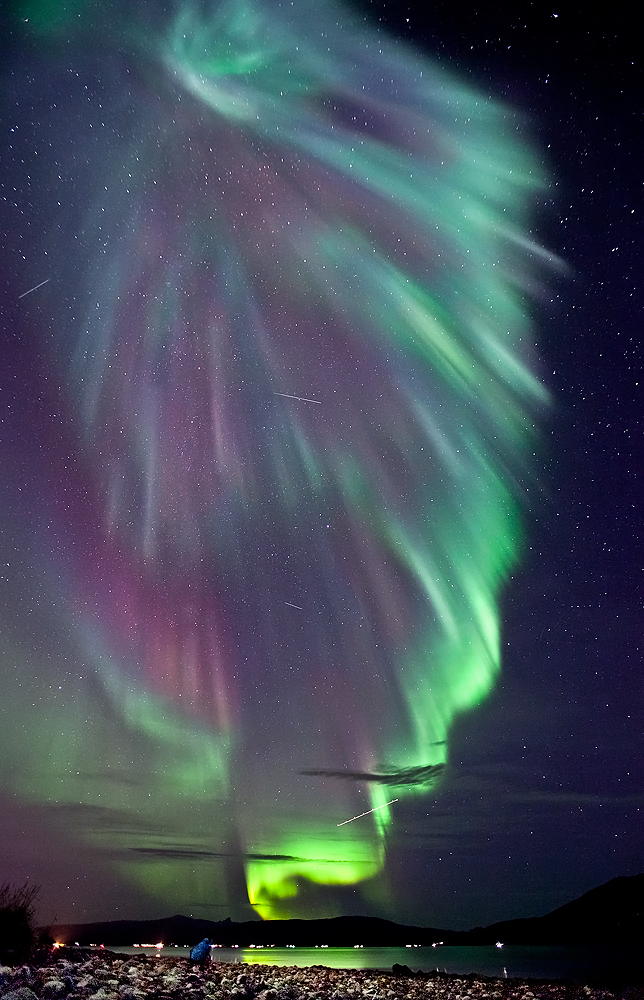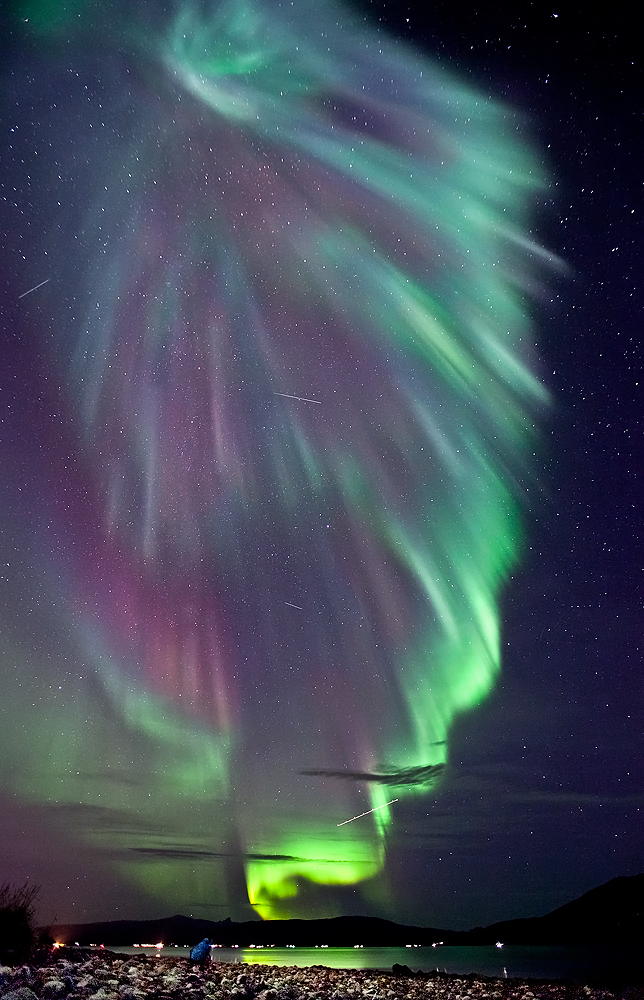
Auroras can make spectacular sights. Photographed above last weekend, flowing multi-colored auroras helped illuminate a busy sky above Troms�, Norway. Besides the spectacular aurora pictured above, the photographer caught three satellites streaks, one airplane streak, and a friend trying to capture the same sight. Although auroras might first appear to be moonlit clouds, they only add light to the sky and do not block background stars from view. Called northern lights in the northern hemisphere, auroras are caused by collisions between charged particles from the magnetosphere and air molecules high in the Earth's atmosphere. If viewed from space, auroras can be seen to glow in X-ray and ultraviolet light as well. Predictable auroras might occur a few days after a powerful magnetic event has been seen on the Sun.
Las auroras pueden crear paisajes espectaculares. Fotografiadas la semana pasada, las multicolores auroras que fluyen iluminaron un cielo animado sobre Tromsø, Noruega. Además de la espectacular aurora mostrada arriba, el fotógrafo capturó tres rastros de satélites, uno de un avión, y a un amigo intentando capturar la misma escena. Aunque las auroras podrían parecer inicialmente nubes iluminadas por la luna, solo añaden luz al cielo y no bloquean las estrellas de fondo. Llamadas luces del norte en el hemisferio norte, las auroras son causadas por colisiones entre partículas cargadas del magnetosfera y moléculas de aire a gran altura en la atmósfera terrestre. Si se observan desde el espacio, las auroras también se ven brillar en luz X y ultravioleta. Las auroras predecibles podrían ocurrir unos días después de un evento magnético poderoso observado en el Sol.