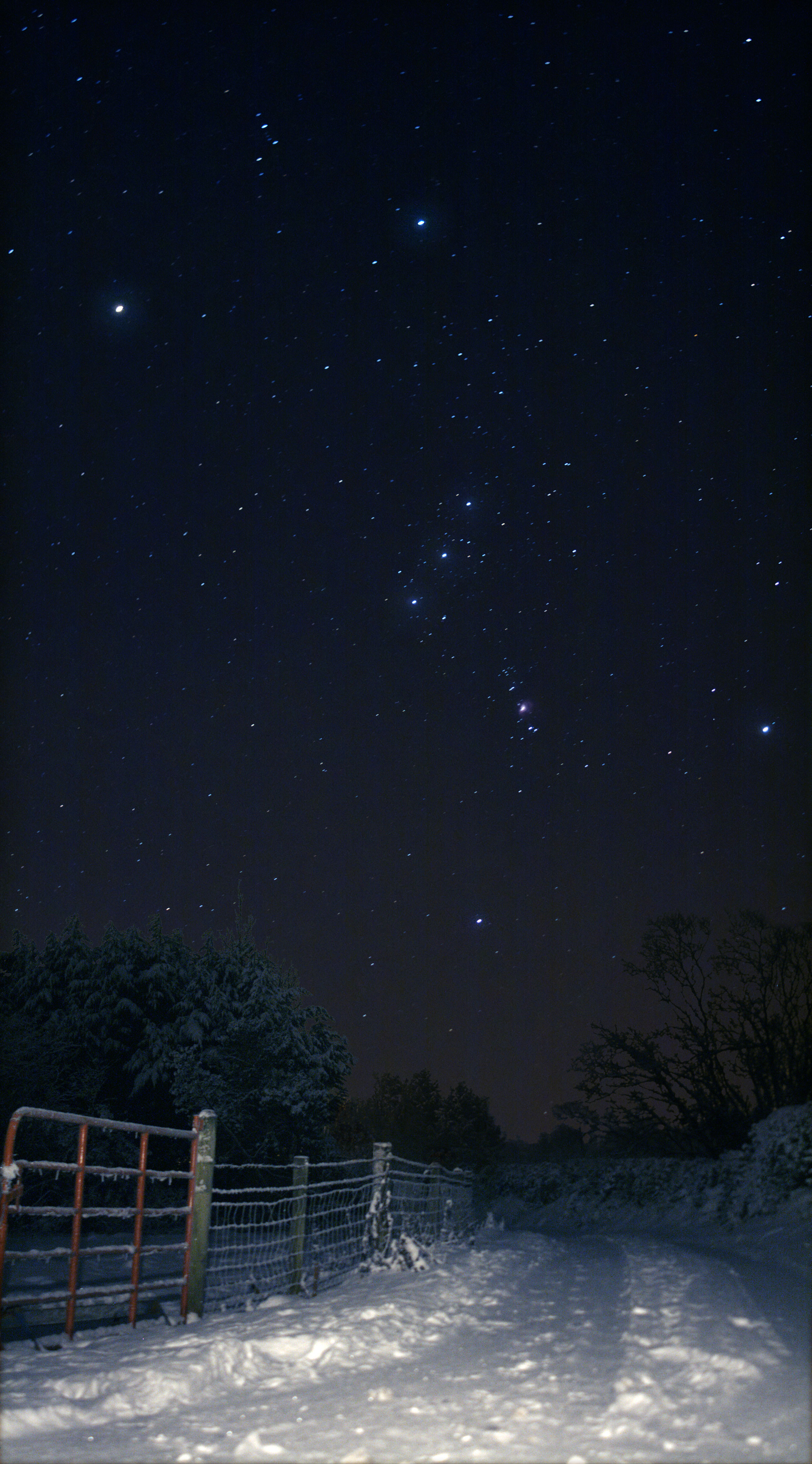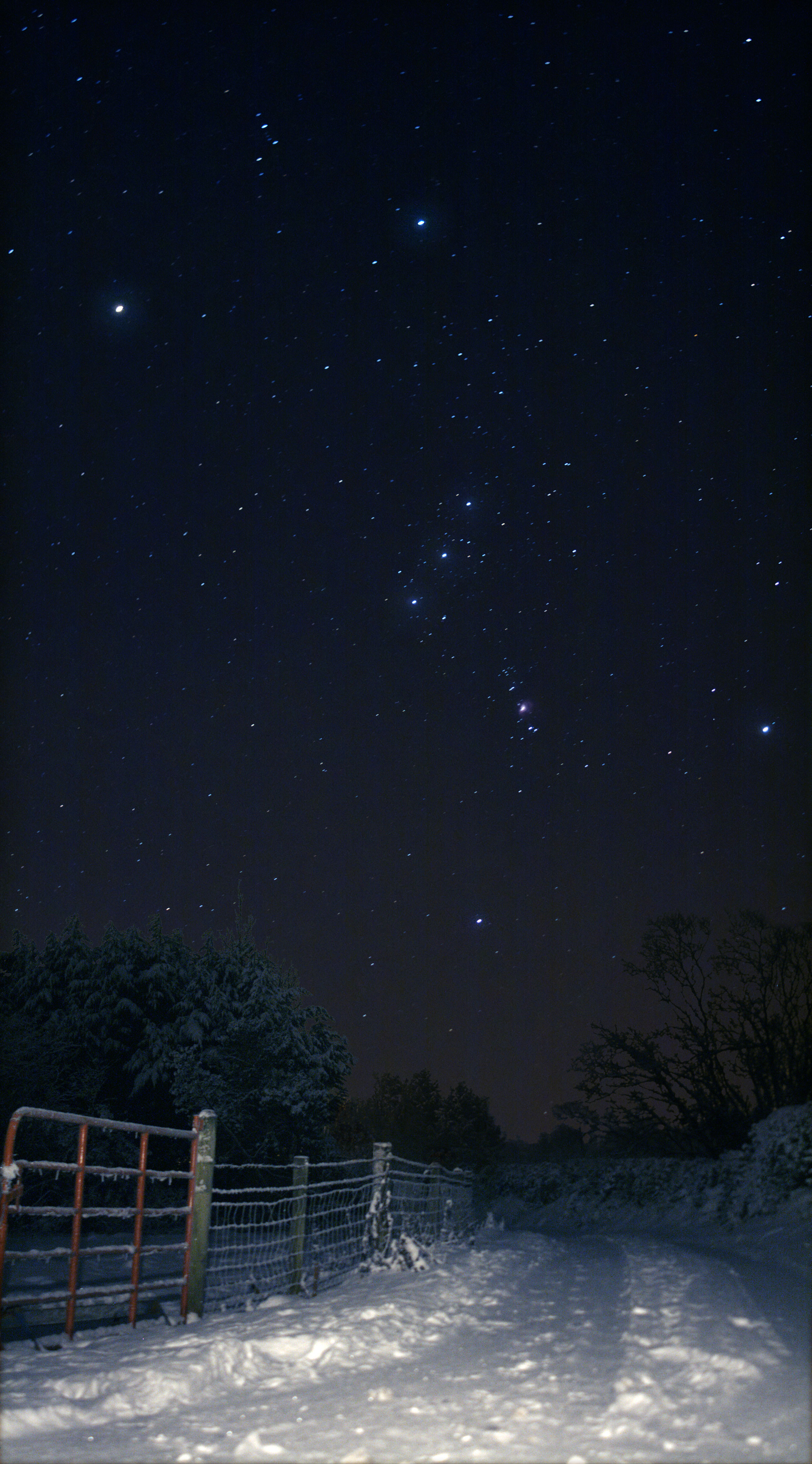
Orion always comes up sideways ... and was caught in the act earlier this month by over a snowy landscape in Donegal, Ireland. To compose this serene picture, the photographer found a picturesque setting to the east, waited until after sunset, and then momentarily lit the foreground with a flashlight. The three bright stars in Orion's belt stand in a nearly vertical line above the snow covered road at the bottom. Hanging from his belt, the stars and nebulae of the Hunter's sword are visible lower and to the right. Yellow-orange Betelgeuse is the brightest star on the image left. As winter progresses in Earth's northern hemisphere, Orion will rise earlier and so appear continually higher in the sky at sunset. Best Astronomy Images: APOD Editor to speak in Philadelphia on Jan 5 and New York City on Jan 7
Crédito: NASA, APOD Orion siempre aparece de costado... y fue capturado en acción a principios de este mes sobre un paisaje nevado en Donegal, Irlanda. Para componer esta tranquila imagen, el fotógrafo encontró un escenario pintoresco al este, esperó hasta después de la puesta de sol y luego iluminó momentáneamente el primer plano con una linterna. Las tres estrellas brillantes de la cintura de Orion se alinean casi verticalmente sobre la carretera cubierta de nieve en la parte inferior. Colgando de su cintura, las estrellas y nebulosas de la espada del Cazador son visibles más abajo y a la derecha. La estrella Betelgeuse, de color amarillo-anaranjado, es la más brillante en el lado izquierdo de la imagen. A medida que avanza el invierno en el hemisferio norte de la Tierra, Orion aparecerá cada vez más temprano y por tanto se verá continuamente más alto en el cielo al atardecer.