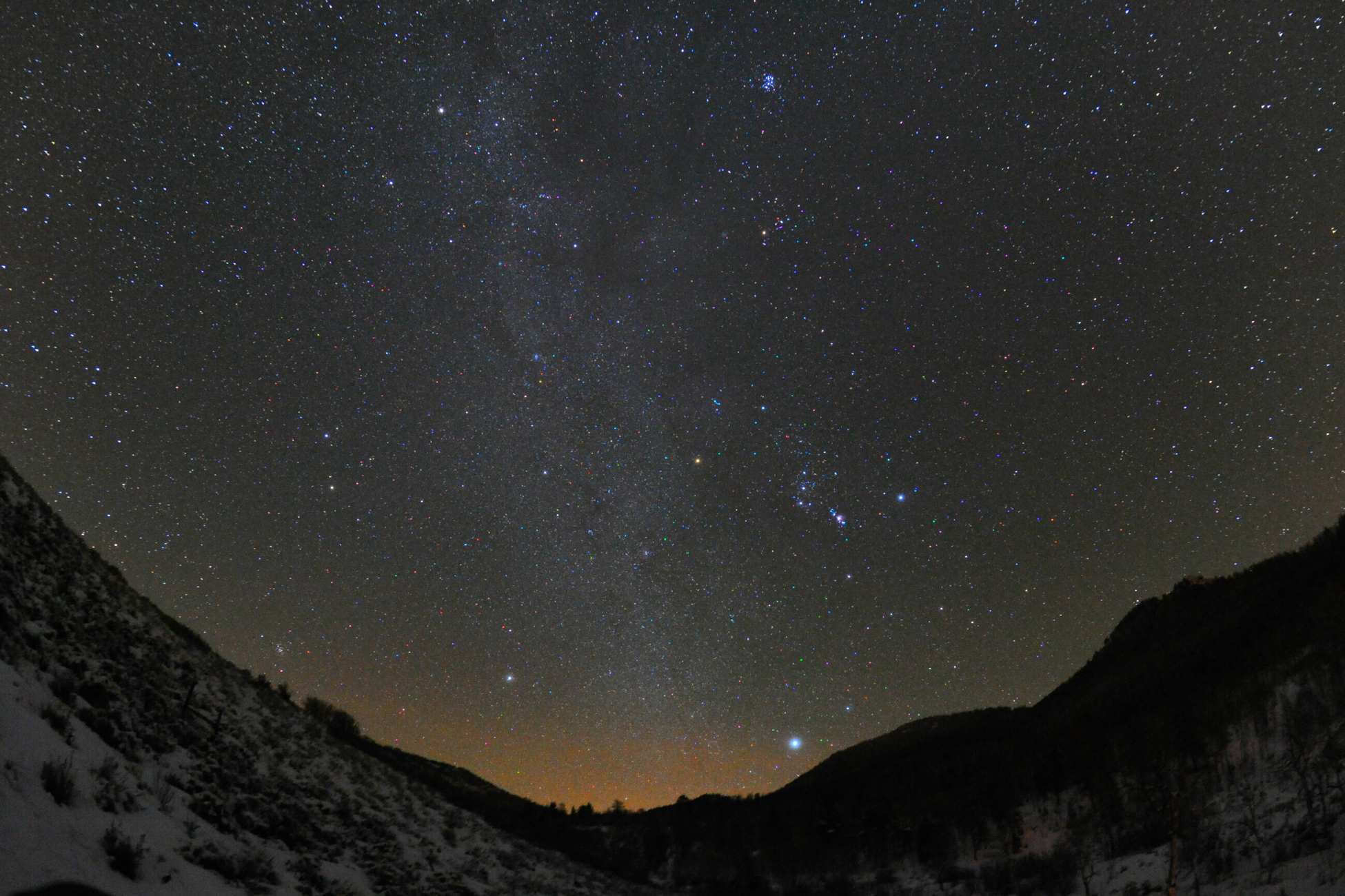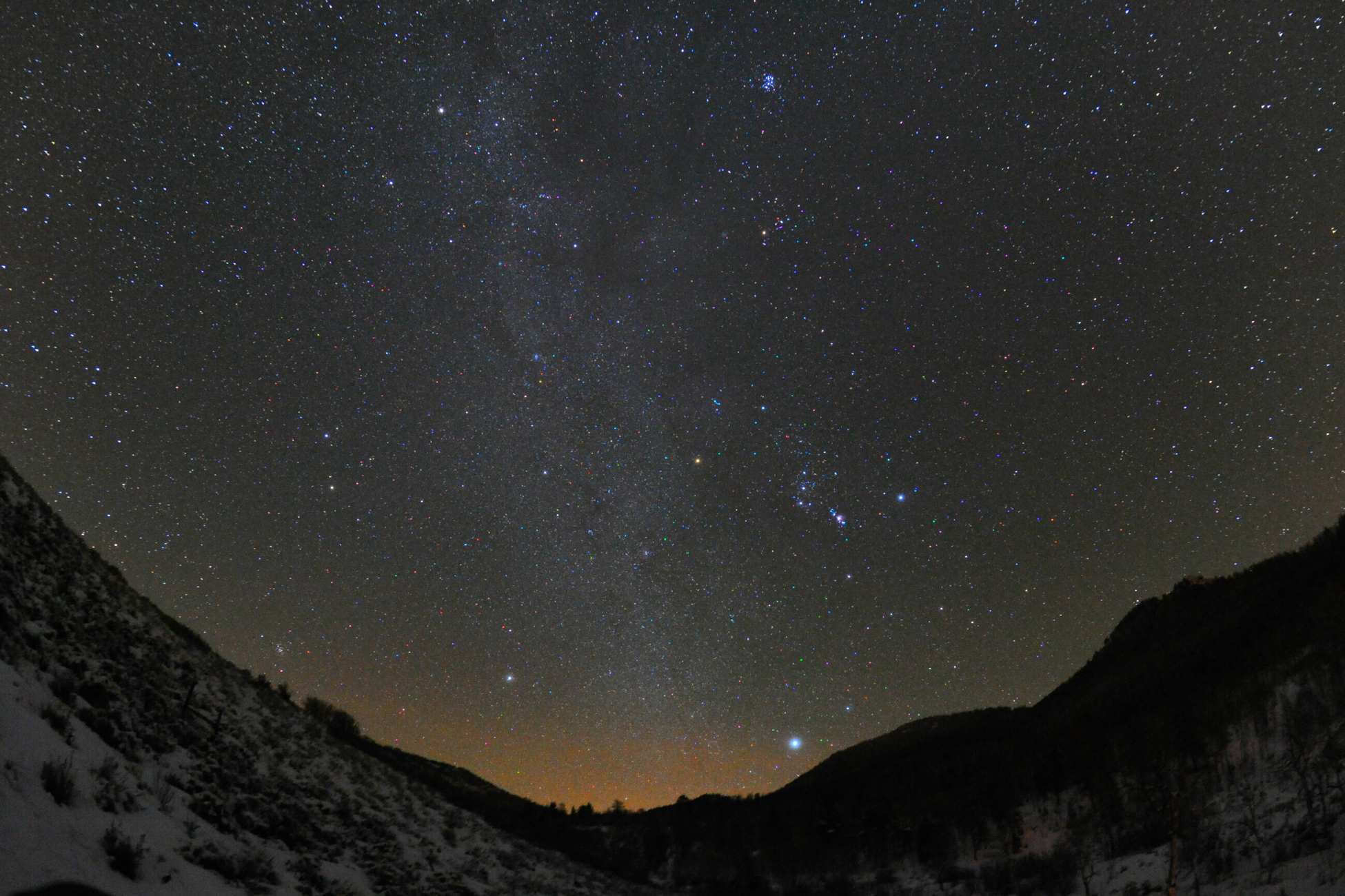
If you can find Orion, you might be able to find the Winter Hexagon. The Winter Hexagon involves some of the brightest stars visible, together forming a large and easily found pattern in the winter sky of Earth's northern hemisphere. The stars involved can usually be identified even in the bright night skies of a big city, although here they appear over darker Stagecoach, Colorado, USA.. The six stars that compose the Winter Hexagon are Aldebaran, Capella, Castor (and Pollux), Procyon, Rigel, and Sirius. Here, the band of our Milky Way Galaxy runs through the center of the Winter Hexagon, while the Pleiades open star cluster is visible just above. The Winter Hexagon asterism engulfs several constellations including much of the iconic steppingstone Orion. Best Astronomy Images: APOD Editor to speak in Philadelphia and New York City this week
Si logras encontrar a Orión, es probable que también puedas encontrar el Hexágono de Invierno. Este asterismo involucra algunas de las estrellas más brillantes del cielo, formando juntas un patrón grande y fácil de identificar en el cielo invernal del hemisferio norte de la Tierra. Las estrellas que lo componen pueden reconocerse incluso en los cielos nocturnos iluminados de una gran ciudad, aunque aquí aparecen sobre el cielo más oscuro de Stagecoach, Colorado, EE. UU. Las seis estrellas que conforman el Hexágono de Invierno son Aldebarán, Capella, Cástor (y Pólux), Proción, Rigel y Sirio. En esta imagen, la banda de nuestra galaxia, la Vía Láctea, atraviesa el centro del Hexágono de Invierno, mientras que el cúmulo estelar abierto de las Pléyades es visible justo por encima. El asterismo del Hexágono de Invierno engloba varias constelaciones, incluyendo gran parte de la icónica constelación de Orión.