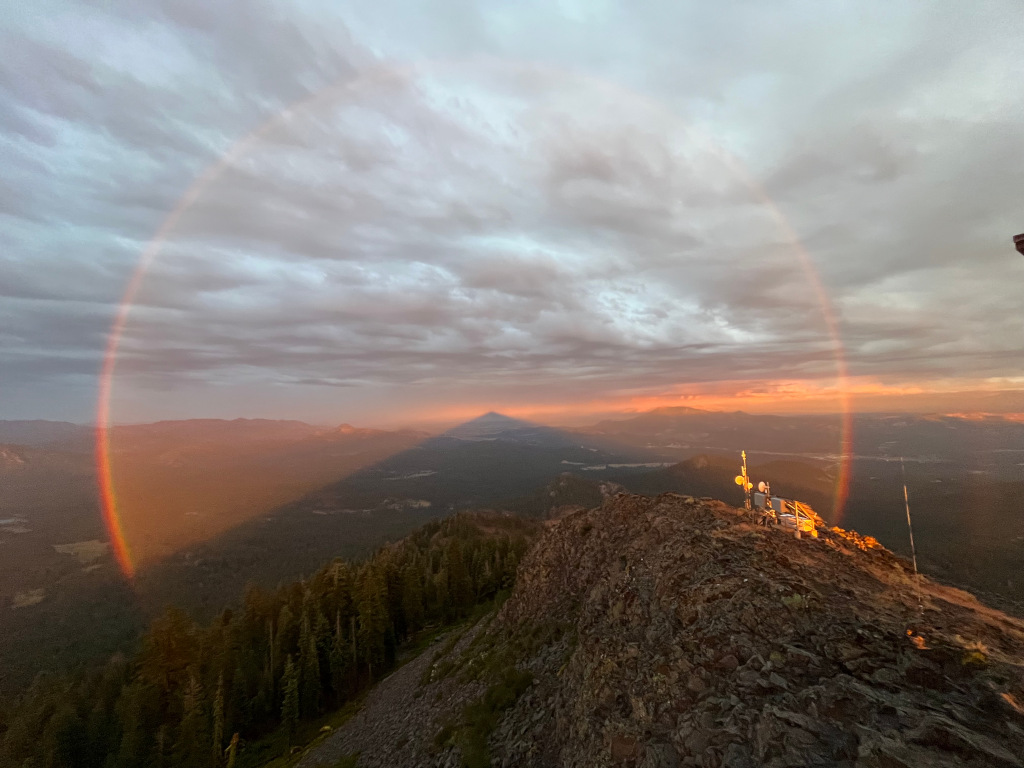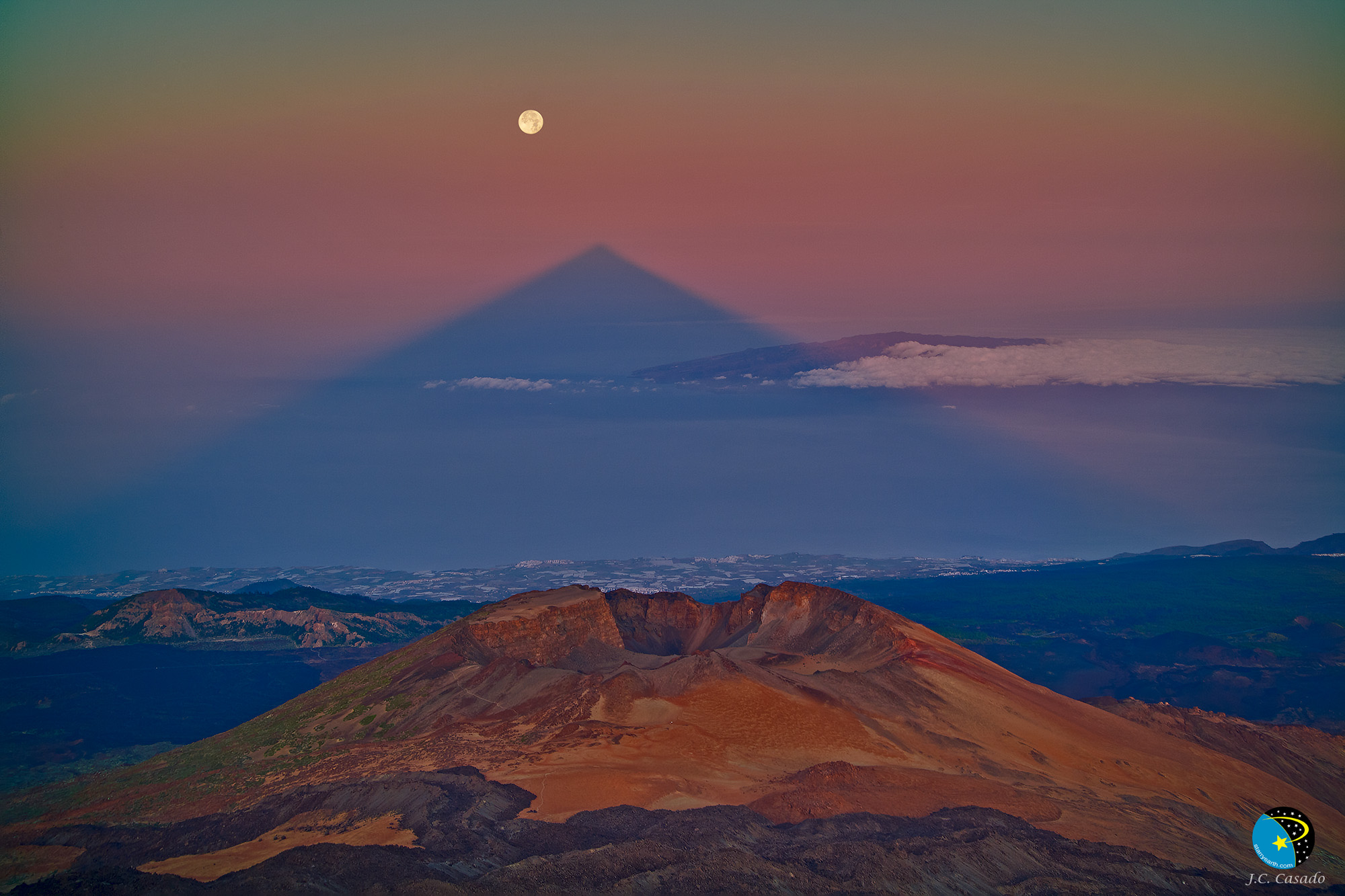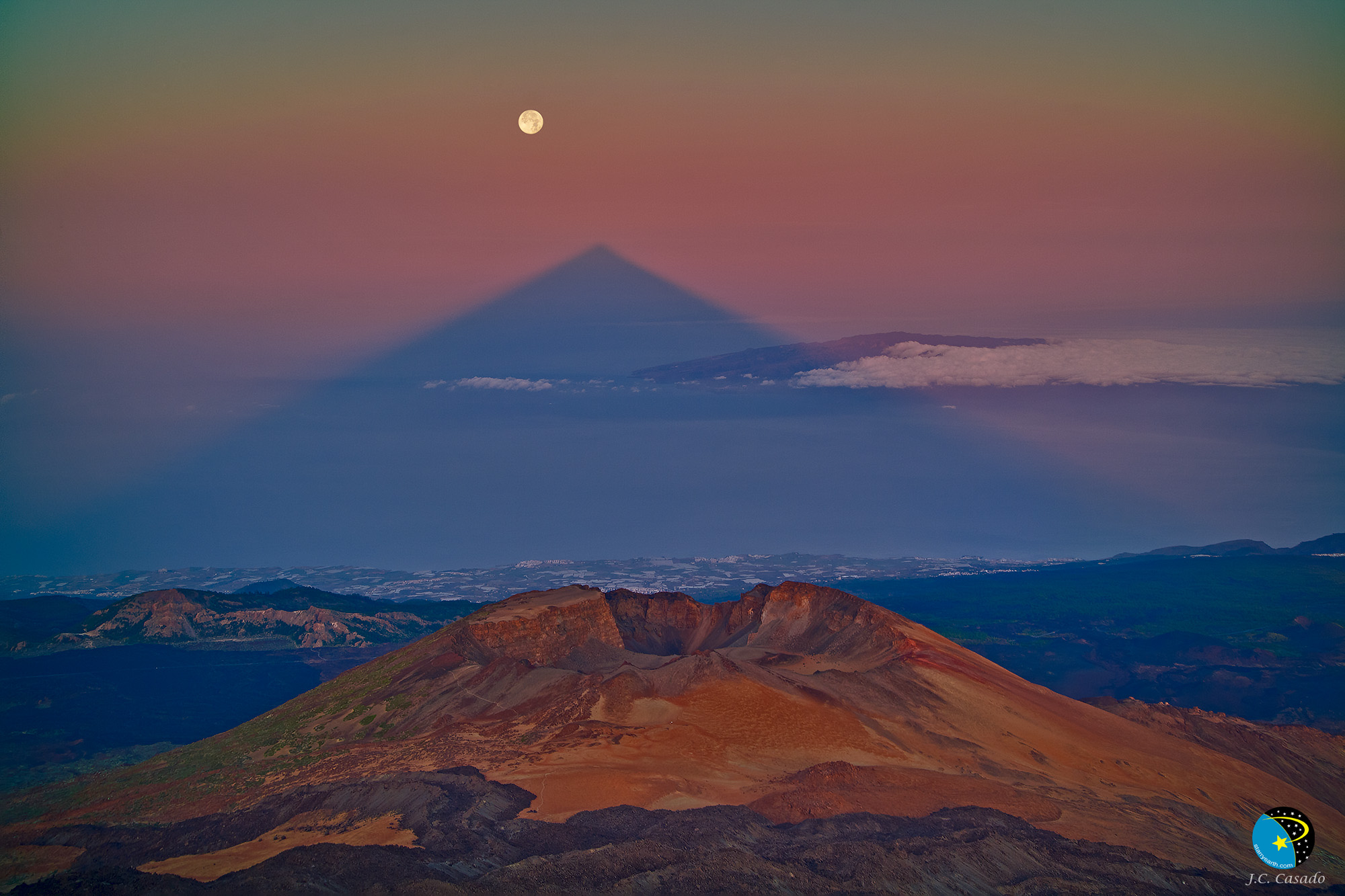
Why does the shadow of this volcano look like a triangle? The Mount Teide volcano itself does not have the strictly pyramidal shape that its geometric shadow might suggest. The triangle shadow phenomena is not unique to the Mt. Teide, though, and is commonly seen from the tops of other large mountains and volcanoes. A key reason for the strange dark shape is that the observer is looking down the long corridor of a sunset (or sunrise) shadow that extends to the horizon. Even if the huge volcano were a perfect cube and the resulting shadow were a long rectangular box, that box would appear to taper off at its top as its shadow extended far into the distance, just as parallel train tracks do. The above spectacular image shows Pico Viejo crater in the foreground, located on Tenerife in the Canary Islands of Spain. The nearly full moon is seen nearby shortly after its total lunar eclipse last month.
¿Por qué la sombra de este volcán tiene forma de triángulo? El volcán Teide en sí no posee la forma estrictamente piramidal que su sombra geométrica podría sugerir. Sin embargo, el fenómeno de la sombra triangular no es exclusivo del Teide y se observa con frecuencia desde la cima de otras grandes montañas y volcanes. Una razón fundamental para esta extraña forma oscura es que el observador está mirando a lo largo del largo corredor de la sombra proyectada durante el atardecer (o el amanecer), que se extiende hasta el horizonte. Aunque el enorme volcán fuera un cubo perfecto y la sombra resultante fuera un largo paralelepípedo rectangular, dicha figura parecería estrecharse en su parte superior a medida que la sombra se aleja hacia la distancia, del mismo modo que las vías paralelas de un tren parecen converger en la lejanía. La espectacular imagen muestra en primer plano el cráter Pico Viejo, ubicado en Tenerife, en las Islas Canarias, España. La Luna, casi llena, se observa cercana poco después de su eclipse lunar total del mes pasado.