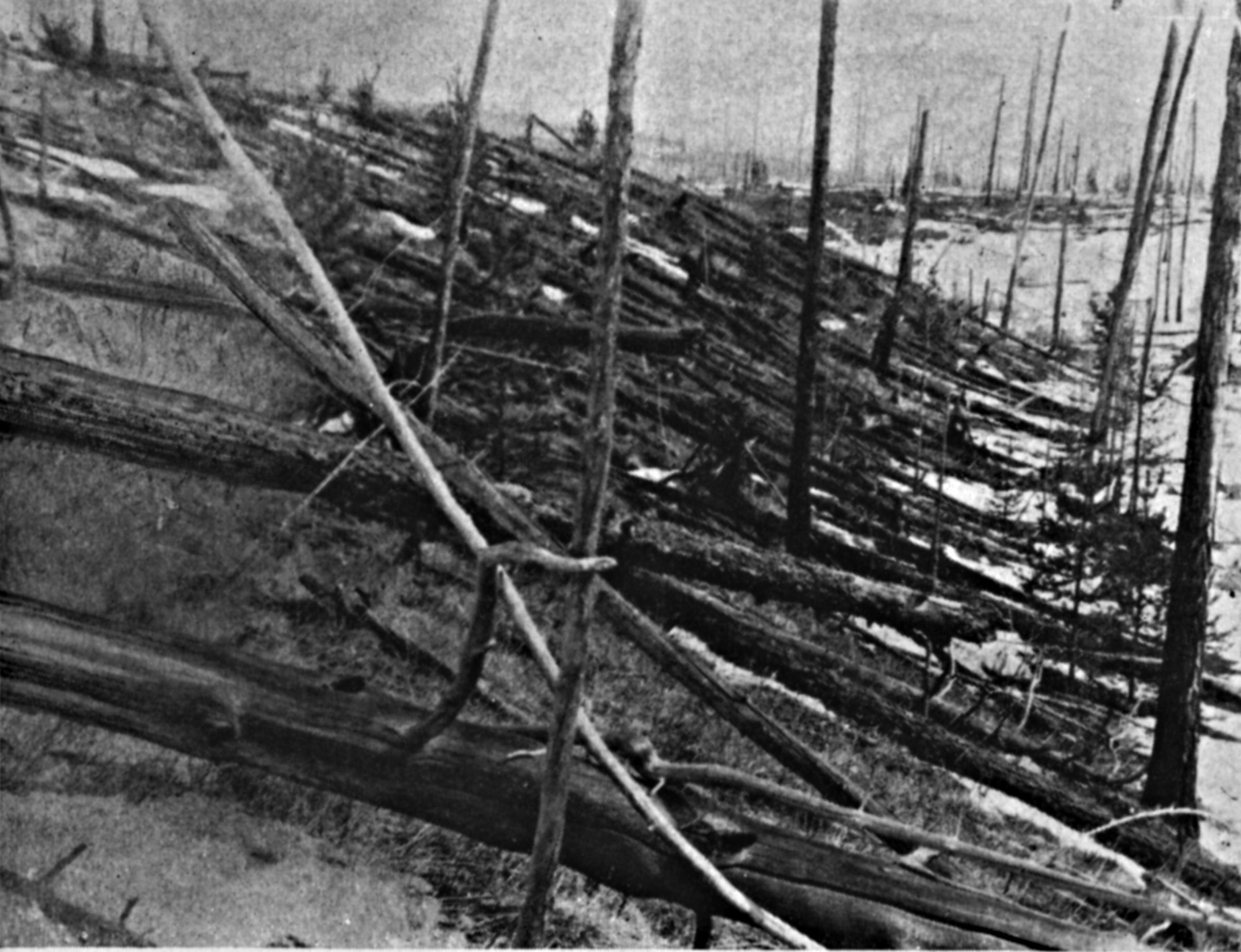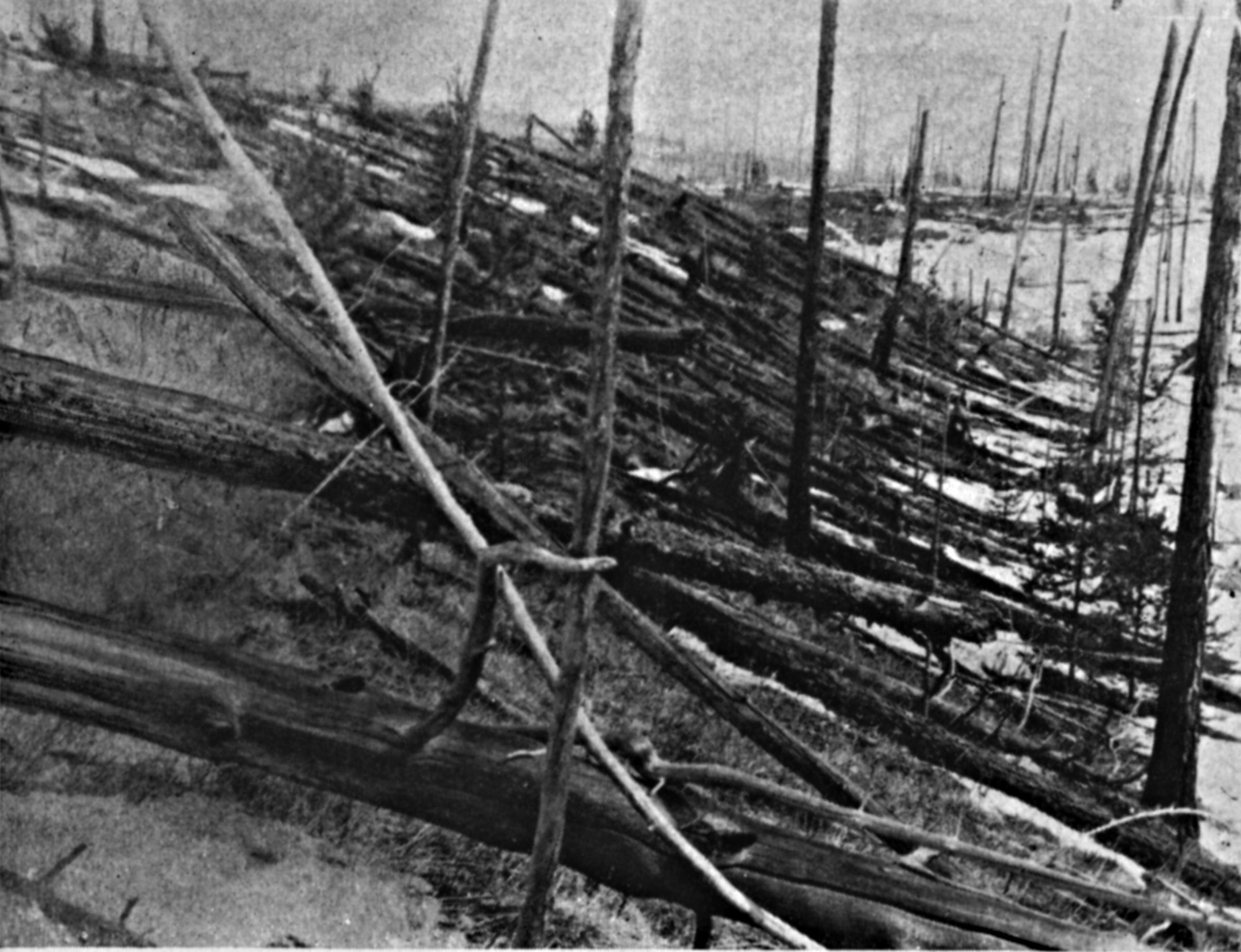
Yes, but can your meteor do this? The most powerful natural explosion in recent Earth history occurred on 1908 June 30 when a meteor exploded above the Tunguska River in Siberia, Russia. Detonating with an estimated power 1,000 times greater than the atomic bomb dropped over Hiroshima, the Tunguska event leveled trees over 40 kilometers away and shook the ground in a tremendous earthquake. Eyewitness reports are astounding. The above picture was taken by a Russian expedition to the Tunguska site almost 20 years after the event, finding trees littering the ground like toothpicks. Estimates of the meteor's size range from 60 meters to over 1000 meters in diameter. Recent evidence suggests that nearby Lake Cheko may even have been created by the impact. Although a meteor the size of the Tunguska can level a city, metropolitan areas take up such a small fraction of the Earth's surface that a direct impact on one is relatively unlikely. More likely is an impact in the water near a city that creates a dangerous tsunami. One focus of modern astronomy is to find Solar System objects capable of creating such devastation well before they impact the Earth.
Sí, pero ¿puede tu meteoro hacer esto? La explosión natural más poderosa de la historia reciente de la Tierra ocurrió el 30 de junio de 1908, cuando un meteoro estalló sobre el río Tunguska en Siberia, Rusia. Al detonar con una potencia estimada 1.000 veces mayor que la bomba atómica lanzada sobre Hiroshima, el evento de Tunguska derribó árboles a más de 40 kilómetros de distancia y sacudió el suelo provocando un tremendo terremoto. Los testimonios de testigos presenciales son asombrosos. La imagen fue tomada por una expedición rusa al sitio de Tunguska casi 20 años después del evento, donde se encontraron árboles esparcidos por el suelo como palillos. Las estimaciones sobre el tamaño del meteoro oscilan entre 60 metros y más de 1.000 metros de diámetro. Evidencia reciente sugiere que el cercano lago Cheko podría incluso haber sido creado por el impacto. Aunque un meteoro del tamaño del de Tunguska puede arrasar una ciudad, las áreas metropolitanas ocupan una fracción tan pequeña de la superficie terrestre que un impacto directo sobre una de ellas es relativamente improbable. Más probable es un impacto en el agua cerca de una ciudad que genere un peligroso tsunami. Uno de los enfoques de la astronomía moderna es identificar objetos del Sistema Solar capaces de causar tal devastación mucho antes de que impacten contra la Tierra.