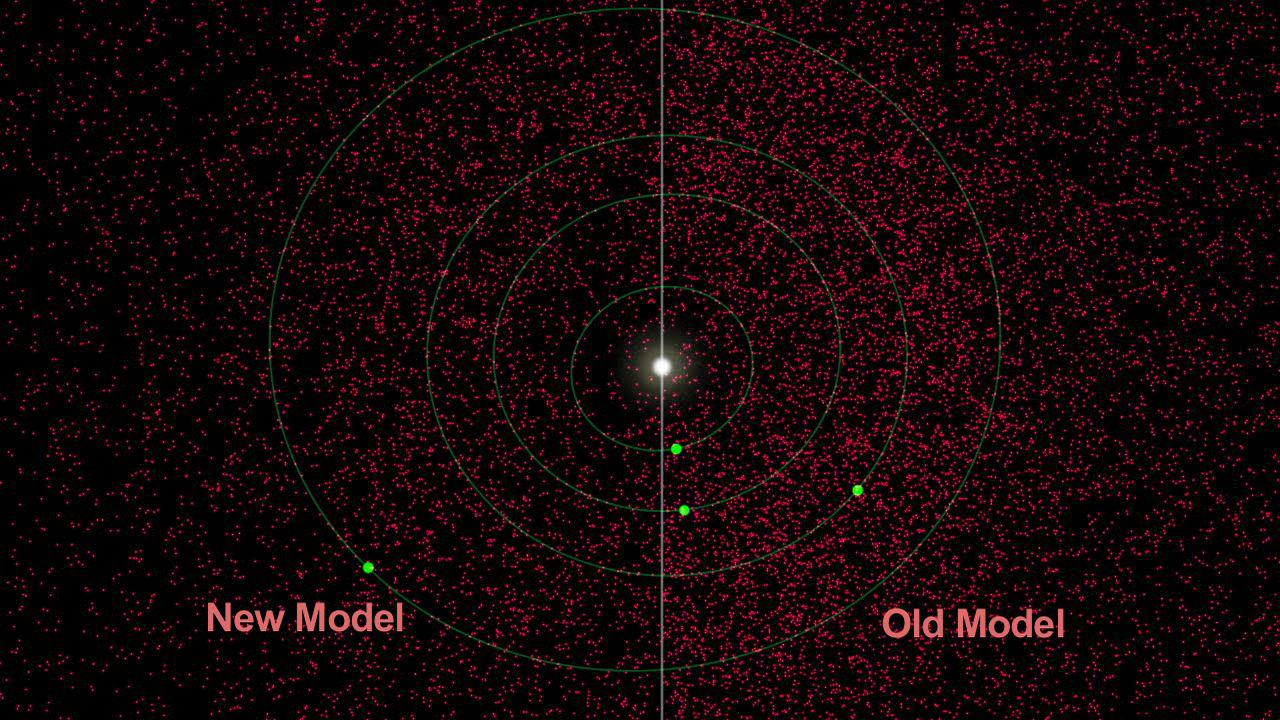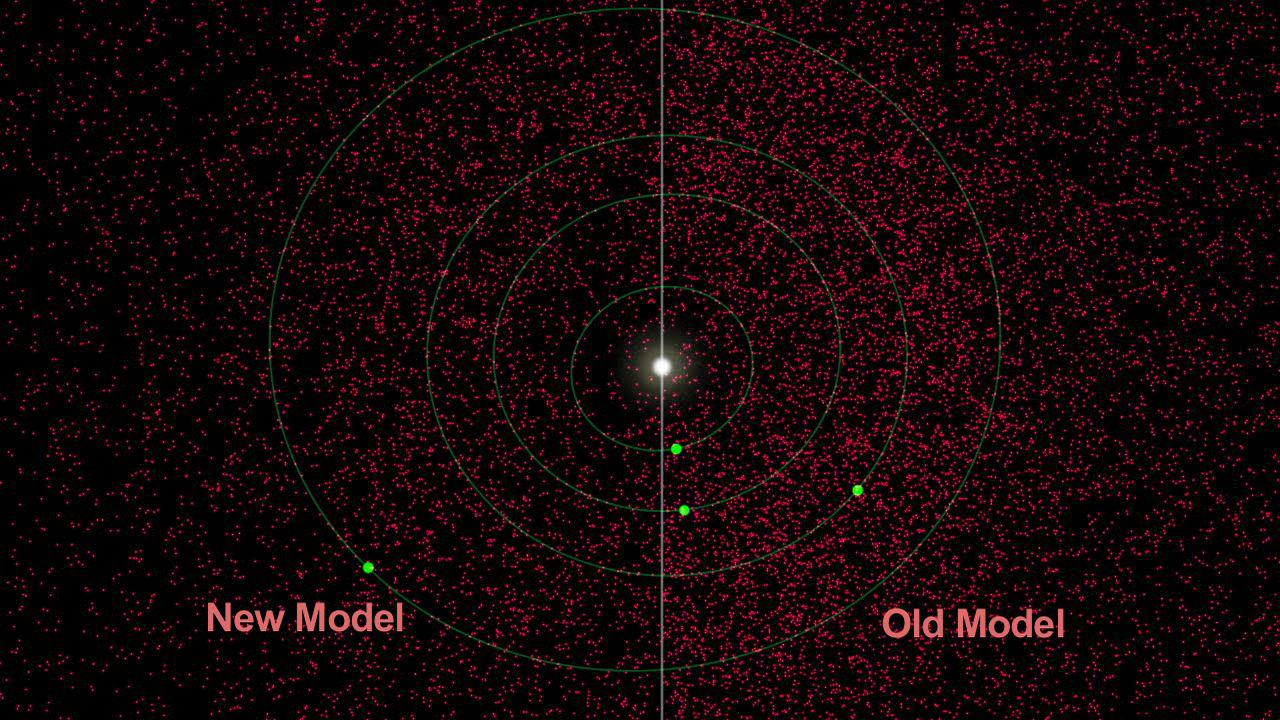
Though the sizes are not to scale, the Sun and planets of the inner solar system are shown in this illustration, where each red dot represents an asteroid. New results from NEOWISE, the infrared asteroid hunting portion of the WISE mission, are shown on the left compared to old population projections of mid-size or larger near-Earth asteroids from surveys at visible wavelengths. And the good news is, NEOWISE observations estimate there are 40 percent fewer near-Earth asteroids that are larger than 100 meters (330 feet), than indicated by visible light searches. Based on infrared imaging, the NEOWISE results are more accurate as well. Heated by the Sun, asteroids of the same size radiate the same amount of infrared light, but can reflect very different amounts of visible sunlight depending on how shiny their surface is, or their surface albedo. That effect can bias surveys based on optical observations. NEOWISE results reduce the estimated number of mid-size near-Earth asteroids from about 35,000 to 19,500, but the majority still remain undiscovered.
Aunque los tamaños no están a escala, en esta ilustración se muestran el Sol y los planetas del sistema solar interior, donde cada punto rojo representa un asteroide. Los nuevos resultados de NEOWISE, la porción de caza de asteroides en el infrarrojo de la misión WISE, se muestran a la izquierda en comparación con las antiguas proyecciones poblacionales de asteroides de tamaño mediano o mayor en órbitas cercanas a la Tierra, obtenidas mediante observaciones en longitudes de onda visibles. La buena noticia es que las observaciones de NEOWISE estiman que hay un 40 por ciento menos de asteroides cercanos a la Tierra con un diámetro superior a 100 metros (330 pies) de lo que indicaban las búsquedas en luz visible. Basados en imágenes infrarrojas, los resultados de NEOWISE son también más precisos. Calentados por el Sol, los asteroides de igual tamaño irradian la misma cantidad de luz infrarroja, pero pueden reflejar cantidades muy diferentes de luz solar visible según el brillo de su superficie, es decir, su albedo superficial. Este efecto puede sesgar los estudios basados en observaciones ópticas. Los resultados de NEOWISE reducen el número estimado de asteroides de tamaño mediano cercanos a la Tierra de aproximadamente 35.000 a 19.500, aunque la mayoría aún permanece sin descubrir.