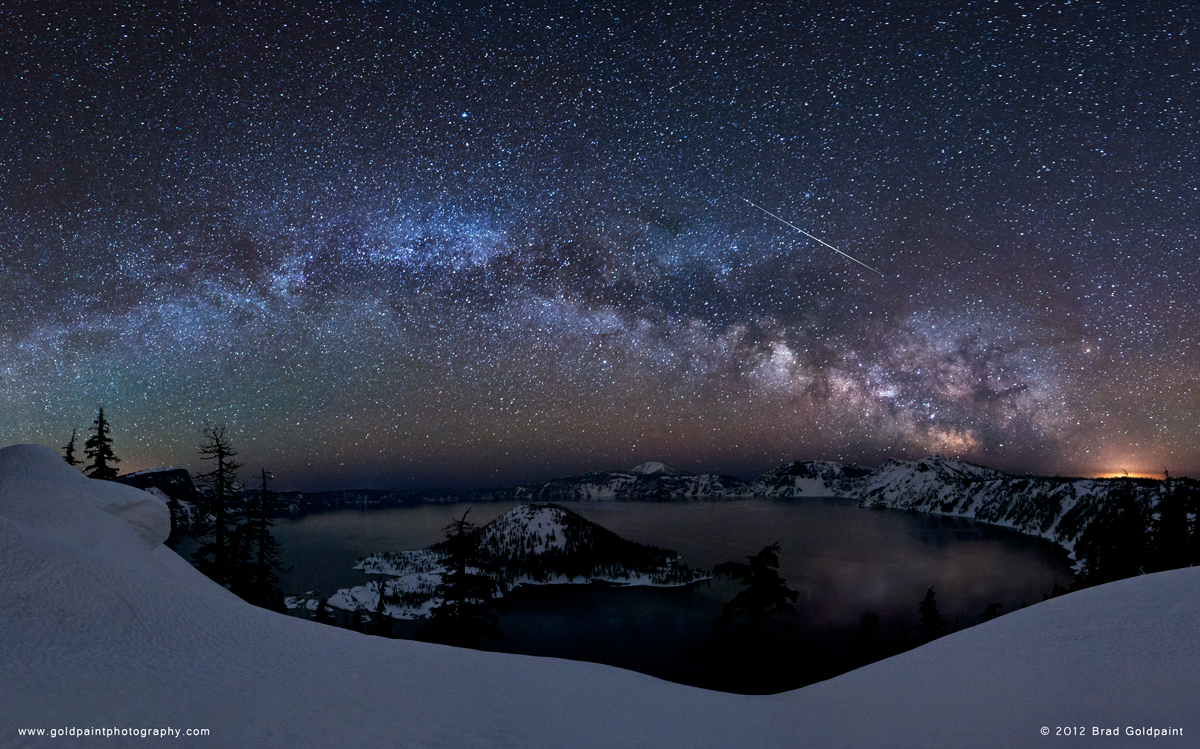
Did you see it? One of the more common questions during a meteor shower occurs because the time it takes for a meteor to flash is typically less than the time it takes for a head to turn. Possibly, though, the glory of seeing bright meteors shoot across and knowing that they were once small pebbles on another world might make it all worthwhile, even if your observing partner(s) could not share in every particular experience. Peaking over the past few days, a dark moonless sky allowed the Lyrids meteor shower to exhibit as many as 30 visible meteors per hour from some locations. A bright Lyrid meteor streaks above picturesque Crater Lake in Oregon, USA, in the above composite of nine exposures taken last week. Snow covers the foreground, while the majestic central band of our home galaxy arches well behind the serene lake. Other meteor showers this year include the Perseids in mid-August and the Leonids in mid-November, both expected to also dodge the glare of a bright Moon in 2012.
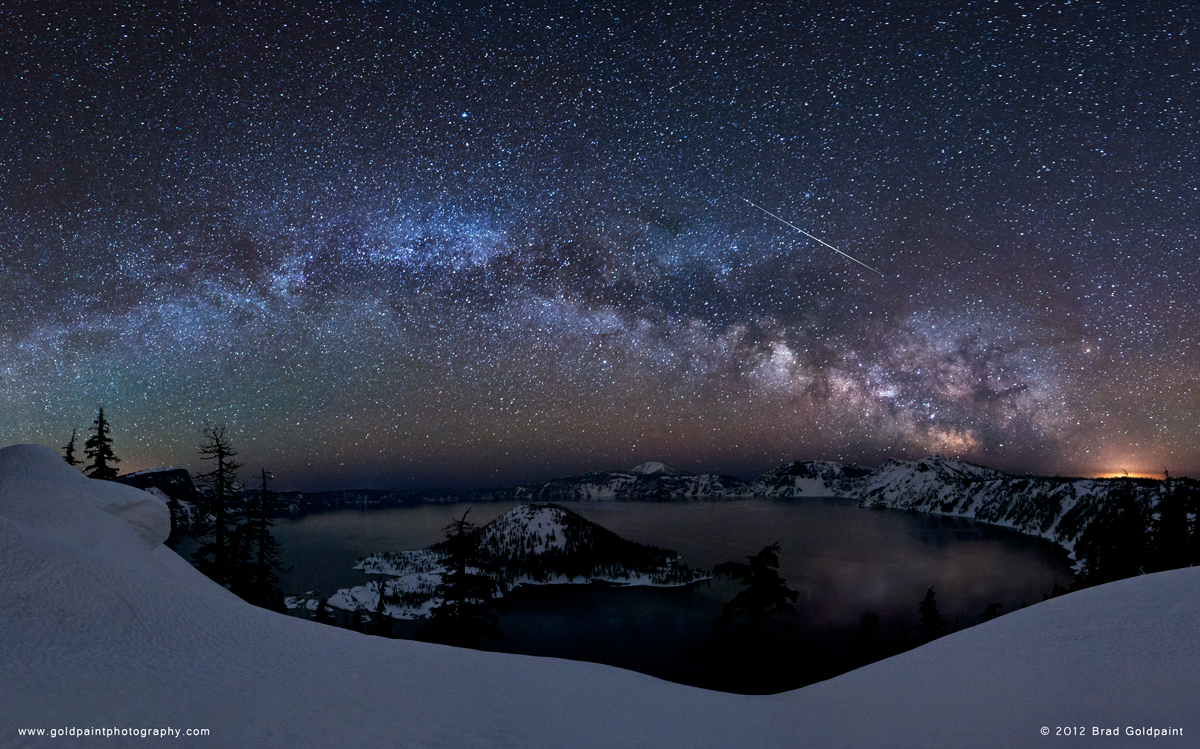
¿Lo viste? Una de las preguntas más comunes durante una lluvia de meteoros ocurre porque el tiempo que tarda un meteorito en brillar es típicamente menor que el tiempo que tarda en girar una cabeza. Sin embargo, posiblemente, la gloria de ver brillantes meteoros cruzando el cielo y saber que una vez fueron pequeñas piedras en otro mundo podría hacerlo todo digno de la experiencia, incluso si tu compañero de observación no pudo compartir cada detalle. Alcanzando su punto máximo en los últimos días, un cielo oscuro y sin luna permitió que la lluvia de meteoros Lyrids mostrara hasta 30 meteoros visibles por hora desde algunos lugares. Un brillante meteorito Lyrid se desliza sobre el pintoresco Lago de Cráter en Oregon, EE. UU., en la imagen compuesta de nueve exposiciones tomadas la semana pasada. La nieve cubre el primer plano, mientras que la majestuosa banda central de nuestra galaxia, la Vía Láctea, se arquea detrás del tranquilo lago. Otras lluvias de meteoros este año incluyen las Perseidas a mediados de agosto y las Leonidas a mediados de noviembre, ambas se espera que también eviten la luz de una luna brillante en 2012.