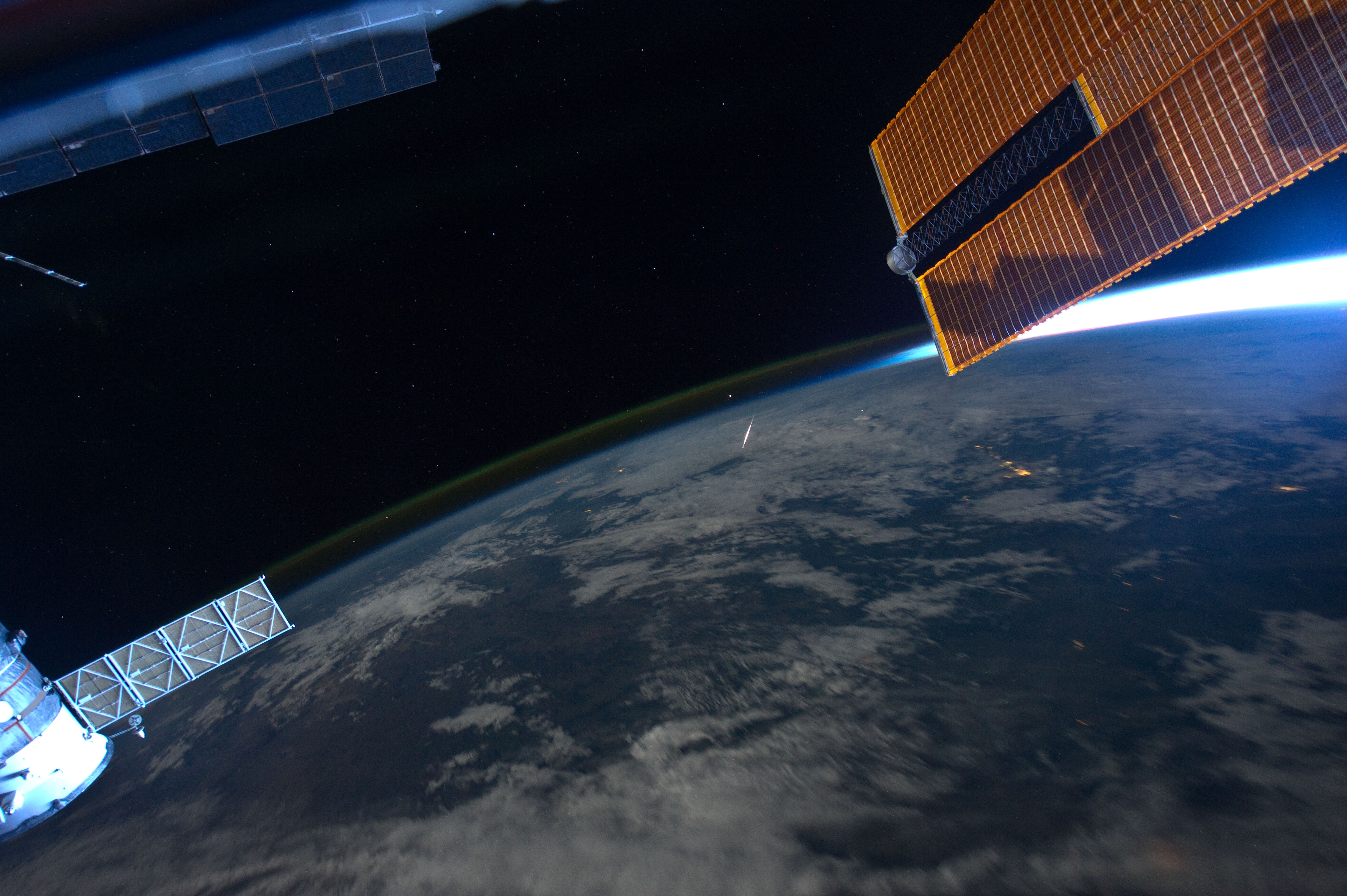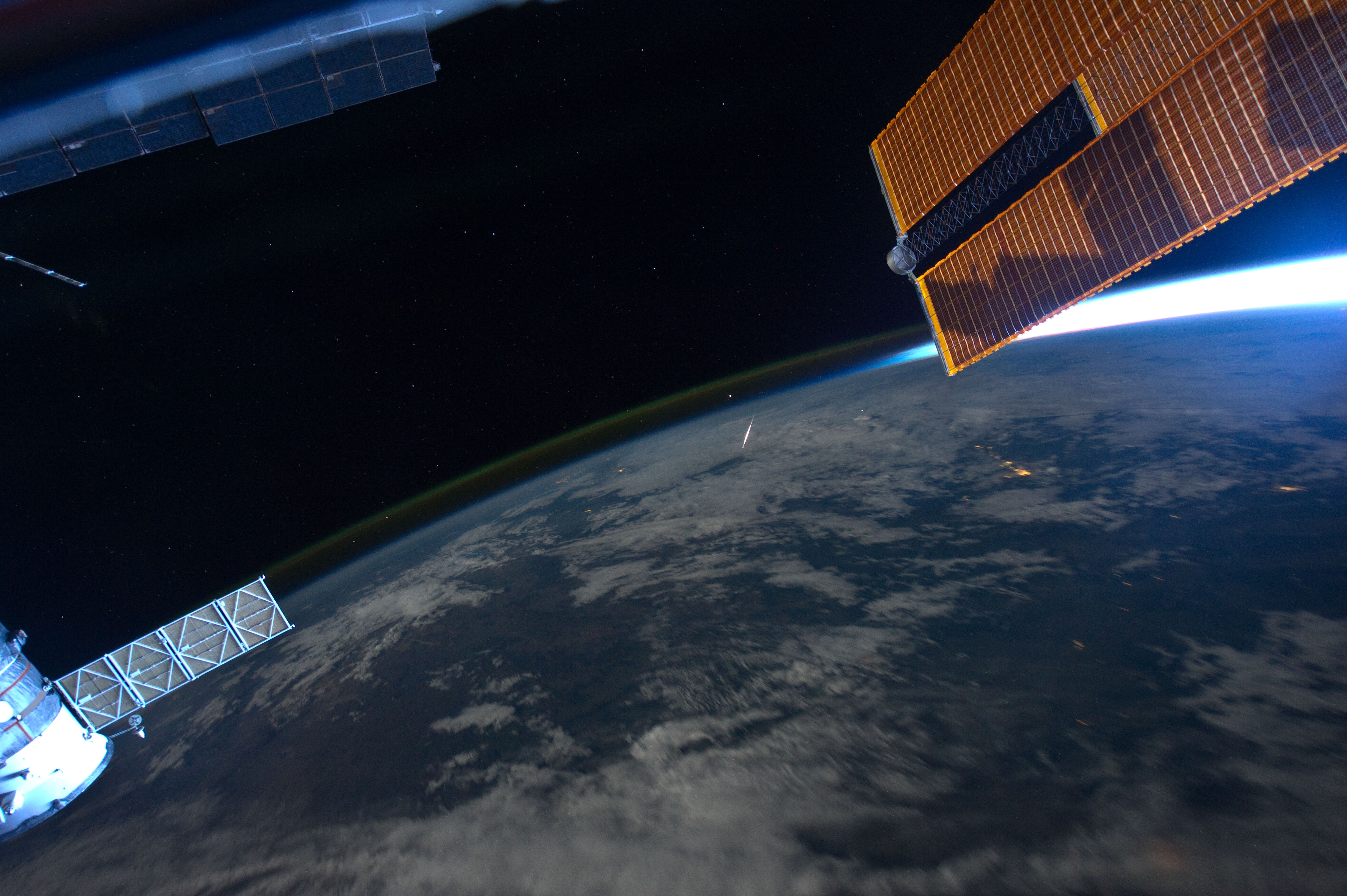
Denizens of planet Earth watched last year's Perseid meteor shower by looking up into the bright moonlit night sky. But this remarkable view captured on August 13, 2011 by astronaut Ron Garan looks down on a Perseid meteor. From Garan's perspective onboard the International Space Station orbiting at an altitude of about 380 kilometers, the Perseid meteors streak below, swept up dust left from comet Swift-Tuttle heated to incandescence. The glowing comet dust grains are traveling at about 60 kilometers per second through the denser atmosphere around 100 kilometers above Earth's surface. In this case, the foreshortened meteor flash is right of frame center, below the curving limb of the Earth and a layer of greenish airglow, just below bright star Arcturus. Want to look up at this year's Perseid meteor shower? You're in luck. This weekend the shower should be near its peak, with less interference from a waning crescent Moon rising a few hours before the Sun. New Curiosity Images: Including a color Gale Crater vista
Los habitantes del planeta Tierra observaron la lluvia de meteoros Perseidas del año pasado mirando hacia el cielo nocturno iluminado por la luna. Pero esta impresionante vista, capturada el 13 de agosto de 2011 por el astronauta Ron Garan, muestra una Perseida desde abajo. Desde la perspectiva de Garan a bordo de la Estación Espacial Internacional, que orbita a una altitud de aproximadamente 380 kilómetros, las Perseidas atraviesan el cielo por debajo, arrastrando polvo遗留 de la cometa Swift-Tuttle, calentado hasta incandescencia. Los granos de polvo luminosos viajan a unos 60 kilómetros por segundo a través de la atmósfera más densa, alrededor de los 100 kilómetros por encima de la superficie terrestre. En este caso, el breve destello del meteoro está a la derecha del centro del fotograma, por debajo del horizonte curvado de la Tierra y una capa de brillo verde de la atmósfera, justo debajo de la brillante estrella Arcturo. ¿Quieres mirar hacia arriba para observar la lluvia de meteoros Perseidas de este año? Tienes suerte. Este fin de semana la lluvia debe estar cerca de su máximo, con menos interferencia por parte de una Luna menguante en cuarto creciente, que se levanta unas horas antes del Sol.