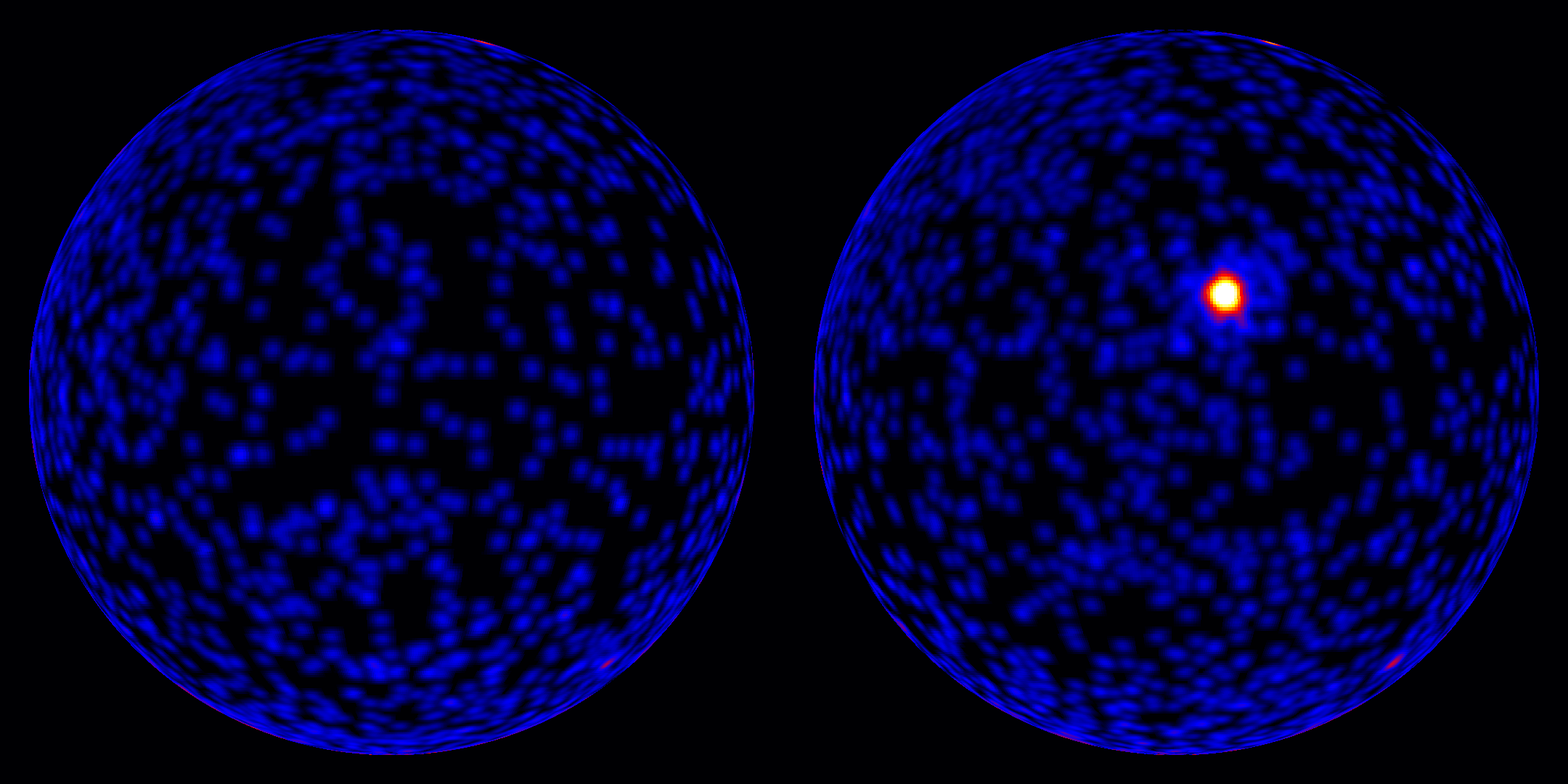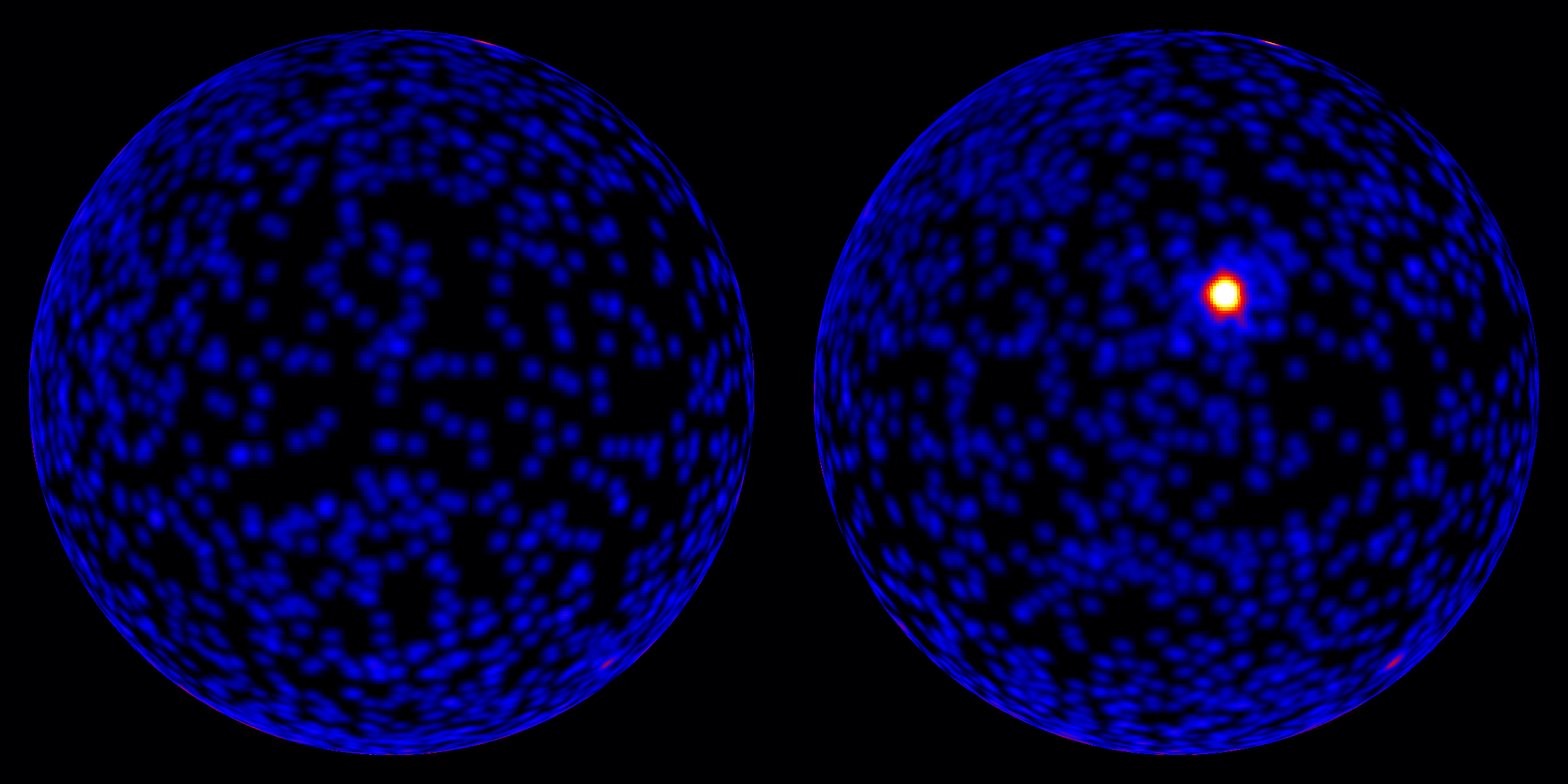
A tremendous explosion has occurred in the nearby universe and major telescopes across Earth and space are investigating. Dubbed GRB 130427A, the gamma-ray burst was first detected by the Earth-orbiting Fermi and Swift satellites observing at high energies and quickly reported down to Earth. Within three minutes, the half-meter ISON telescope in New Mexico found the blast in visible light, noted its extreme brightness, and relayed more exact coordinates. Within the next few minutes, the bright optical counterpart was being tracked by several quickly re-pointable telescopes including the 2.0-meter P60 telescope in California, the 1.3-meter PAIRITEL telescope in Arizona, and the 2.0-meter Faulkes Telescope North in Hawaii. Within two hours, the 8.2-meter Gemini North telescope in Hawaii noted a redshift of 0.34, placing the explosion about 5 billion light years away -- considered nearby in cosmological terms. Previously recorded images from the RAPTOR full-sky monitors were scanned and a very bright optical counterpart -- magnitude 7.4 -- was found 50 seconds before the Swift trigger. The brightest burst in recent years, a signal from GRB 130427A has also been found in low energy radio waves by the Very Large Array (VLA) and at the highest energies ever recorded by the Fermi satellite. Neutrino, gravitational wave, and telescopes designed to detect only extremely high energy photons are checking their data for a GRB 130427A signal. Pictured in the above animation, the entire gamma-ray sky is shown becoming momentarily dominated by the intense glow of GRB 130427A. Continued tracking the optical counterpart will surely be ongoing as there is a possibility that the glow of a classic supernova will soon emerge.
Una tremenda explosión ha tenido lugar en el universo cercano y los principales telescopios de la Tierra y del espacio están investigándola. Denominado GRB 130427A, el destello de rayos gamma fue detectado inicialmente por los satélites en órbita terrestre Fermi y Swift, que observan a altas energías, y fue rápidamente reportado a la Tierra. En menos de tres minutos, el telescopio ISON de 0.5 metros en Nuevo México localizó el estallido en luz visible, registró su extremada luminosidad y transmitió coordenadas más exactas. En los minutos siguientes, el brillante contraparte óptico fue seguido por varios telescopios capaces de reorientarse rápidamente, incluyendo el telescopio P60 de 2.0 metros en California, el telescopio PAIRITEL de 1.3 metros en Arizona y el telescopio Faulkes Telescope North de 2.0 metros en Hawái. Dentro de dos horas, el telescopio Gemini North de 8.2 metros en Hawái registró un corrimiento al rojo de 0.34, situando la explosión a unos 5 mil millones de años luz de distancia — considerada cercana en términos cosmológicos. Imágenes previamente registradas por los monitores de todo el cielo RAPTOR fueron escaneadas y se encontró un contraparte óptico muy brillante — magnitud 7.4 — 50 segundos antes del disparo de Swift. El destello más brillante de los últimos años, una señal del GRB 130427A también fue detectada en ondas de radio de baja energía por el Very Large Array (VLA) y en las energías más altas jamás registradas por el satélite Fermi. Telescopios diseñados para detectar neutrinos, ondas gravitacionales y fotones de extremadamente alta energía están revisando sus datos en busca de una señal del GRB 130427A. En la animación mostrada arriba, se ve cómo todo el cielo de rayos gamma se vuelve momentáneamente dominado por el intenso resplandor del GRB 130427A. El seguimiento continuo del contraparte óptico seguramente continuará, ya que existe la posibilidad de que pronto aparezca el resplandor característico de una supernova clásica.