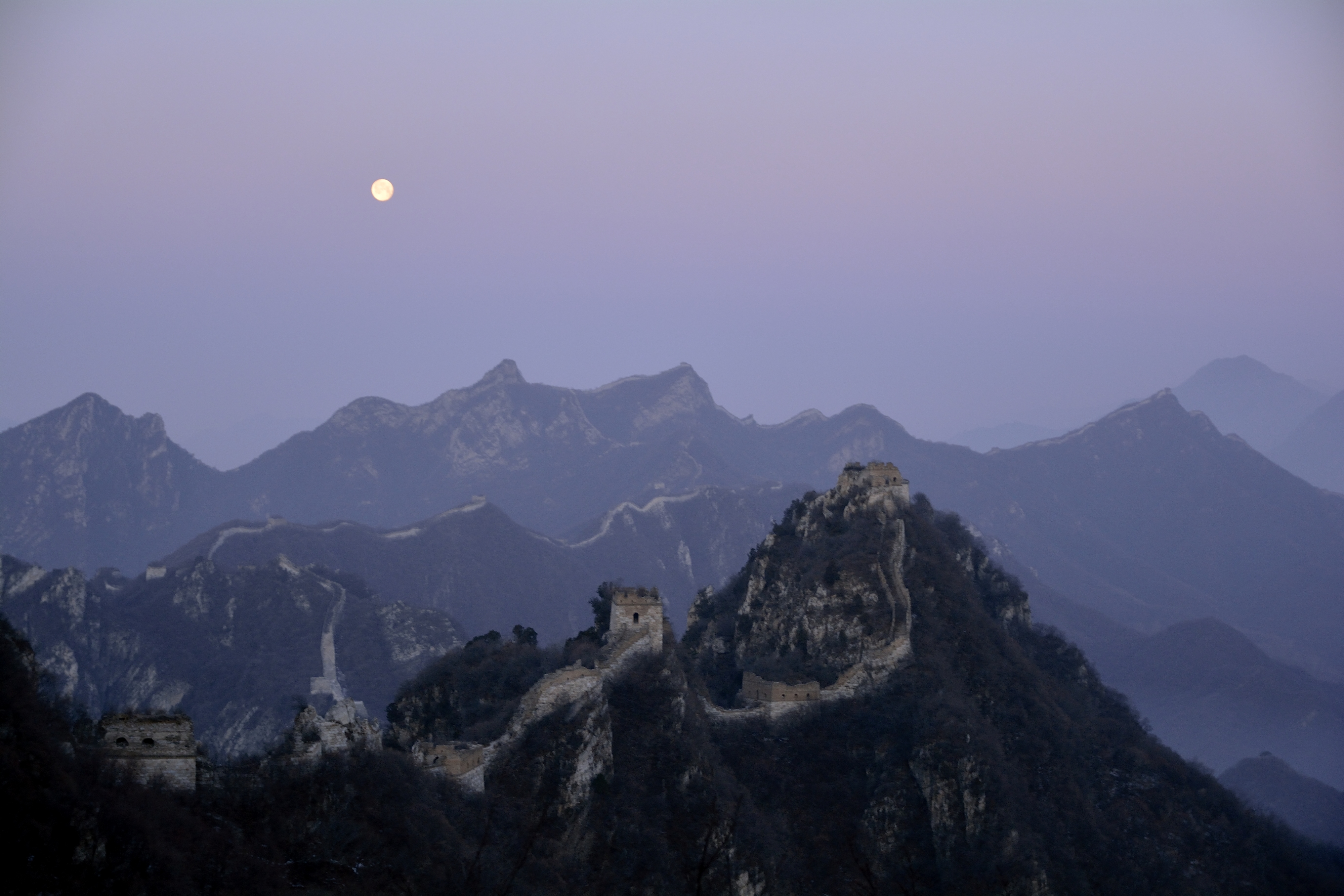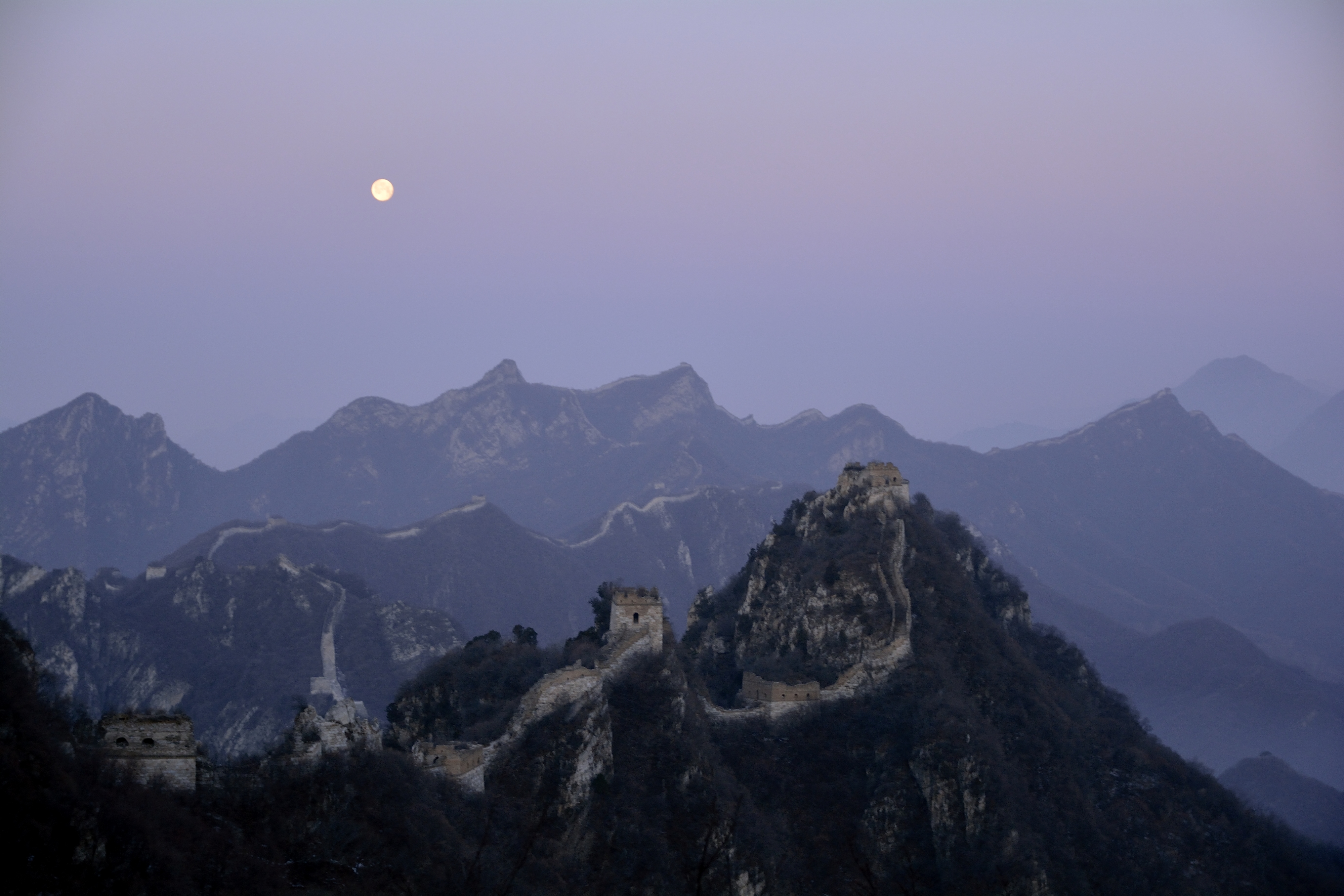
Last Friday, an almost Full Moon rose as the Sun set, over this mountainous landscape north of Beijing, China. Also near apogee, the farthest point in its elliptical orbit around planet Earth, it was this year's smallest and faintest Full Moon. The Jiankou section of the Great Wall of China meanders through the scene, the ancient Great Wall itself the subject of an older-than-the-space-age myth that it would be visible to the eye when standing on the lunar surface. But even from low Earth orbit, the large scale artifact of human civilization is very difficult to identify. At its farthest from our fair planet, the Moon shines brightly in the twilight sky though, posing in the faint, pinkish band known as the antitwilight arch or the belt of Venus.
La pasada viernes, una Luna casi llena se elevó mientras el Sol se ponía sobre este paisaje montañoso al norte de Beijing, China. También cerca de su apogeo, el punto más alejado de su órbita elíptica alrededor del planeta Tierra, fue la Luna llena más pequeña y más tenue de este año. La sección de Jiankou de la Gran Muralla de China atraviesa la escena, siendo la antigua Gran Muralla el tema de un mito más antiguo que la era espacial, que afirmaba que sería visible a simple vista desde la superficie lunar. Sin embargo, incluso desde una órbita baja de la Tierra, este gran testimonio de la civilización humana es muy difícil de identificar. A su mayor distancia de nuestro planeta, la Luna brilla intensamente en el cielo crepuscular, apareciendo en la tenue banda rosada conocida como arco antitwilight o cinturón de Venus.