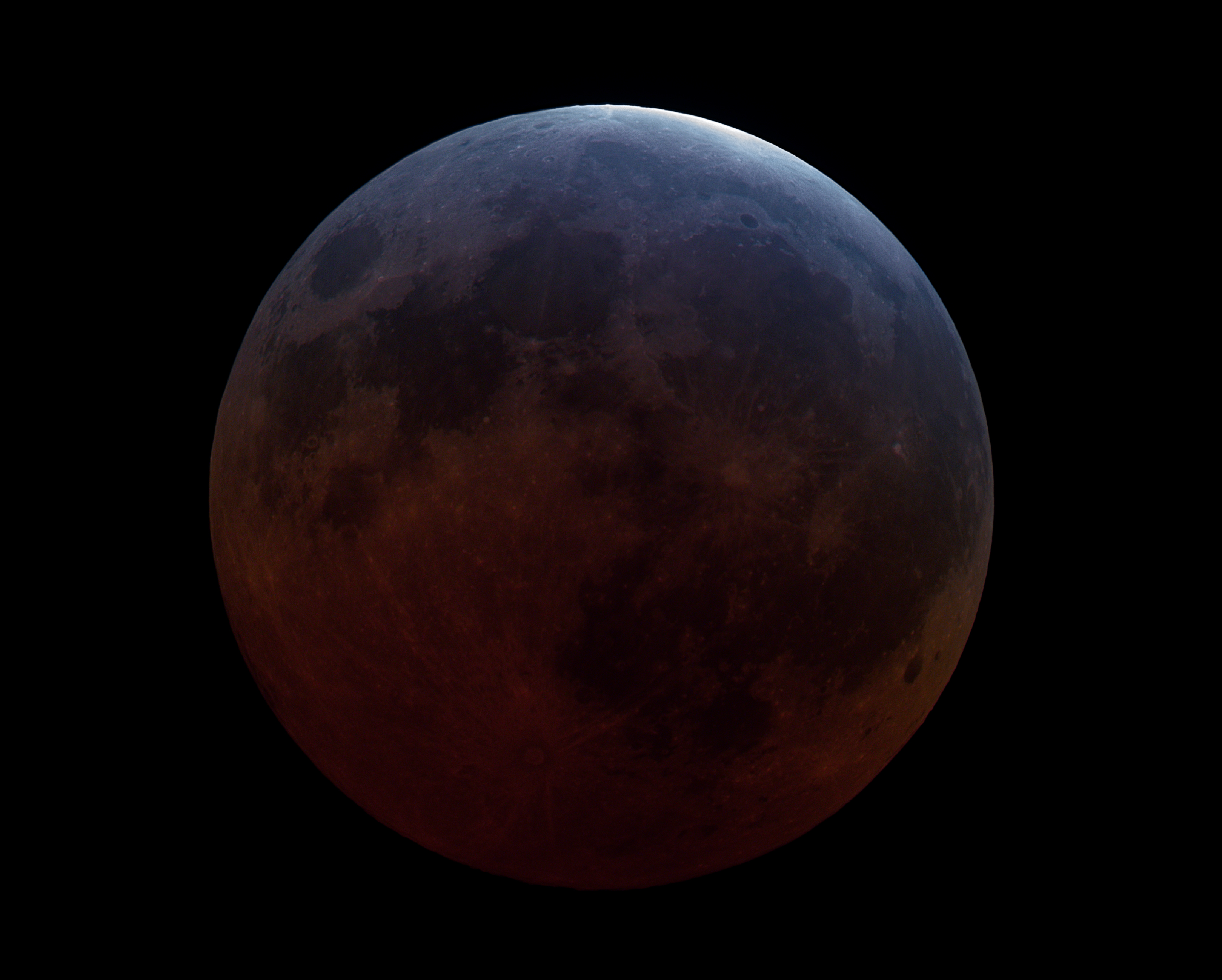
Last week the Full Moon was completely immersed in Earth's dark umbral shadow, just briefly though. The total phase of the April 4, 2015 lunar eclipse lasted less than 5 minutes, the shortest total lunar eclipse of the century. In fact, sliding just within the Earth's umbral shadow's northern edge, the lunar north stayed relatively bright, while a beautiful range of blue and red hues emerged across the rest of the Moon's Earth-facing hemisphere. The reddened light within the shadow that reaches the lunar surface is filtered through the lower atmosphere. Seen from a lunar perspective it comes from all the sunsets and sunrises around the edges of the silhouetted Earth. Close to the shadow's edge, the bluer light is still filtered through Earth's atmosphere, but originates as rays of sunlight pass through layers high in the upper stratosphere. That light is colored by ozone that absorbs red light and transmits bluer hues. In this sharp telescopic view of totality from Auckland, New Zealand, planet Earth, the Moon's north pole has been rotated to the top of the frame.
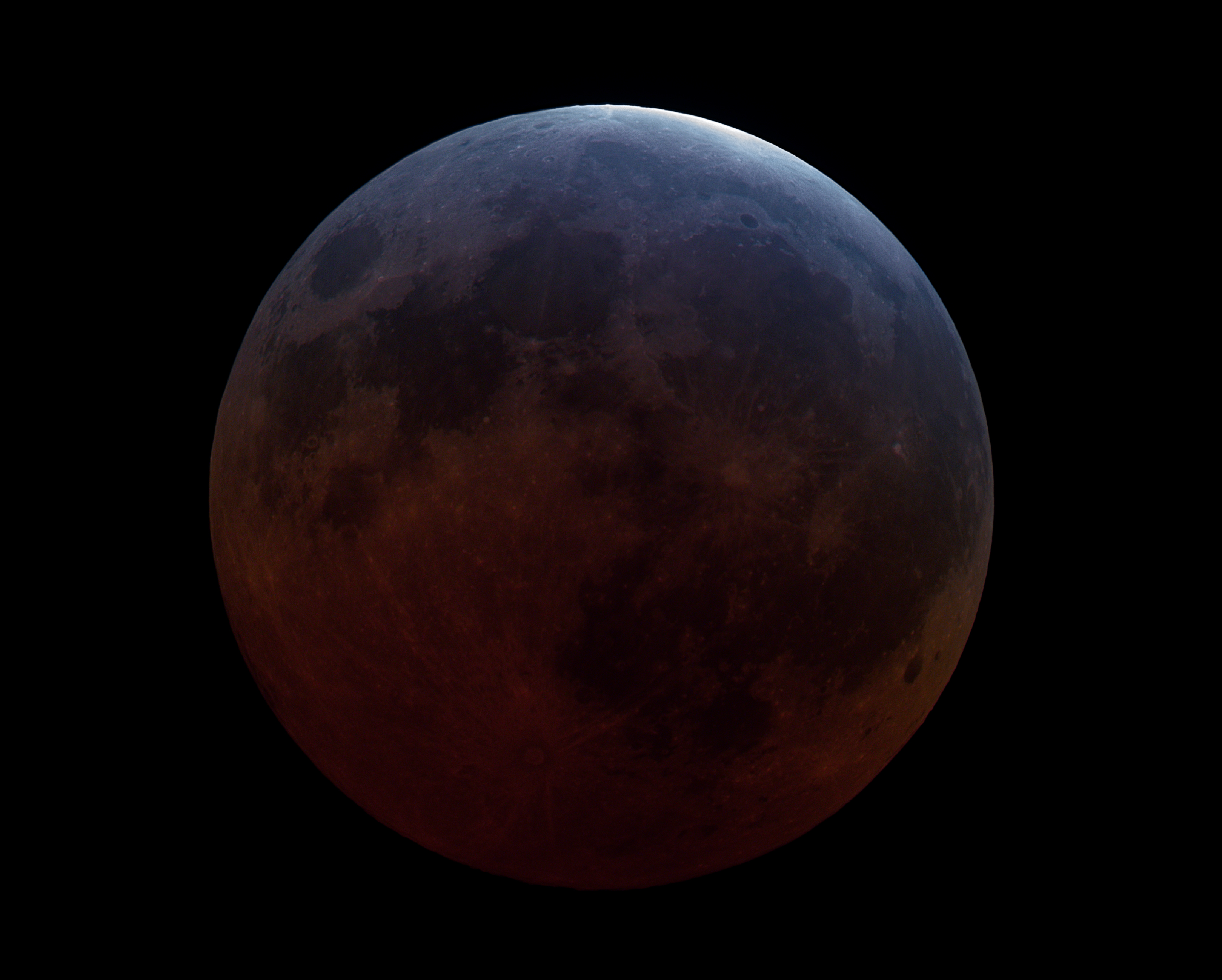
La semana pasada, la Luna llena estuvo completamente inmersa en la oscura sombra umbra de la Tierra, aunque solo brevemente. La fase total del eclipse lunar del 4 de abril de 2015 duró menos de 5 minutos, siendo el eclipse lunar total más corto del siglo. De hecho, deslizándose apenas dentro del borde norte de la sombra umbra de la Tierra, el polo norte lunar permaneció relativamente brillante, mientras que un hermoso rango de tonos azules y rojos emergió en el resto de la cara de la Luna orientada hacia la Tierra. La luz enrojecida dentro de la sombra que alcanza la superficie lunar está filtrada a través de la atmósfera inferior. Desde una perspectiva lunar, proviene de todos los atardeceres y amaneceres alrededor de los bordes de la Tierra silueteada. Cerca del borde de la sombra, la luz más azulada aún está filtrada a través de la atmósfera terrestre, pero proviene de rayos de luz solar que atraviesan capas altas de la estratosfera superior. Esa luz está teñida por el ozono que absorbe la luz roja y transmite tonos más azules. En esta nítida imagen telescópica de la totalidad capturada desde Auckland, Nueva Zelanda, el polo norte de la Luna ha sido rotado hacia la parte superior del marco.