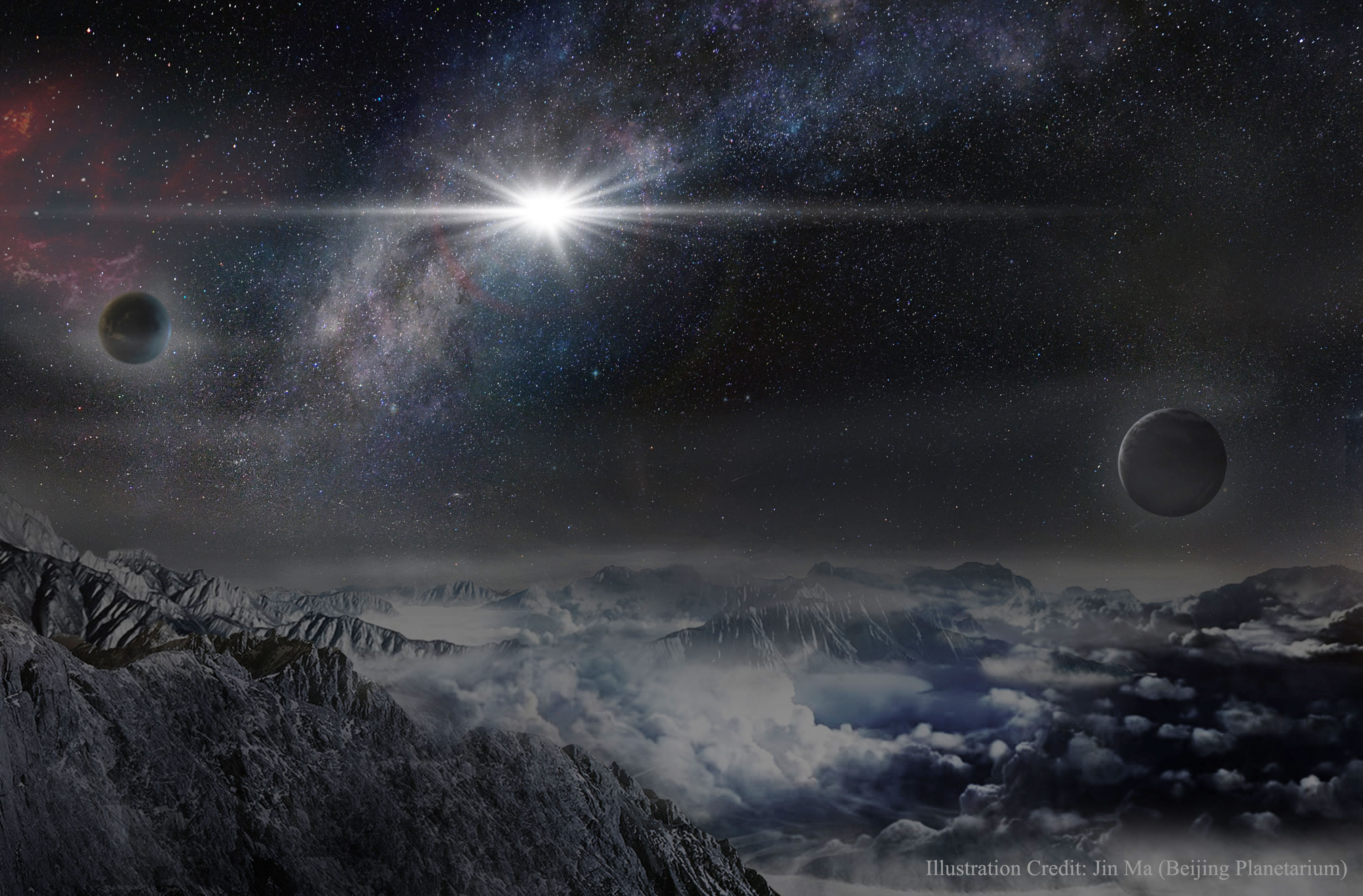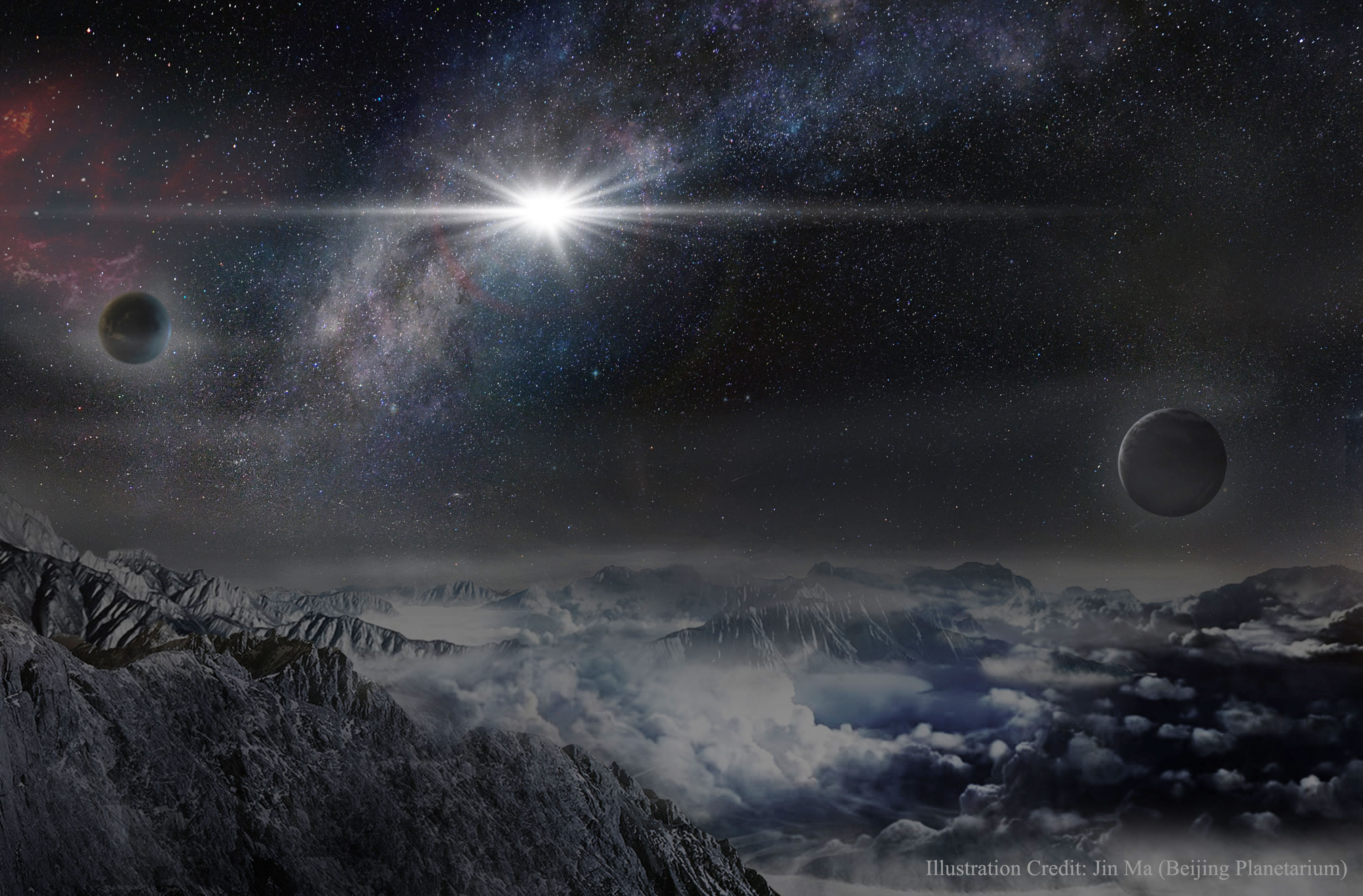
It is a candidate for the brightest and most powerful explosion ever seen -- what is it? The flaring spot of light was found by the All Sky Automated Survey for Supernovae (ASASSN) in June of last year and labelled ASASSN-15lh. Located about three billion light years distant, the source appears tremendously bright for anything so far away: roughly 200 times brighter than an average supernova, and temporarily 20 times brighter than all of the stars in our Milky Way Galaxy combined. Were light emitted by ASASSN-15lh at this rate in all directions at once, it would be the most powerful explosion yet recorded. No known stellar object was thought to create an explosion this powerful, although pushing the theoretical limits for the spin-down of highly-magnetized neutron star -- a magnetar -- gets close. Assuming the flare fades as expected later this year, astronomers are planning to use telescopes including Hubble to zoom in on the region to gain more clues. The above-featured artist's illustration depicts a hypothetical night sky of a planet located across the host galaxy from the outburst.
Es un candidato para el estallido más brillante y potente jamás observado: ¿qué es? El punto brillante que se observa fue descubierto por la Encuesta Automatizada de Todo el Cielo en Busca de Supernovas (ASASSN) en junio del año pasado y fue etiquetado como ASASSN-15lh. Ubicado a unos tres mil millones de años luz de distancia, la fuente aparece extremadamente brillante para algo tan lejano: aproximadamente 200 veces más brillante que una supernova promedio, y temporalmente 20 veces más brillante que todas las estrellas de nuestra Galaxia Vía Láctea combinadas. Si la luz emitida por ASASSN-15lh se emitiera a esta tasa en todas direcciones al mismo tiempo, sería el estallido más potente jamás registrado. No se pensaba que ningún objeto estelar conocido pudiera producir un estallido tan potente, aunque alcanzar los límites teóricos para el desaceleramiento de una estrella de neutrones altamente magnetizada — un magneto — se acerca bastante. Suponiendo que el destello disminuya como se espera a finales de este año, los astrónomos planean utilizar telescopios, incluido el Hubble, para enfocarse en la región y obtener más pistas. La ilustración artística mostrada arriba representa un cielo nocturno hipotético de un planeta ubicado en el lado opuesto de la galaxia anfitriona del estallido.