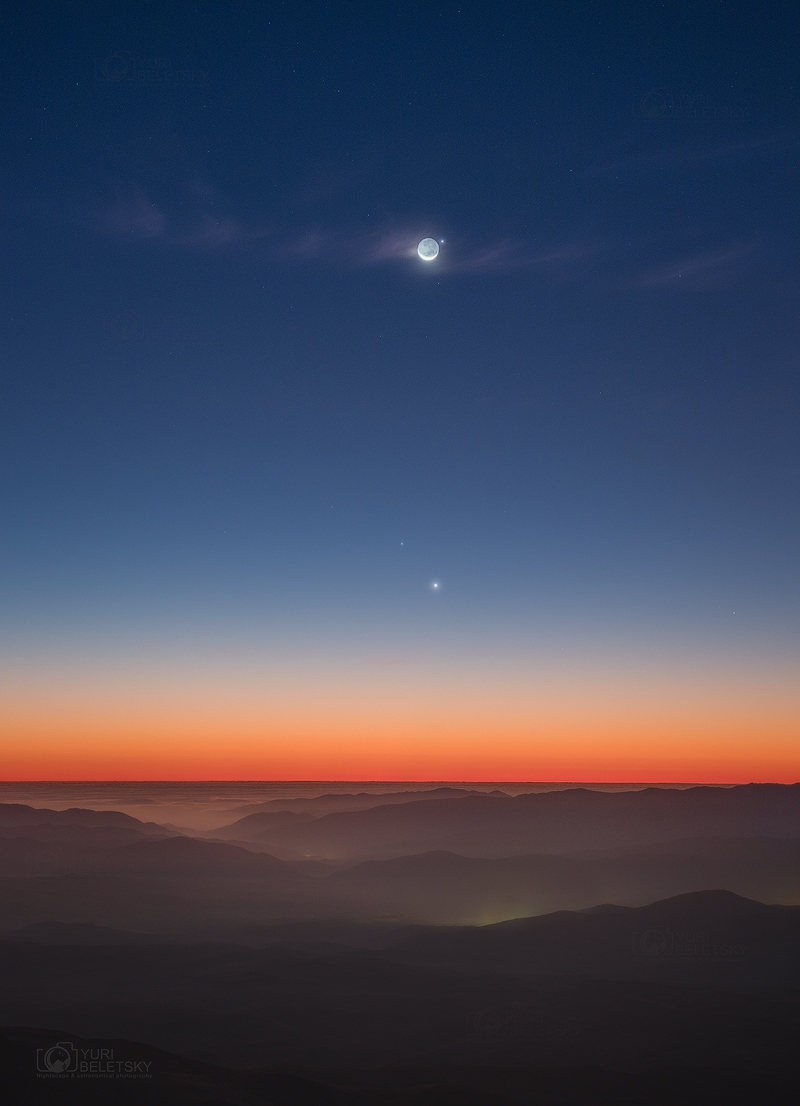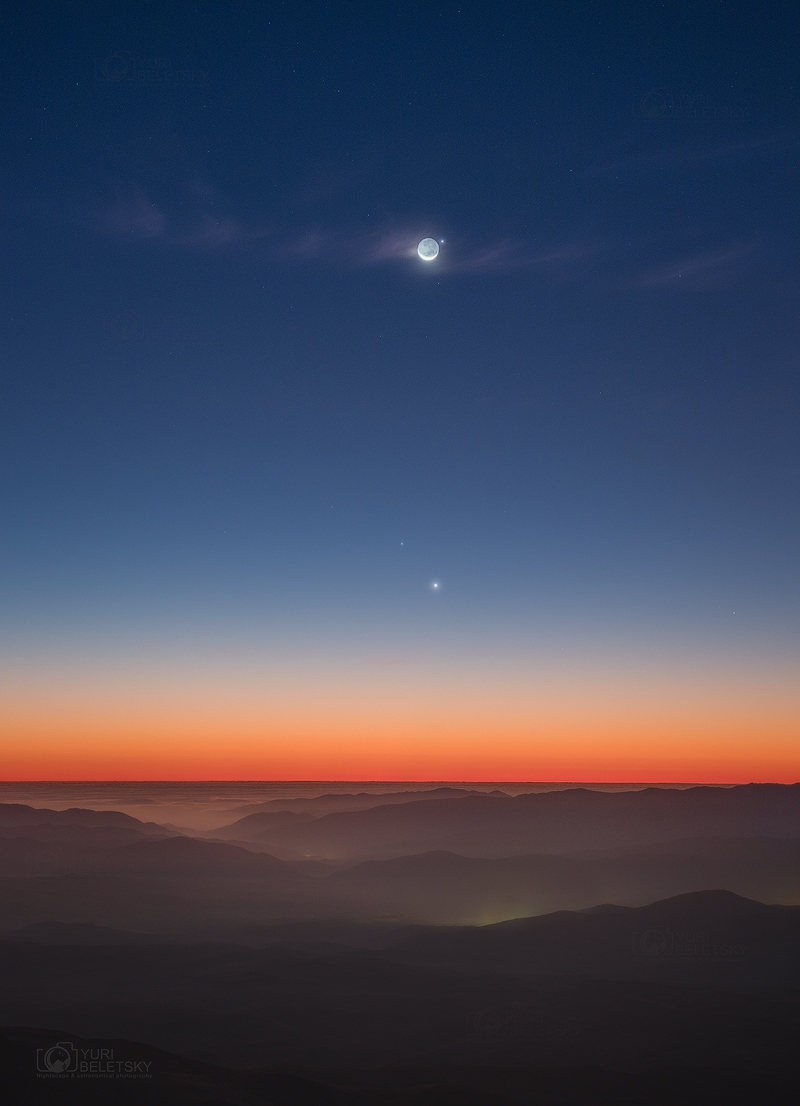
Last Thursday the view toward sunset from the 2.5 kilometer summit of Cerro Las Campanas in the remote Chilean Andes was amazing. Bright but fading Mercury stood very close to a two day old Moon. Both a sunlit lunar crescent and earthlit lunar nightside are captured with the fleeting innermost planet in this breathtaking mountainscape. Even below the conjunction of Moon and Mercury, a close pairing of brilliant Venus and bright star Regulus hangs in the sky, still above the colorful western horizon. Of course amazing skies above Las Campanas are not unexpected. The region is currently home to the twin Magellan telescopes of the Las Campanas Observatory and the summit location is the site of the future Giant Magellan Telescope.
El jueves pasado, la vista hacia el atardecer desde la cumbre de 2,5 kilómetros de Cerro Las Campanas, en los Andes chilenos, fue asombrosa. Mercurio, brillante pero en declive, se encontraba muy cerca de una Luna de dos días. Tanto el creciente lunar iluminado por el Sol como la cara nocturna de la Luna iluminada por la Tierra se captan junto con el fugaz planeta interior en este impresionante paisaje montañoso. Incluso por debajo de la conjunción de la Luna y Mercurio, una cercana pareja de brillante Venus y la brillante estrella Regulus cuelgan en el cielo, aún por encima del colorido horizonte occidental. Por supuesto, los asombrosos cielos sobre Las Campanas no son inesperados. La región alberga actualmente los telescopios gemelos Magellan del Observatorio Las Campanas, y el lugar de la cumbre es el emplazamiento del futuro Gran Telescopio Magellan.