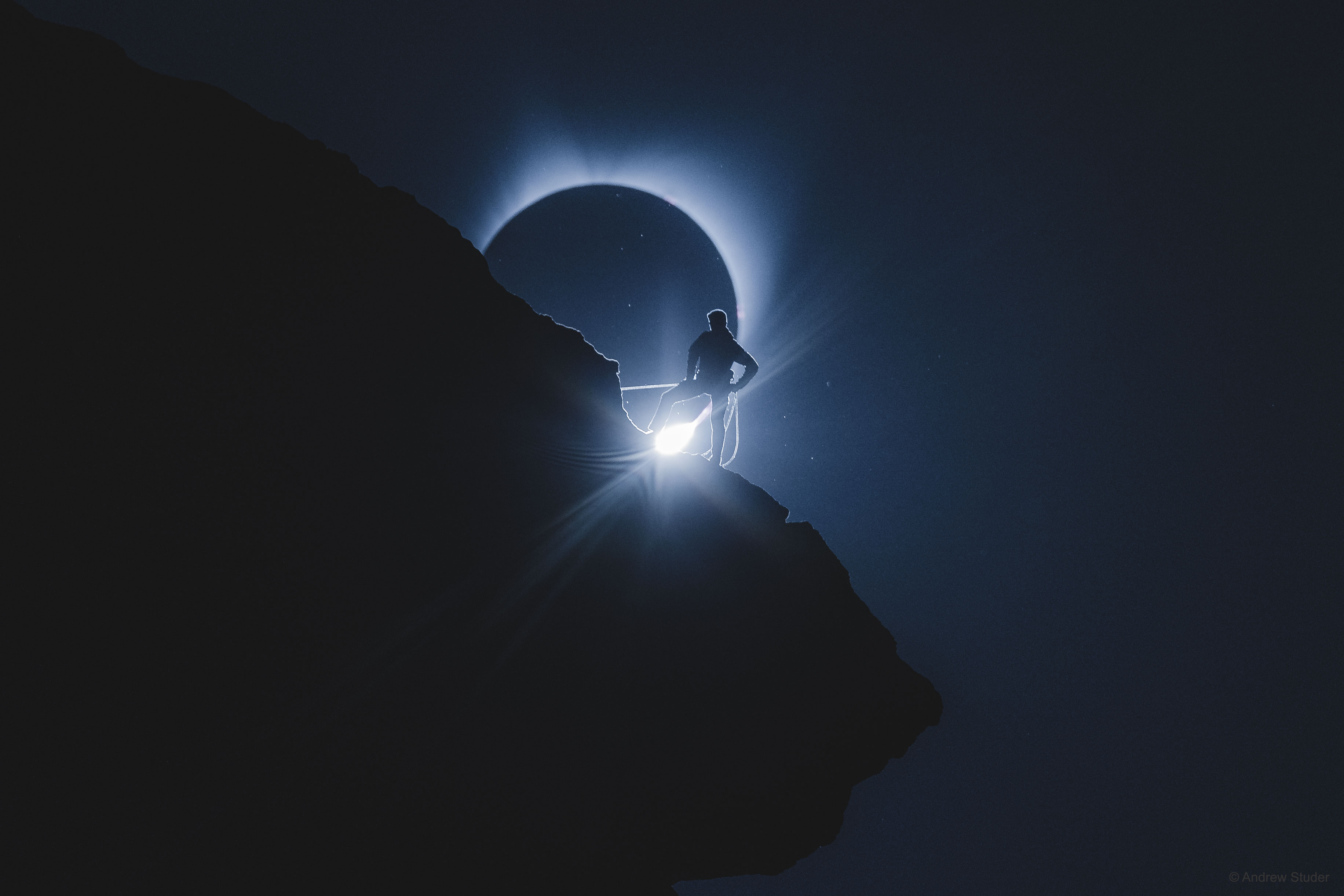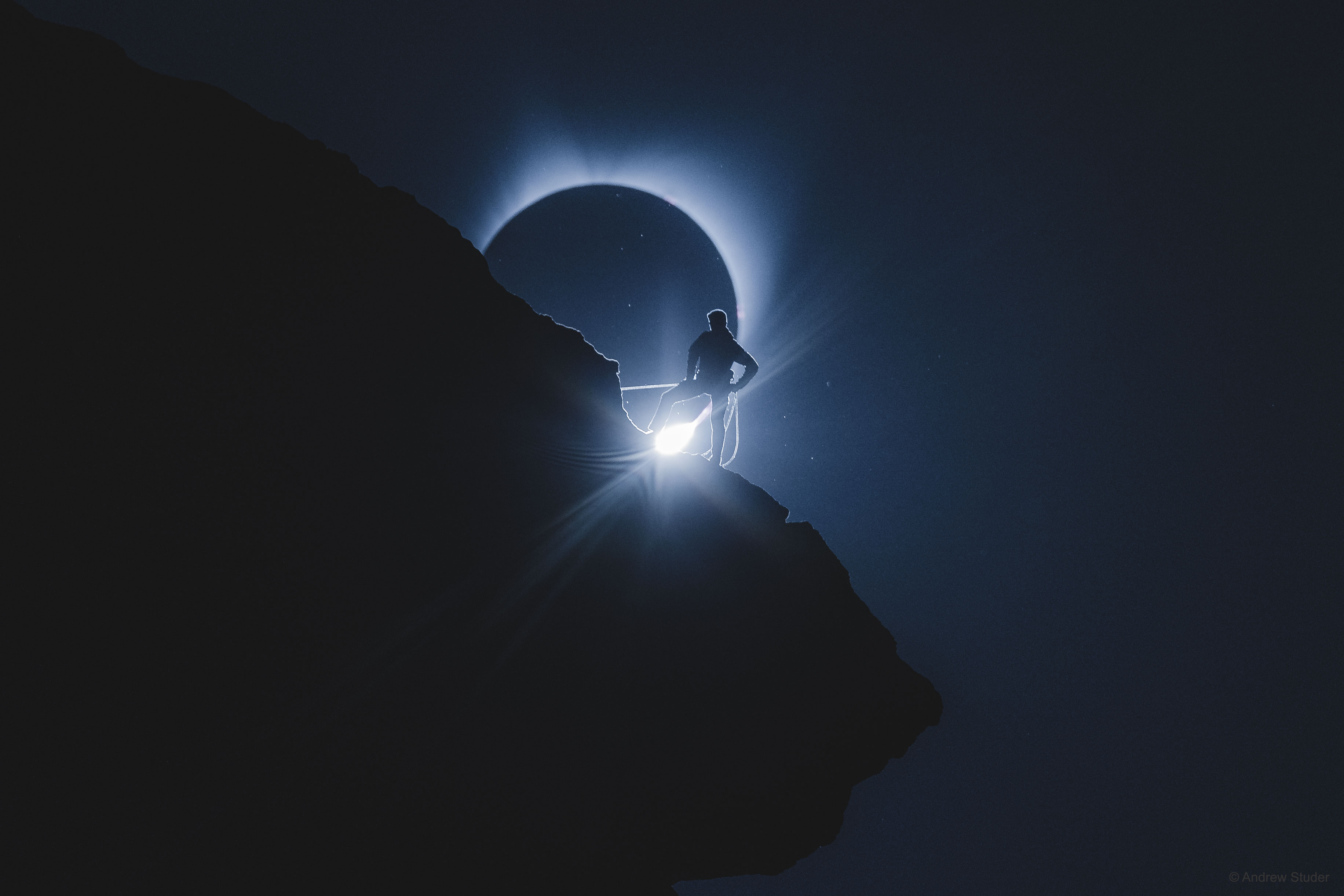
What should you do if your rock climbing picture is photobombed by a total eclipse of the Sun? Rejoice -- because your planning paid off. After months of considering different venues, and a week of scouting different locations in Oregon's Smith Rock State Park, a group of photographers and rock climbers led by Andrew Struder, Ted Hesser, Martina Tibell, and Michael Shainblum settled on picturesque 100-meter tall Monkey Face tower as the dramatic foreground for their images of the pending total solar eclipse. Tension mounted as the eclipse time approached, planned juxtapositions were scrutinized, and the placement of rock climber Tommy Smith was adjusted. Right on schedule, though, the Moon moved in front of the Sun, and Smith moved in front of the Moon, just as planned. The solar eclipse image displayed here actually shows a diamond ring, an eclipse phase when a bit of the distant Sun is still visible beyond the Moon's surface. Open Science: Browse 1,500+ codes in the Astrophysics Source Code Library
¿Qué debería hacer si una fotografía de escalada en roca es interrumpida por un eclipse total de Sol? Alegrarse, porque la planificación dio resultados. Después de meses considerando diferentes lugares y una semana explorando distintas ubicaciones en el Parque Estatal Smith Rock de Oregon, un grupo de fotógrafos y escaladores, liderado por Andrew Struder, Ted Hesser, Martina Tibell y Michael Shainblum, eligió la torre de 100 metros de altura llamada Monkey Face como fondo dramático para sus imágenes del inminente eclipse solar total. A medida que se acercaba el momento del eclipse, se revisaron cuidadosamente las composiciones planificadas y se ajustó la posición del escalador Tommy Smith. Justo a tiempo, la Luna se colocó frente al Sol, y Smith se colocó frente a la Luna, tal como se había planeado. La imagen del eclipse solar mostrada aquí en realidad muestra un anillo de diamante, una fase del eclipse en la que aún se ve una pequeña parte del Sol distante más allá de la superficie de la Luna.