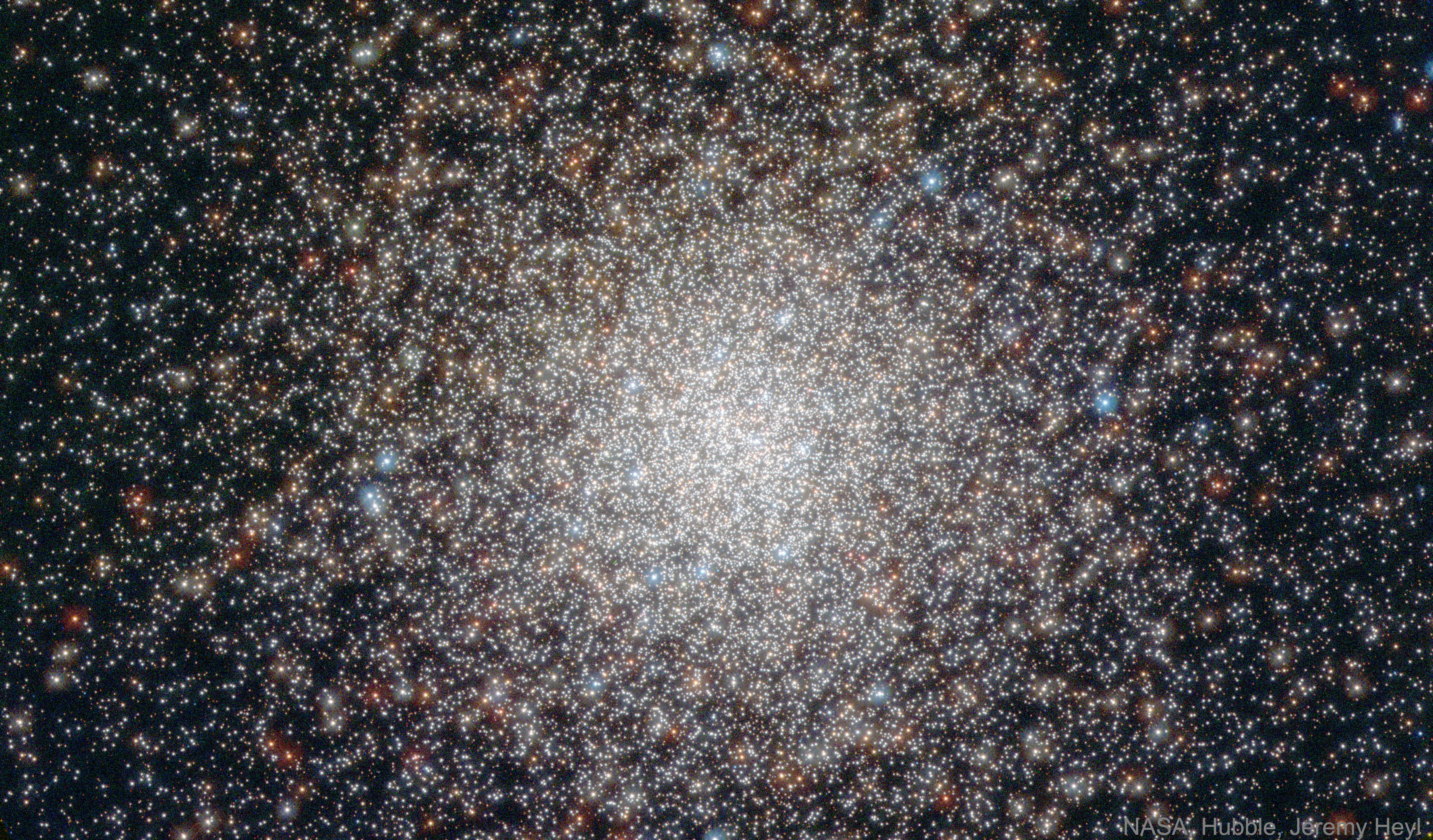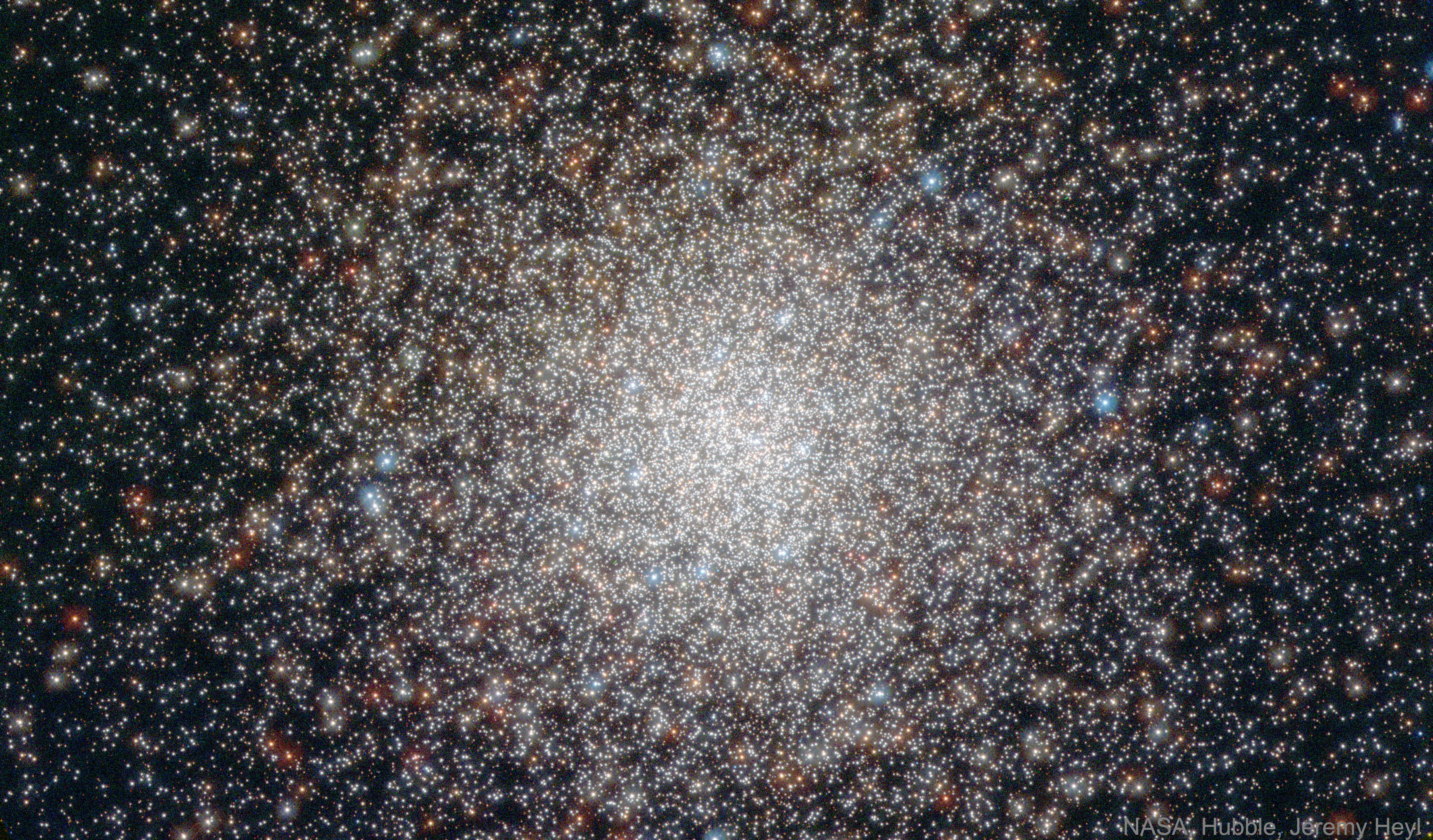
If our Sun were near the center of NGC 362, the night sky would glow like a jewel box of bright stars. Hundreds of stars would glow brighter than Sirius, and in many different colors. Although these stars could become part of breathtaking constellations and intricate folklore, it would be difficult for planetary inhabitants there to see -- and hence understand -- the greater universe beyond. NGC 362 is one of only about 170 globular clusters of stars that exist in our Milky Way Galaxy. This star cluster is one of the younger globulars, forming likely well after our Galaxy. NGC 362 can be found with the unaided eye nearly in front of the Small Magellanic Cloud, and angularly close to the second brightest globular cluster known, 47 Tucanae. The featured image was taken with the Hubble Space Telescope to help better understand how massive stars end up near the center of some globular clusters.
Si nuestro Sol estuviera cerca del centro del cúmulo estelar NGC 362, el cielo nocturno brillaría como una caja de joyas llena de estrellas brillantes. Cientos de estrellas brillarían más que Sirio, y en muchos colores diferentes. Aunque estas estrellas podrían formar parte de constelaciones impresionantes y de complejas leyendas, sería difícil para los habitantes planetarios allí ver — y por lo tanto comprender — el universo más amplio que existe más allá. NGC 362 es uno de los aproximadamente 170 cúmulos globulares de estrellas que existen en nuestra Galaxia de la Vía Láctea. Este cúmulo estelar es uno de los más jóvenes de los cúmulos globulares, formándose probablemente mucho después de nuestra Galaxia. NGC 362 puede verse a simple vista casi frente a la Nube Magallánica Pequeña, y angularmente cercano al segundo cúmulo globular más brillante conocido, 47 Tucanae. La imagen destacada fue tomada con el Telescopio Espacial Hubble para ayudar a comprender mejor cómo terminan las estrellas masivas cerca del centro de algunos cúmulos globulares.