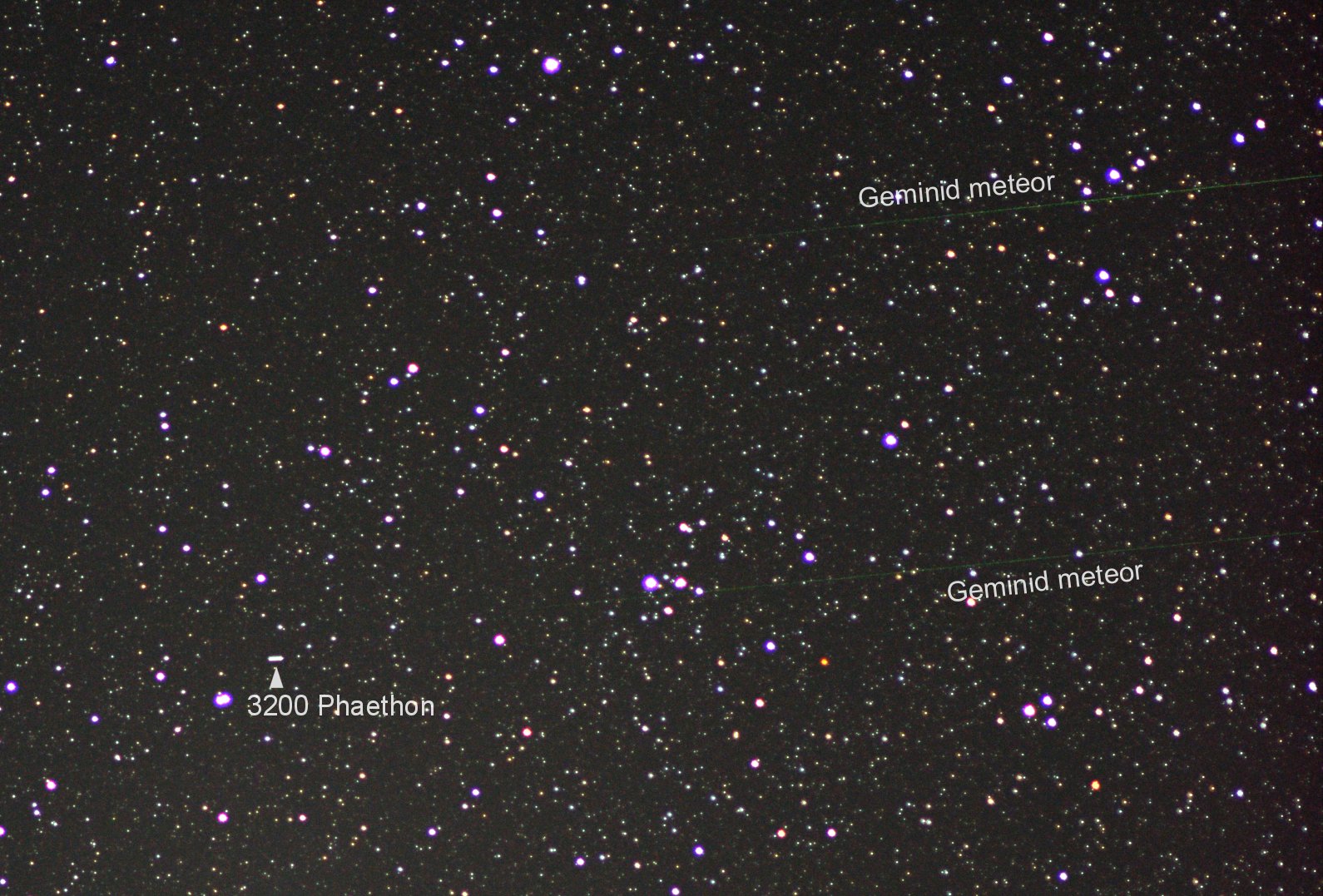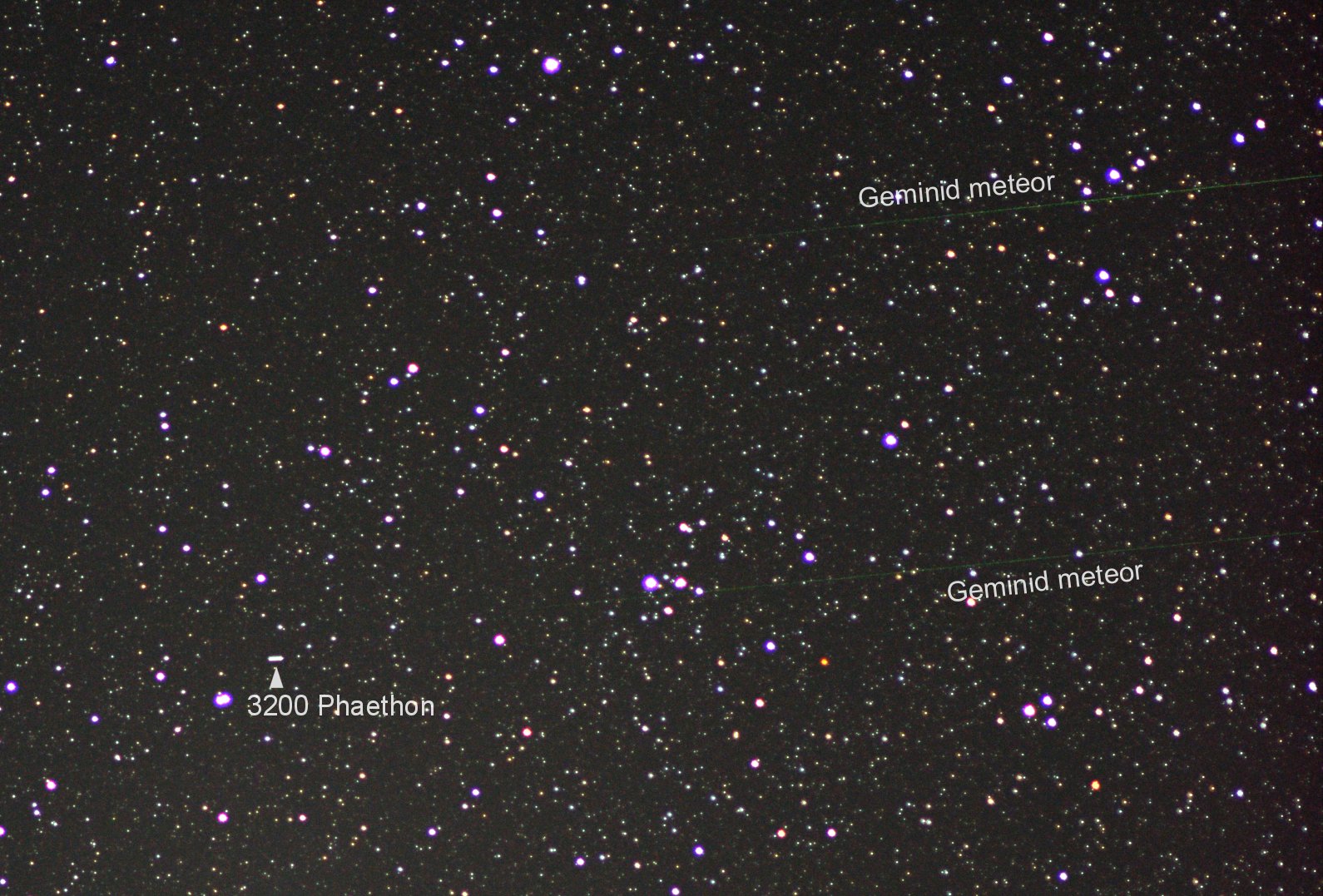
Based on its well-measured orbit, 3200 Phaethon (sounds like FAY-eh-thon) is recognized as the source of the meteroid stream responsible for the annual Geminid meteor shower. Even though most meteor showers' parents are comets, 3200 Phaethon is a known and closely tracked near-Earth asteroid with a 1.4 year orbital period. Rocky and sun-baked, its perihelion or closest approach to the Sun is well within the orbit of innermost planet Mercury. In this telescopic field of view, the asteroid's rapid motion against faint background stars of the heroic constellation Perseus left a short trail during the two minute total exposure time. The parallel streaks of its meteoric children flashed much more quickly across the scene. The family portrait was recorded near the Geminid meteor shower's very active peak on December 13. That was just before 3200 Phaethon's historic December 16 closest approach to planet Earth. Gallery: Images from yesterday's photogenic SpaceX launch in California
Basado en su órbita bien medida, el asteroide 3200 Phaethon (pronunciado FAY-eh-thon) es reconocido como la fuente del flujo de meteoroides responsable de la lluvia de meteoros anual de Géminidas. Aunque la mayoría de las lluvias de meteoros tienen como progenitores cometas, 3200 Phaethon es un asteroide cercano a la Tierra bien conocido y seguido de cerca, con un período orbital de 1.4 años. Rocoso y expuesto al calor del Sol, su perihelio, o punto más cercano al Sol, se encuentra bien dentro de la órbita del planeta Mercurio más interno. En este campo de visión telescópica, el rápido movimiento del asteroide contra las tenues estrellas de fondo de la constelación heroica de Perseo dejó una corta trayectoria durante el tiempo total de exposición de dos minutos. Las paralelas rayas de sus hijos meteoroides pasaron mucho más rápidamente por la escena. El retrato familiar fue capturado cerca del pico muy activo de la lluvia de meteoros de Géminidas el 13 de diciembre. Eso fue justo antes del histórico acercamiento más cercano de 3200 Phaethon a la Tierra el 16 de diciembre.