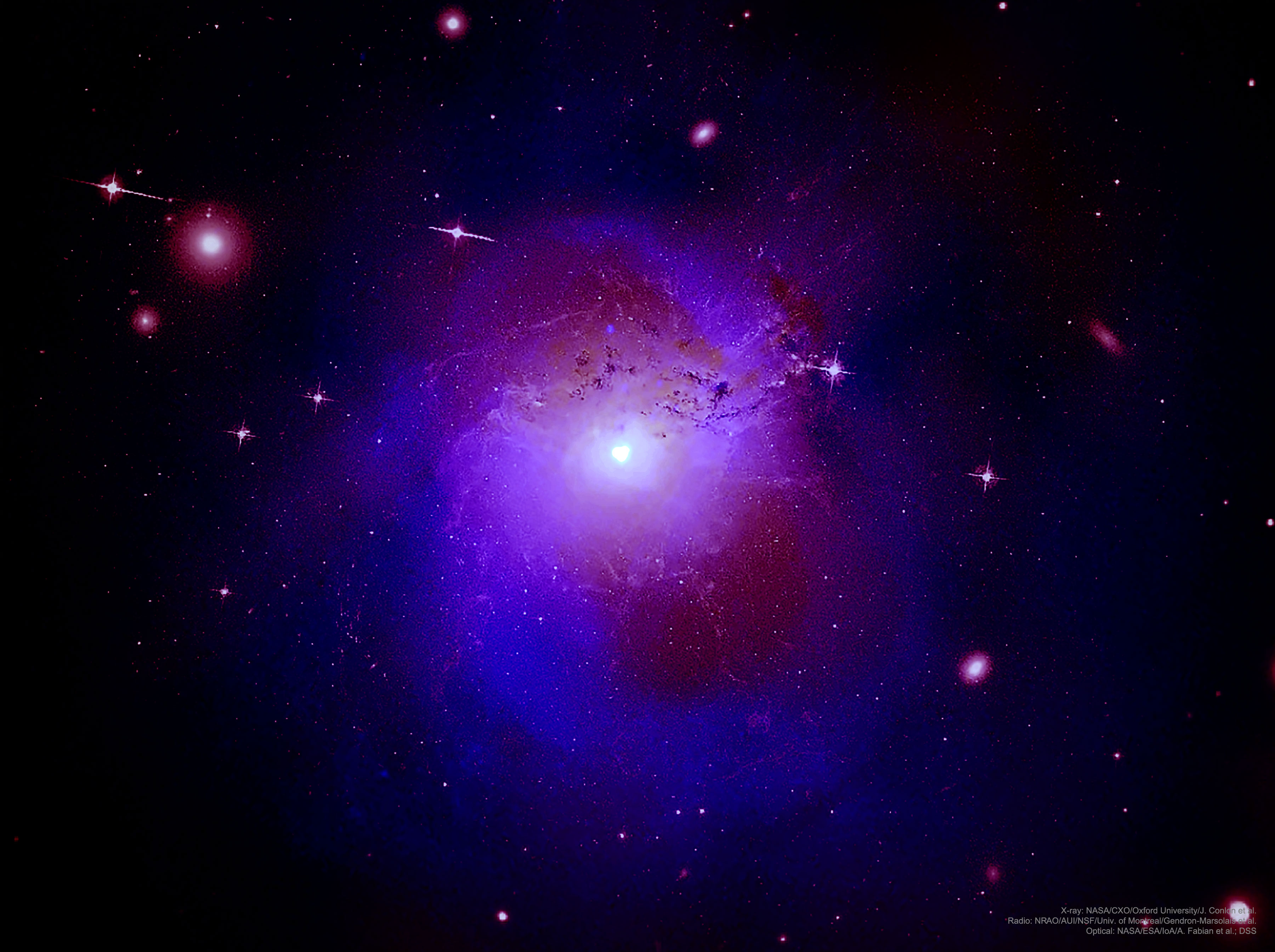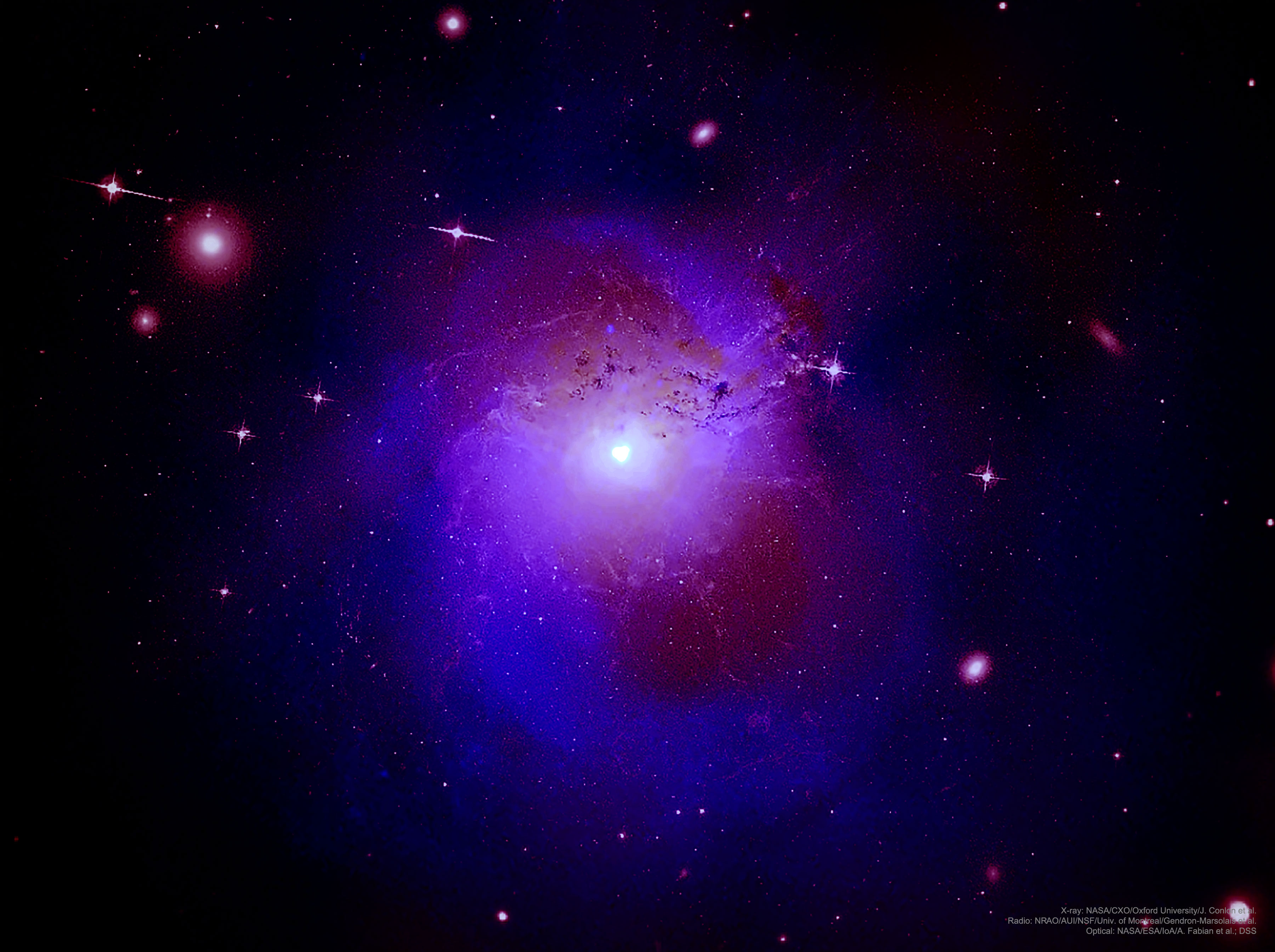
Why does the Perseus galaxy cluster shine so strangely in one specific color of X-rays? No one is sure, but a much-debated hypothesis holds that these X-rays are a clue to the long-sought identity of dark matter. At the center of this mystery is a 3.5 Kilo-electronvolt (KeV) X-ray color that appears to glow excessively only when regions well outside the cluster center are observed, whereas the area directly surrounding a likely central supermassive black hole is actually deficient in 3.5 keV X-rays. One proposed resolution -- quite controversial -- is that something never seen before might be present: fluorescent dark matter (FDM). This form of particle dark matter might be able to absorb 3.5 keV X-radiation. If operating, FDM, after absorption, might later emit these X-rays from all over the cluster, creating an emission line. However, when seen superposed in front of the central region surrounding the black hole, FDM's absorption would be more prominent, creating an absorption line. Pictured, a composite image of the Perseus galaxy cluster shows visible and radio light in red, and X-ray light from the Earth-orbiting Chandra Observatory in blue. Free APOD Lectures: January 5 in NYC & January 9 in DC
Crédito: NASA, Chandra X-ray Observatory ¿Por qué el cúmulo de galaxias de Perseo brilla de manera tan extraña en un color específico de rayos X? Nadie está seguro, pero una hipótesis muy debatida sostiene que estos rayos X son una pista sobre la identidad largamente buscada de la materia oscura. En el centro de este misterio se encuentra un color de rayos X de 3.5 kiloelectrónvoltios (keV) que parece brillar excesivamente solo cuando se observan regiones bastante alejadas del centro del cúmulo, mientras que el área directamente alrededor de un agujero negro supermasivo probablemente central es en realidad deficiente en rayos X de 3.5 keV. Una posible solución, bastante controvertida, es que podría estar presente algo nunca visto antes: materia oscura fluorescente (FDM). Esta forma de materia oscura a nivel de partículas podría ser capaz de absorber radiación de rayos X de 3.5 keV. Si esto ocurre, la FDM, después de la absorción, podría emitir posteriormente estos rayos X desde todo el cúmulo, creando una línea de emisión. Sin embargo, cuando se ve superpuesta frente a la región central que rodea al agujero negro, la absorción de la FDM sería más prominente, creando una línea de absorción. La imagen mostrada es una imagen compuesta del cúmulo de galaxias de Perseo, donde la luz visible y de radio se muestran en rojo, y la luz de rayos X del observatorio Chandra en órbita terrestre se muestra en azul.