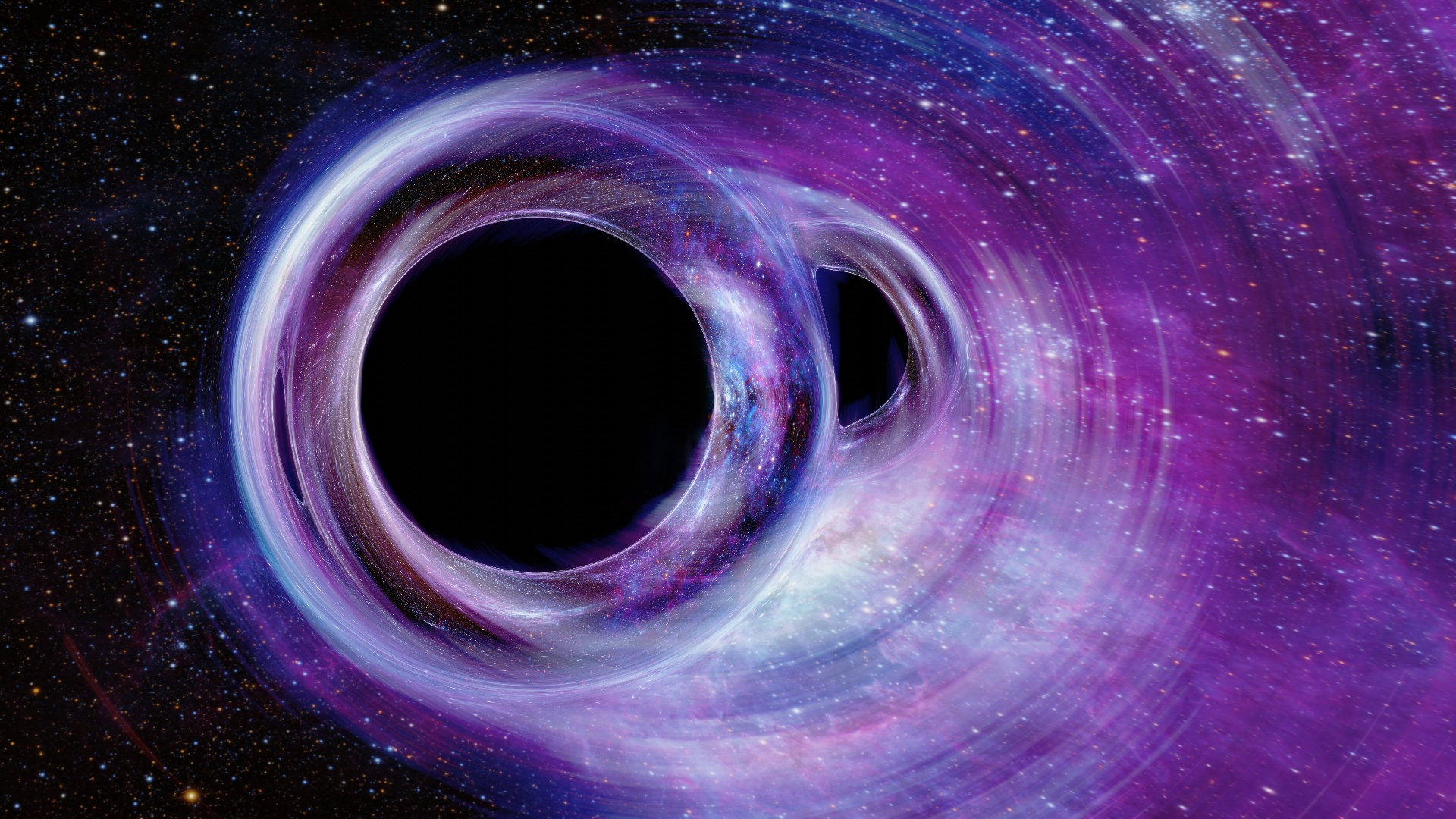
How can we see what is invisible? Black holes are not easy to see in the dark cosmic night, but astronomers can find them by analyzing their gravitational effects on matter, light and spacetime. The featured image shows an illustration that combines a simulation of a black hole binary system in its final "death-dance" with an astrophotography image of the Tarantula Nebula in the background. Even though black holes don't emit light, they distort the path of light rays, acting like a gravitational lens. As a result, the nebula appears extremely distorted, forming Einstein rings and multiple images. Tarantula Nebula lies in the Large Magellanic Cloud, a dwarf galaxy that is one of the satellite galaxies of the Milky Way, 160,000 light-years away. That is more than 1,000 times closer than any of the binary black hole mergers detected so far. We'll probably never detect a merger so close to home!
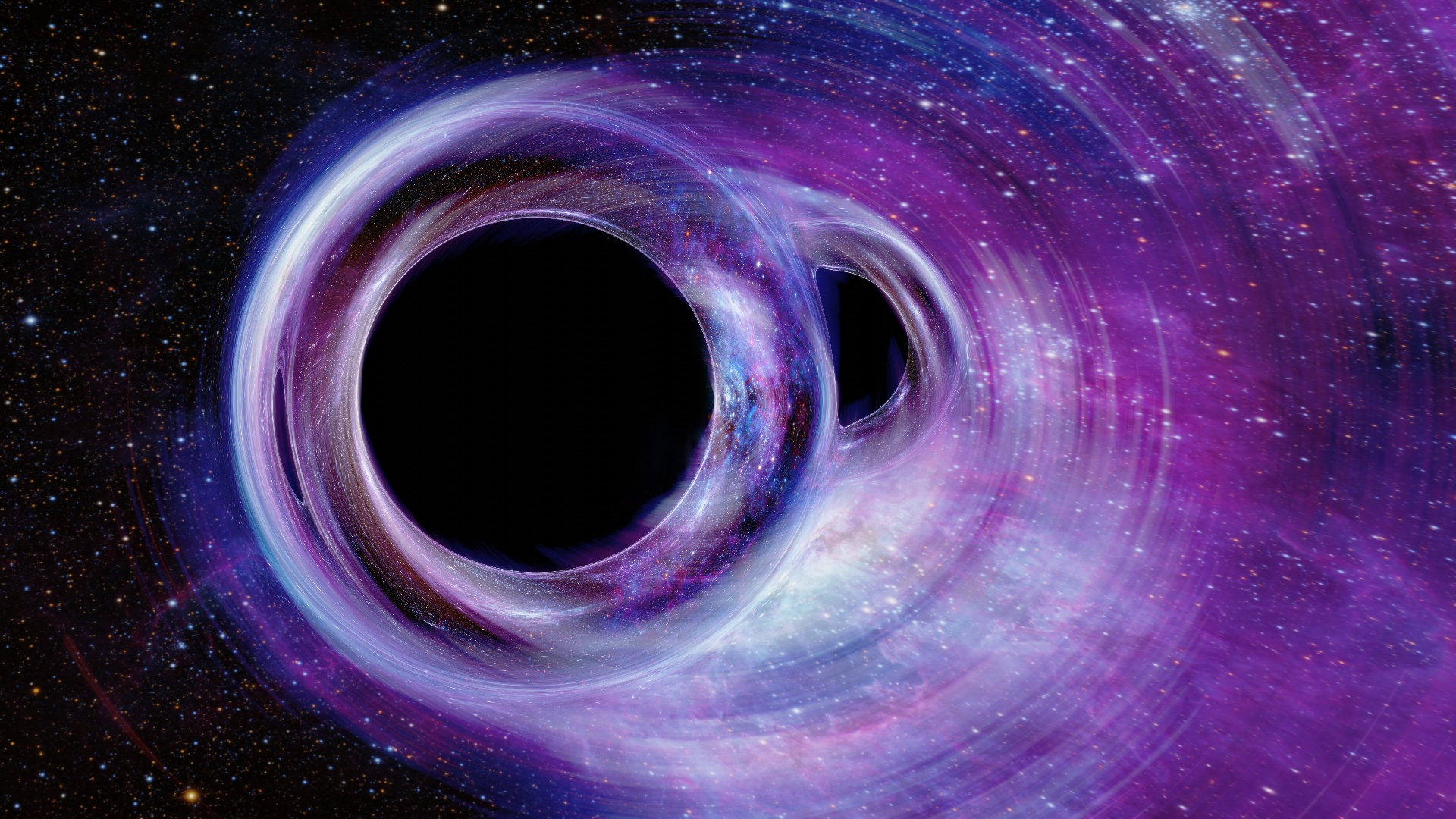
¿Cómo podemos ver lo que es invisible? Los agujeros negros no son fáciles de observar en la oscura noche cósmica, pero los astrónomos pueden localizarlos analizando sus efectos gravitacionales sobre la materia, la luz y el espaciotiempo. La imagen destacada muestra una ilustración que combina la simulación de un sistema binario de agujeros negros en su fase final de "danza de la muerte" con una imagen astrofotográfica de la Nebulosa Tarántula como fondo. Aunque los agujeros negros no emiten luz, distorsionan la trayectoria de los rayos luminosos, actuando como lentes gravitacionales. Como resultado, la nebulosa aparece extremadamente distorsionada, formando anillos de Einstein e imágenes múltiples. La Nebulosa Tarántula se encuentra en la Gran Nube de Magallanes, una galaxia enana que es una de las galaxias satélite de la Vía Láctea, a 160.000 años-luz de distancia. Esto es más de 1.000 veces más cercano que cualquiera de las fusiones de agujeros negros binarios detectadas hasta ahora. ¡Probablemente nunca detectaremos una fusión tan cercana a nuestro hogar!